Masauna

  • Origin: Greenlandic
  • Meaning: “wet snow.”
  • Gender: Male

The name comes from the Greenlandic masaut (wet snow), a long with the suffix – na on the end.

Other forms include: Masaatsiaq and Masaitsiaq.

Feminine forms are Masaana, Masaani, Masâne, Masáuna and Masaune.

Sources

Aputsiaq

  • Origin: Greenlandic
  • Meaning: “snowflake; ice crystal.”
  • Gender: Unisex, mostly male

The name comes from the Greenlandic word for snowflake or ice crystal.

An older form is Aputsiak.

Sources

Kimmernaq

  • Origin: Greenlandic
  • Meaning: “cowberry; lingonberry.”
  • Gender: Female

The name is from the Greenlandic and means “cowberry; lingonberry.”

Sources

Ephraim

  • Origin: Biblical Hebrew אֶפְרַיִם
  • Meaning: “fruitful; double fruited; increasing.”
  • Gender: masculine
“Ephraim” Francisco Hayez

The name is borne in the Bible by the son of Joseph and Asenath, who is considered a patriarch, as he is a founder of one of the 12 trubes of Israel. According Genesis 41:52, he is named thus by Joseph because “God has made me fruitful in the land of my suffering.”

The name was also borne by a few early Christian saints, including St. Ephraim of Syria (4th-century, CE).

Ephraim appeared in the U.S. Top 1000 between 1880-1914, it disappeared for 99 years and reappeared in the charts in 2013. For its first centennial cycle, it peaked at #403 in 1880. As of 2023, it was the 992nd most popular male name.

Its Spanish counterparts of Efraín and Efrén have also appeared in the U.S. Top 1000, Efraín appeared between 1950 and 2014, peaking at #469 in 1981 whilst Efrén appeared between 1966-2007, peaking at #768 in 1990.

Forms/Usages

  • Efrayim ኤፍራይም (Amharic, Modern Hebrew)
  • Yeprem, Jeprem, Eprem Եփրեմ (Armenian)
  • Afrem ܐܦܪܝܡ (Assyrian)
  • Afri ܐܦܪܝ (Assyrian)
  • Afron ܥܦܪܘܢ (Assyrian)
  • Aprem, Aprim ܐܦܪܝܡ (Assyrian)
  • Efrim ܐܦܪܝܡ (Assyrian)
  • Ephraim ეფრაიმ (Georgian); Εφραιμ (Greek); ⲉⲫⲣⲁⲓⲙ (Coptic); ܐܦܪܝܡ(Syriac) (Assyrian, Dutch, English, Estonian, German, Greek, Portuguese)
  • Akhrym, Ahrym Акхрым (Belarusian)
  • Yafrym Яфрым (Belarusian)
  • Efraïm (Catalan, Dutch)
  • Efrajim (Czech)
  • Efraim (Finnish, Hungarian, Italian, Nordic, Polish, Romanian)
  • Eprami (Finnish)
  • Éphraïm (French)
  • Îvfa (Greenlandic)
  • Eframi (Icelandic)
  • Efraím (Icelandic)
  • Efraimo (Italian)
  • Efrem (Italian, Polish)
  • Effrem (Italian)
  • Efro (Italian)
  • Ephraem (Late Latin)
  • Ephraimus (Late Latin)
  • Ofrem (Russian, Archaic)
  • Yefraim, Jefraim Эфраим (Russian)
  • Yefrem Ефрем (Russian)
  • Jevrem Јеврем (Serbian)
  • Efraín (Spanish)
  • Efrén (Spanish)
  • Ohrim, Okhrim Охрім (Ukrainian)
  • Evron ֶבְֿרוֹן (Yiddish)

Sources

Thurstan, Torsten

  • Origin: Old Norse
  • Meaning: “Thor’s stone.”
  • Gender: masculine

Both names are derived from the Old Norse male name, Þórsteinn, literally meaning “Thor’s stone.” The name is attested as early as the 5th-century in Medieval Scandinavia and appears in the Norse saga, Draumr Þorsteins Síðu-Hallssonar.

It was transported to England by Anglo-Saxon & Norse settlers, the Anglo-Saxon form being Thurstan, and remained prevalent even after the conquest of the Normans, who themselves also used the name due to their original Norse heritage. Thurstan was borne by an 11th-century Bishop of York. Thurstan is the progenitor of the English surnames Thurston and Dustin.

Torsten appeared in Germany’s Top 100 Most Popular Male Names between 1960 and 1978, and peaked at #6 between 1964-68. While Torstein was in and out of the Norwegian Top 100 Male Names between 1947-1991, peaking at #84 in 1948. It’s original Old Norse form of Þórsteinn ranked in at #46 in Iceland’s Top 100 Male Names in 2012.

Forms include:

  • Turstin (Anglo-Norman, French)
  • Thurstan (English)
  • Tórstein (Faroese)
  • Torstein, Thorstein (Faroese, Norwegian)
  • Toro, Torro (Finnish, Scandinavian)
  • Torste,Torsti (Finnish)
  • Toutain (French, archaic)
  • Torsten (German, Scandinavian)
  • Thorsten (German, Scandinavian)
  • Torstene, Torsteni (Greenlandic)
  • Þórsteinn (Icelandic, Old Norse)
  • Turstino (Italian, Spanish)
  • Turstanus, Tursteinus, Turstinus (Late Latin)
  • Twyste (Middle Low German)
  • Tostein (Norwegian)
  • Dorste (Sami)
  • Toste (Scandinavian)
  • Tosten, Thosten (Swedish, archaic)

Sources

Elika

The name can be of several different origins and meanings.

It is a Biblical male name that occurs in 2 Samuel 23:25 as the name of Elika the Harodite, one of David’s 37 special warriors. In this case, אֵַליקָא (Eli’ka), may mean “vomit of God” or “Congregation of God.” Some sources also list this as meaning “pelican of God.” In English, the name would be pronounced ee-LYE-kuh.

Pronounced, EH-lee-KAW الیکا, it is a Persian female name that derives from the Mazanderani language, meaning, “wild cherry.” However, it’s use in Iran may be influenced by an identical sounding Indian female name, which is derived from the Sanskrit एलीका (Elika), meaning “small cardamom.” It is also the name of a village in northern Iran of the same aforementioned Mazanderani etymology.

Elika is also a Nordic female name of uncertain etymology, it’s earliest use is recorded in 18th-century Iceland. It may derive from the the Frisian diminutive name, Alike, which is a diminutive form of any name beginning in the Adal- element, or the Frisian unisex diminutive name Elike, which is a short form of any name beginning in the EGG- element.

It may also be linked with a Greenlandic female name of uncertain etymology.

It’s Nordic form has been in use in Finland & Estonia, as well as all of Scandinavia & Iceland. It should be noted that Elike has occurred in use as a unisex name in Norway and Friesland.

Swedish and Frisian female variations include Eliko & Eliken.

Alternately, it is a Mari female name, but is of uncertain meaning, it may be a variation of Evika, meaning “slender.”

It is also the Hawaiian translation of Elisa, Eliza, Erica & Eric.

Sources

Rudy, Rudolph, Rolf

200px-Rudolf_IV


  • Origin: German
  • Meaning: “famous wolf.”
  • Gender: Masculine

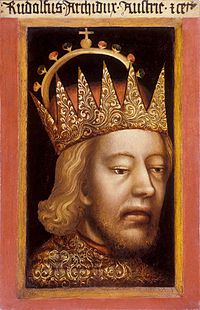
The name is derived from the Germanic Hrodulf, which is composed of the elements hrod (fame) and wulf (wolf). The name was borne by several European rulers.

In England, it has been in use since Anglo-Saxon times, its Anglo-Saxon form of Hroðulf was usurped by the Norman Rudolph and Rodolph in the 11th-century.

In the English-speaking world, the name has come to be associated with the Christmas folk hero, Rudolph the Red-nosed Reindeer, based on a children’s book written by Robert L. May in 1939.

Rudolf appeared in the U.S. Top 1000 between 1887-1932, and peaked at # 715 in 1916. He appeared 3 times in the French Top 1000 in 1914, 1931 and again in 1933, peaking at #454 in 1934. He was in the German Top 20 between 1893 and 1936, peaking at #11 in 1899 and in 1916.

In France, it’s native form of Rodolphe appeared in the Top 1000 between 1900 and 2001 and peaked at #79 in 1970.

Its contracted form of Rolf has been in occasional use in England since the 11th-century. It was a favorite in German-speaking countries in the 1920s-50s, peaking at #11 in 1947. In Norway, it peaked at #14 in 1945. Rolf has also appeared in the American and French charts, though not very high. Rolf peaked at #210 in France in 1943 and #772 in 1960 in the U.S.

It his diminutive form of Rudy, often used as an independent given-name, is the one which has gained some traction in recent years. Rudy appeared in the French Top 100 between 1979-1984, and peaked at #76 in 1980. Rudy’s current rankings in the popularity charts are as follows:

  • #271 (England & Wales, 2018)
  • #822 (U.S.A., 2018)

Rudolf is used in Albanian, Armenian, Czech-Slovak, Dutch, Hungarian, Icelandic, Polish, Serbo-Croatian, Slovene, the Scandinavian languages and Russian.

Other forms include:

  • Hroðulf, Hrothulf (Anglo-Saxon)
  • Roel, Roelof, Ruud (Dutch)
  • Rodolf (Catalan)
  • Rolph (English)
  • Rudo, Ruudo, Ruudolf (Estonian)
  • Róðolvur (Faroese)
  • Ruuto, Ruutolffi, Ruutolhvi, Ruutolppi (Finnish)
  • Rodolphe (French)
  • Roele, Roelef, Roelf, Rolef, Rolof, Roloff, Roluf, Roolof (Frisian)
  • Rudolp რუდოლფ (Georgian)
  • Roff (German)
  • Rudi (German, Hungarian, Serbo-Croatian, Slovenian)
  • Rudo (German)
  • Rul (German)
  • Rûtulfe, Ruutuulfi (Greenlandic)
  • Rhodólphos Ροδόλφος (Greek)
  • Rúdólf (Icelandic)
  • Rodolfino (Italian)
  • Rodolfo (Italian, Portuguese, Spanish)
  • Ridolfo (Italian)
  • Rudolphus (Latin)
  • Rūdolfs, Rūdis (Latvian)
  • Rudolfas, Rudas (Lithuanian)
  • Doffen (Norwegian)
  • Roffe (Norwegian, Swedish)
  • Hróðólfr, Hrólfr (Old Norse)
  • Rudulf (Polish, archaic)
  • Duff, Dusch, Riedi, Ruosch (Romansch)
  • Ruedi (Swiss-German, diminutive form, occasionally used as an independent form)

Feminine forms include:

  • Rudolfia (Danish, Norwegian)
  • Rodolphine (French)
  • Rudolfine (German, Scandinavian)
  • Rodolfa, Rodolfina (Italian, Spanish)
  • Rodolfetta (Italian)
  • Rudolfa (Polish, Scandinavian)
  • Rudolfina (Hungarian, Polish, Scandinavian)

Sources
Igor, Ingvar

Radzivill_Igor-945


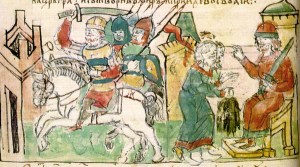
Ingvar is the modern Scandinavian form of the Old Norse, Yngvarr, meaning “Ing’s warrior.” It was introduced into Russia in the 10th-century by the Varangians, which gave the world the Igor form. The latter was borne by 2 Grand Princes of Kiev and has been a favorite in several Slavic countries since.

Currently, Igor is the 19th Most Popular Male Name in Poland (2018) and the 48th Most Popular in Moscow, Russia (2018), while in England he currently ranks quite low at #497 (2018).

Igor is used in Bulgarian, Czech-Slovak, Dutch, Estonian, German, Hungarian, Italian, Macedonian, Portuguese, Romanian, Serbo-Croatian, all modern Scandinavian languages, Slovene, & Spanish

Other forms of the name include:

  • Ihar Ігар (Belarusian)
  • Ingvar (Danish, Estonian, Finnish, Icelandic, Norwegian, Swedish)
  • Iku (Finnish)
  • Ingwar, Ingwer (German)
  • Ingvaari (Greelandic)
  • Ingvâre (Greenlandic)
  • Ígor (Icelandic)
  • Inguarus (Late Latin)
  • Ingvars, Igors (Latvian)
  • Igoris (Lithuanian)
  • Ignar (Nowegian)
  • Yngvar (Norwegian)
  • Yngvarr (Old Norse)
  • Ingwar (Polish)
  • Inguar (Portuguese)
  • Ingor (Swedish)
  • Ihor Ігор  (Ukrainian)

Sources

Magnus

250px-Saint_Magnus_of_Füssen


The name is from the Latin cognomen meaning “great,” and by the 11th-century, was imported to Scandinavia as a synchronized name, likely being used as a latinized form of the Old Norse Magni (power; strength).

The name was especially common among Norwegian and Swedish royalty. King Magnus I is the first bearer of the name in the Norwegian line, who was said to be named for King Charlemagne (Carolus Magnus).

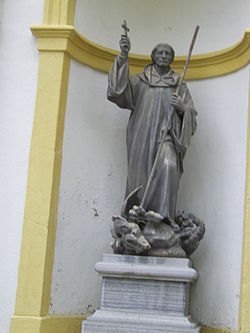
It was also borne by several saints, including St. Magnus of Füssen, a 6th-century saint who is credited for converting the Germanic tribes to Christianity in what is now Bavaria.

It has remained a staple in Scandinavia, it currently ranks in as the 15th Most Popular Male Name in Denmark (2018) & the 9th Most Popular Male Name in Norway (2018). His rankings in other countries are as follows:

  • #414 (England & Wales, 2018)
  • #781 (United States, 2018)

Other forms of the name include:

  • Mang (Alemmanish)
  • Mogens (Danish)
  • Magnuz (Danish, Swedish)
  • Mack (English)
  • Manu (Finnish)
  • Mauno/Maunu (Finnish)
  • Magne (French, Norwegian)
  • Mânuse (Greenlandic)
  • Mághnus, Manus (Irish-Gaelic)
  • Magnús (Icelandic)
  • Magno (Italian)
  • Magnuss (Latvian)
  • Magnar (Norwegian)
  • Maghons (Old Swedish)
  • Mávdnos (Sami)
  • Mankan (Swedish)
  • Måns (Swedish)

Magna is a feminine form and Magnúsína is an Icelandic feminine form.

Sources