Vera

Gender: Feminine
Origin: Slavic Вера
Meaning: “faith.”
Eng (VARE-uh; VEER-uh); Rus (VYEH-rah)

The name is most likely a borrowing from the Russian female name, Vera, which comes directly from the Slavic meaning, “faith.” Initially, it was a Russian-Orthodox cognate of the Greek female name, Pistis (Faith), the name of an early Christian saint and martyr.

The name has been used outside of Eastern Europe since at least the 19th-century. It is unclear how the name caught on in the English-speaking world, but by the time of its popularity the name was usually associated with the Latin, verus, (true), verses, the Slavic, (hope).

Its usage in Albania may also be connected with the Albanian word, verë, (Summer).

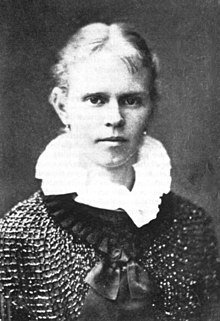
The name is borne by several famous Russian women, including silent film actress, Vera Kholodnaya (1893-1919) and theatre actress, Vera Komissarzhevskaya (1864-1910); Chemist, Vera Popova (1867-1896).

Other notable bearers include: English writer and feminist, Vera Brittain (1893-1970); Ukrainian-American actress, Vera Farmiga (b.1973); American actress, Vera Miles (b.1929); American fashion designer, Vera Neumann (b.1907) and American fashion designer, Vera Wang (b.1949).

The highest the name ranked in the United States was in 1919 when she came in as the 65th most popular female name; its popularity may have had something to do with Vera Kholodnaya who died the same year, but this is only my personal conjecture.

As of 2010, Vera is the 675th most popular female name in the United States. Her rankings in other countries are as follows:

  • # 13 (Veera, Finland, 2011)
  • # 39 (Sweden, 2010)
  • # 45 (the Netherlands)

Other forms of the name include:

  • Vera Вера (Albanian/Bulgarian/Croatian/Dutch/English/Faroese/German/Hungarian/Icelandic/Italian/Latvian/Lithuanian/Macedonian/Portuguese/Russian/Scandinavian/Serbian/Slovene)
  • Věra (Czech)
  • Veera (Estonian/Finnish)
  • Véra (French)
  • Verina (Italian)
  • Verutė (Lithuanian)
  • Wiara (Polish)
  • Wiera (Polish)
  • Verá (Sami)
  • Viera (Slovak)
  • Wera (Swedish)
  • Vira Віра (Ukrainian)

Diminutive forms include:

  • Verica (Czech/Serbian)
  • Verika (Czech)
  • Verochka (Russian)
  • Verunka (Czech)
  • Verusha (Russian)
  • Vierunka (Czech)
  • Vieruška (Czech)
  • Věrka (Czech)
  • Věruna (Czech)
An obscure Latin masculine form is Verus.

Siri

Gender: Feminine
Origin: Norwegian
(SEE-ree)

The name is a contracted form of the Old Norse, Sigrid.

The name has been used as an independent given name since at least the 18th-century. As of 2011, its Finnish form of Siiri 9th most popular female name in Finland. While in 2010, she was the 57th most popular female name in Sweden.

Other forms of the name include:

  • Siria (Danish/Swedish)
  • Siiri (Estonian/Finnish)
  • Siru (Finnish/Sami)
  • Sire (Sami)
  • Siri (Scandinavian)
The name was borne by Swedish theatre actress, Siri von Essen (1850-1912)

Helmi

Gender: Feminine
Origin: Finnish/Estonian
Meaning: “pearl”
(HEL-mee)

The name was originally a diminutive form of the name Vilhelmiina, but later became an independent name in Finland due to its coincidental meaning of “pearl,” in Finnish. The pronunciation could be heard here: http://www.forvo.com/word/helmi/

As of 2011, Helmi was the 11th most popular female name among Finnish speakers in Finland.

The designated name-day in Finland and Estonia is May 7th. In Sweden, it is April 6th.

Aino

Gender: Feminine
Origin: Finnish/Estonian
Meaning: “only; the one.”
(I-no)

The name is found in the national Finnish epic, the Kalevala, as the name of the “only sister” of Joukahainen.

Joukahainen promised his sister’s hand marriage to the very old Väinämöinen, after losing a singing contest.

When Aino finds out she must marry the old man, she drowns herself, and returns as a sort of water spirit, appearing in the form of a salmon to haunt the grieving Väinämöinen.

It is believed by many Finnish linguist that Aino was not actually her name because in the Kalevala she is referred to as ainoa tytär, (only daughter), and it is believed that this designation was confused for her actual name.

At the end of the 19th-century, the name was introduced by Fennoman activists.

The first to bear the name was Aino Järnefelt Sibelius (1871-1969), the first wife of famous Finnish composer, Jean Sibelius. It was also borne by Aino Krohn Kallas (1878-1956), and Estonian-Finnish author.

As of 2011, Aino was the 5th most popular female name in Finland.

Other forms of the name include:

  • Aija (Finnish)
  • Aina (Finnish/Scandinavian)
  • Ainamo (Finnish)
  • Aini (Finnish)
  • Ainikki (Finnish)
  • Áidná (Sami)
  • Áidnu (Sami)

The designated name-days are:

May 10 (Estonia/Finland) and June 13 (Sweden).

Sources

  1. http://www.behindthename.com/namedays/lists/fin.php
  2. http://www.nordicnames.de/wiki/Finnish_Name_Days#May
  3. http://en.wiktionary.org/wiki/Aino

Ada(h)

Ada is sweet, vintagy and classy, with her two syllable Victoriana quality, ending and beginning in a vowel, Ada(h) may just be the next Ava. The Finns have already beaten us, as she is currently the 3rd most popular female name in Finland, (Aada, 2011).

In English, she is usually pronounced like (AY-duh), but in the rest of the world, she is (AH-dah).

Her origins are various; in the form of Adah, she can be traced to the Hebrew Bible, being a relative of the modern Hebrew unisex name, Adi, meaning (jewel), in ancient Hebrew her meaning is more around the lines of “a piece of jewelry; adornment or; ornament.”

In the Bible, Adah appears twice as the name of a wife of Lemech and again as the name of the wife Esau.

Ada without the H is usually traced to the Germanic element, adal, meaning, “noble,” making her a relative of Adela, Adelaide and Adeline. Among royalty and nobility alike, she was a popular choice across Medieval Europe, being borne by St. Ada, a 7th-century Abbess; Ada of Atholl (d.1264); Ada, Countess of Holland, (1188-1223) and; Ada de Warenne, mother of two Scottish kings and the wife of Henry of Scotland, (1120-1178).

In more contemporary times, Ada is usually associated with Ada Lovelace (née Augusta Ada Byron 1815-1852), the daughter of Lord Byron and a renowned Mathematician, she is often credited by modern scientists as being the first Computer Engineer.

The name could also be of Turkic or Greek origins, but its meaning is lost. It was borne by a female governor of Caria (377-326 B.C.E.) a loyal ally of Alexander the Great.

In the United States, Ada was quite popular around the turn of the 19th-century. The highest she ranked in U.S. naming history was in 1880, coming in as the 33rd most popular female name. By 1985, she completely fell off the charts and reappeared in the top 1000 in 2005. As of 2010, she currently ranks in as the 552nd most popular female name in the United States, (2010). Her rankings in other countries are as follows:

  • # 3 (Aada, Finland, 2011)
  • # 72 (Ada, Norway, 2010)

Other forms of the name include:

  • Ada (Dutch/Estonian/Faroese/Finnish/French/Frisian/German/Greek/Hungarian/Icelandic/Italian/Latvian/Lithuanian/Polish/Plattdeutsch/Scandinavian/Slovene)
  • Aada (Estonian/Finnish)
  • Ade (Estonian)
  • Aata (Finnish)
  • Aatukka (Finnish)
  • Ata (Finnish)
  • Adina (Italian)
  • Ádá (Sami)
  • Adica (Slovene)

Venla

Gender: Feminine
Origin: Finnish
(VEN-lah)

The name is a Finnish form of the Swedish female name, Vendela, which is a feminine form of Wendel, meaning, “Vandal”, the name of an ancient Slavo-Germanic tribe.

As of 2011, Venla was the 2nd most popular female name in Finland.

Other forms of the name include:

  • Vendla (Finnish/Norwegian/Swedish)
  • Ventla (Finnish)
  • Ventta (Finnish)
  • Venlá (Sami)
  • Wendla (Swedish)


Sólja, Sóley

Gender: Feminine
Origin: Faroese/Icelandic
Meaning: “buttercup.”
(SOLE-yah); (SOO-lay).

Both names are derived from the Norse word sol meaning “sun.” In modern vernacular both names are used to refer to the buttercup flower in their own respective languages. Sólja is the Faroese form and Sóley the Icelandic. Though Sóley is used as a given name in the Faroe Islands as well.

As of 2010 Sólja was the 8th most popular female name in the Faroe Islands.

Unna

Gender: Feminine
Origin: Old Norse
Meaning: “to love.”
(EW-nah)

The name comes directly from the Old Norse verb, unna, meaning, “to love.”

As of 2010, Unna was the 8th most popular female name in the Faroe Islands.

Other forms of the name include:

  • Unna (Faroese/Icelandic/Scandinavian)
  • Udna (Norwegian)

A masculine form is Unne.