Rocco, Rock

Gender: Male
Origin: Italian
Meaning: “rest”
(ROCK-ko); (ROCK)

The name is derived from the Germanic hroc meaning rest.

It was borne by a 14th-century saint whose cult is still very popular in Italy. He was known for his care and selflessness toward the plague victims. He would nurse them when nobody else would.

Legend has it that he himself contracted the deadly disease. He chose to go out into the woods and die, however, thanks to a loyal dog that visited him and nursed him back to health each day, he was able to live and go on to help more victims. As a result, he is the patron saint against dog bites and of dogs.

The name is also borne by actor Rock Hudson, Rocky Balboa, Rocco DiSpirito, and singer Madonna has used this name for her own child.

Currently, Rocco is the 341st most popular male name in Germany, (2011) and the 389th most popular male name in the United States, (2010).

Other forms include:

  • Rok (Breton)
  • Roc (Catalan)
  • Roko (Croatian)
  • Rochus (Dutch/German)
  • Rock (English)
  • Roche (French)
  • Rocque (French)
  • Rokus (Frisian)
  • Rokkó (Hungarian)
  • Rollux (Latin)
  • Rokas (Lithuanian)
  • Ròc (Occitanian)
  • Ro (Poitvin)
  • Roch (Polish)
  • Rocque (Portuguese/Spanish)
  • Rok (Slovene)

Sonja

Gender: Feminine
Origin: Russian
Eng (SONE-yah); Germ (ZONE-yah)

The name is from a Russian diminutive form of Sophia. Among Russian-Jews, the name was often used as a Russian cognate for the Yiddish, Shayndel, though the two names are not etymologically related.

Sonia could also be from the Hindi word sona सोना  meaning “gold.”

In South Eastern Europe and Northern Europe, the name has been used as an independent given name since at least the turn of the 20th-century.

In the English-speaking world, the name was popularized by a 1917 eponymous novel by Stephen McKenna.

Currently, Sonja is the 297th most popular female name in Germany, (2011)

Other forms of the name include:

  • Soňa (Czech/Slovak)
  • Sonia (English/Italian/Portuguese/Romanian/Spanish)
  • Sonya (English/Russian)
  • Sonja Соња (Croatian/Dutch/Estonian/Finnish/German/Icelandic/Macedonia/Polish/Scandinavian/Serbian/Slovene)
  • Sonje (German)
  • Szonja (Hungarian)

The name is borne by Norwegian figure skater and actress, Sonja Henie (1916-1969).

Annemarie

Gender: Feminine
Origin: French

The name is a compound of Anne and Marie. Originally, the name was used by Catholic families, usually in honour of the Virgin Mary and her legendary mother St. Anne. Its usage spread to German-speaking countries and became especially common in Bavaria.

Currently, Annemarie is the 361st most popular female name in Germany, (2011). Its South Slavic form of Anamarija is currently the 48th most popular female name in Croatia (2010) and the 79th most popular in Slovenia, (2010).

  • Anamarija Анамарија (Croatian/Macedonian)
  • Annemarie (Dutch/English/French/German/Limburgish/Scandinavian)
  • Amrei (Bavarian/Swiss-German)
  • Annamirl (Bavarian)
  • Annamaria (Italian)
  • Anna Maria (Polish/Romansch)
  • Ana María (Spanish)

Gina

Gender: Feminine
Origin: Italian
Eng/It (JEE-nah); Germ (GHEE-nah); Grk (YEE-nah)

The name was originally a short form of Regina, Georgina or Luigina, but has been used as an independent given name in Italy, Greece, the English and German-speaking world.

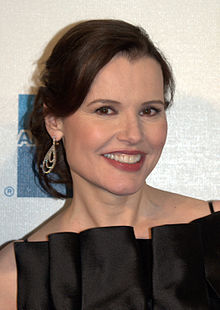
It has been borne by several actresses, including Gina Lollobrigida (b.1927) and Geena Davis (b.1956).

Currently, Gina is the 327th most popular female name in Germany, (2011).

A masculine form is Gino.

Delia

Gender: Feminine
Origin: Greek
Meaning: “from Delos.”
Eng (DEE-lee-ah)

The name comes from an epithet for the goddess Artemis as she was believed to have been born on the island of Delos.

It has also been used as a contracted form of Cordelia.

In the English-speaking world, the name came into usage during the 18th-century.

Currently, it is the 276th most popular female name in Germany, (2011).

Other forms of the name include:

  • Delia (Czech/English/German/Greek/Italian/Romanian/Slovak/Spanish)
  • Délia (French/Hungarian/Portuguese)
  • Délie (French)
It is also the name of a womens’ apparel store.

Nike

Gender: Feminine
Origin: Greek Νικη
Meaning: “victory.”
Eng (NYE-kee); Grk (NEE-kay); Germ (NEE-keh)

The name comes directly from the Greek word for victory.

It was borne in Greek mythology by the goddess and personification of Victory, her Roman counterpart being Victoria. She was the daughter of Pallas and Styx and the sister of Cratos (Strength), Bia (Force) and Zelus (Zeal). She was believed to fly around battlefields on a chariot awarding glory and fame to victors.

Coincidentally, Nike can also be a Nigerian name meaning, “cherished.”

The name has experienced usage in modern Greece, Russia, Israel and Germany. In Germany, her popularity may be due to Nike Wagner (b.1945) the great-granddaughter of Richard Wagner.

It is currently the 323rd most popular female name in Germany, (2011).

The Russian and Belarusian form is Nika Ника.

It is also the name of the shoe company which was named for the Greek goddess.

Salim

Gender: Masculine
Origin: Arabic سليم
Meaning: “safe.”

The name is derived from the Arabic word, salima (to be safe). Its Turkish form of Selîm was a very popular choice among the Ottomanian Sultans, being borne by at least three.

The name also seems to have been occasionally used in 18th and 19th-century Britain and America. It was borne by Selim E. Woodworth (1815-1871) a commander of the United States Navy, and British born American pioneer Selim Franklin (1814-1884). It was also borne by Finnish composer Selim Gustav Adolf Palmgren (1878-1951) and one of the most famous Kurdish poets, known simply as Salîm (1800-1866).

Currently, Selîm is the 373rd most popular male name in Germany, (2011) while Salim stands as the 495th most popular male name in France, (2010).

Other forms of the name include:

  • Selim (Egyptian/Sudanese/Tunisian)
  • Saleem (Indian/Urdu/Pakistani)
  • Salîm (Kurdish)
  • Selîm (Turkish)
Feminine forms include Salima, Salma and Selima.

Clarissa

Gender: Feminine
Origin: Latin
Meaning: “clear; bright; brilliant.”
Eng (kluh-RIS-sah); Germ (klah-HRIS-sah)

The name is possibly a modern English form of Clarice, which is an Anglo-French form of the Latin Claritia, a derivative of Clara.

Clarice was introduced into the English-speaking world through the Normans and was a fairly popular female name in Medieval England. It fell out of usage during the Reformation, and was revived in the 18th-century in the form of Clarissa. This may have been due to the eponymous novel by Samuel Richardson (1748), a tragic novel which recounts the unfortunate circumstances of a nouveau-riche girl by the name of Clarissa Harlowe.

It was borne by Clara Barton, née Clarissa Harlowe Barton, (1821-1912), foundress of the American Red Cross.

It is also borne by Clarissa Eden, Countess of Avon (b.1920) and American poet, Clarissa Pinkola Estés (b.1945).

In the early 90s, the name was brought to the spotlight via the Nickelodean sit-com, Clarissa Explains It All.

In Virginia Woolf’s Mrs Dalloway (1925), it is the first name of the heroine.

Currently, Clarissa is the 396th most popular female name in Germany, (2011).

Other forms of the name include:

  • Clarice (English/French/Italian)
  • Clarissa (English/German/Italian/Portuguese)
  • Clarisse (French)
  • Clarisa (Spanish)
  • Klarysa (Polish)

Allegra

Gender: Feminine
Origin: Italian
Meaning: “cheerful; happy.”
Eng (uh-LAY-grah); (uh-LEG-rah); It (ahl-LAY-grah)

Allegra first appeared in Medieval Italy and was used as an auspicious name. It was especially common among Italian-Jewish families and more common in Central and Northern Italy.

It was introduced into the English-speaking world through Clara Allegra Byron (1817-1822), the short lived daughter of Lord Byron and Claire Clairmont. It was also borne by Anne Allegra Longfellow (1855-1934), the daughter of Henry Wadsworth Longfellow who is mentioned in the 1860 poem The Children’s Hour.

It is currently borne by Allegra Versace (b.1986), heiress to the Versace fashion house.

Allegra is also the Romansch word for hello and is used by Romansch-speakers as a given name.

Another Italian form is Allegrina. A Spanish and Ladino cognate is Alegría.

Allegra is the 413th most popular female name in Germany, (2011).


Chantal

Gender: Feminine
Origin: French
Meaning: debated
Fre (CHAn-TAHL); Eng (SHAHN-tel)

The name comes from the surname of a popular French Catholic saint, Jeanne Françoise de Chantal (1572-1641), a French noblewoman and widow who became a nun upon her husband’s death, eventually founding the order of the Visitation of Holy Mary.

Originally, the name was used by devout French-Catholic parents, but due to its pleasant and feminine sound, its usage has spread elsewhere. It has been used in the Netherlands, the English-speaking world and in German-speaking countries. In Germany, the term chantalismus was coined, referring to German parents who like to give their daughters foreign and exotic sounding names.

Its popularity in other countries may have been due to the false assumption that the name is derived from the French verb chanter (to sing). In reality, the name may actually be related to a Provençal place name, cantal, (stony place). Even then, the origins of the surname are still a subject of debate.

In France, the name has spun off several double names, such as Marie-Chantal, Jeanne-Chantal and Anne-Chantal.

It is currently the 395th most popular female name in Germany (2011) and the 491st most popular in the Netherlands, (2010).

It is borne by Chantal, Princess of Hanover (b.1955), heiress to a Swiss chocolate fortune and Marie-Chantal, Crown Princess of Greece, Princess of Denmark (b.1968).