Célian, Céliane

download (3)

The name is from the Latin cognomen, Caelianus, which is likely derived from the Latin caelus (heaven).

Celian has been in occasional use in Sweden & the Netherlands.

In recent years, Célian and its various forms have been in the Top 500 Most Popular Male Names in France. It is currently the 301st Most Popular Male Name.

Other forms include:

  • Celiaan (Dutch)
  • Selyan (French)
  • Selian/Zelian (German)
  • Celiano (Italian/Portuguese/Spanish)

Feminine forms include:

  • Celiana (Dutch/German/Italian/Portuguese/Spanish)
  • Céliane (French)
  • Célianne/Selyane (French)
  • Zeliana (German)

Sources

Sixtus, Sixtine, Sistine

download (2)

Sixtus is a Latin corruption of the Greek Ξυστος (Xystos) meaning “polished.” It has often been confused with the Latin, Sextus (the sixth). The name was borne by 5 Roman Catholic Popes, (3 of whom are saints), several notable bishops and most recently in history, Prince Sixtus of Bourbon-Parma (1886-1934); Prince Sixtus Henry of Bourbon-Parma (b. 1940) also bears the name.

In 2017, British Conservative Politician, Jacob Reese-Mogg chose this name for his son.

The Sistine Chapel in the Vatican gets its name from Pope Sixtus IV (1477-1480_, who was responsible for revamping the apostolic chapel.

Its female form of Sixtine has been in the French Top 500 Most Popular Female Names since 1991, which was also the same year it peaked the highest in its popularity, coming in at #286. It currently ranks in at #376 (2018).

In 1998, actor Sylvester Stallone and his wife, Jennifer Flavin bestowed this name Sistine on their daughter, which is perhaps a watered-down version of the Italian, Sistina.

Other forms of the name include

Male

  • Sistu (Asturian/Sicialian)
  • Sixt (Catalan/German)
  • Siksto (Croatian)
  • Sixtinus (Dutch/German/Latin)
  • Sixtus (Dutch/English/German/Latin/Scandinavian)
  • Sixte (French)
  • Sixtin (French)
  • Sisto (Galician/Italian/Portuguese)
  • Xykstus (German)
  • Sixtos Σίξτος (Greek)
  • Sziktusz (Hungarian)
  • Sükösd (Hungarian)
  • Sistino (Italian)
  • Siksts (Latvian)
  • Sikstas (Lithuanian)
  • Sykstus/Sykst (Polish)
  • Sixto (Spanish)

Female forms include

  • Sixta (Dutch/German/Latin/Spanish)
  • Sixtina (Dutch/German/Latin/Spanish)
  • Sista/Sistina (Italian)
  • Szixtin/Szixtina (Hungarian)
  • Sykstyna (Polish)

Sources

Noan, Nohan, Noane

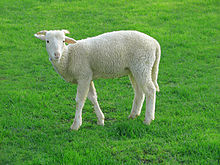
220px-Lamb_09807-a

The name is derived from the Breton an oan (the lamb). Its Gallicized form of Nohan currently appears in the French Top 500 Most Popular Male Names, coming in at #400 (2018).

Noan itself has been in and out of the French Top 500 since 2006.

Noan currently comes in as the 356th Most Popular Male Name in the Netherlands (2018).

Feminine forms are Noann (Breton spelling), Noane, Noanne & Nohane.

Sources

Willa

Use: English, Danish, Dutch, German, Norwegian, Swedish

The name is derived from the old Germanic “will,” meaning “will, desire.” It was borne by a 10th-century Frankish queen known as Willa of Provence (d.924), also known as Guille (GHEE; GHEE-ye) or Guilla.

Another notable bearer was the Italian queen consort, Willa of Tuscany (10th-century).

It was borne by the American novelist, Willa Cather, (nee Wilella) (1873-1947).

It has been in and out of the U.S. Top 1000 since 1880. It peaked at #272 in 1932 and it is currently the 383rd most popular female name (2018).

Other forms include:

  • Wil – la (Catalan)
  • Guille (French, archaic)
  • Guilla (Italian/Spanish)
  • Villa (Italian, archaic)

Sources

Evander

Evander

Origin: Greek
Meaning: “good man”
Gender: Masculine
(ee-VAN-der)

The name is composed of the Greek elements, Greek ευ (eu) meaning “good” and ανηρ (aner, genetive) “man.” It was borne in Roman Mythology by an Arcadian hero who is credited for founding the city of Pallatium and also introducing the alphabet, the Greek religion and laws to the Italian peninsula. It was also borne by a 2nd-3rd-century BCE Greek Philosopher and 1st-Century CE Greek Sculptor.

In Scotland, Evander was adopted as the anglicized form of the Gaelic male name, Iomhair (EE-vor), though an English form (Ivor) already existed and neither Evander or Ivor are really related.

A notable contemporary bearer is American boxer, Evander Holyfield (b.1962).

In the United States, the name only made an appearance in the U.S. Top 1000 one time in 1895, coming in as the 872nd most popular male name.

Short forms include: Evan, Van, and Vandy.

Other forms include:

  • Evandre (Catalan)
  • Evànder (Catalan)
  • Evander (Danish/Dutch/German/English/Hungarian/Norwegian/Portuguese/Swedish)
  • Évandre (French)
  • Euandros (Original Greek form)
  • Evandro (Italian/Portuguese/Spanish)
  • Euander (Latin)
  • Evandrus (Latin)
  • Ewander (Polish)

A feminine form is Evandra.
Sources

Amaia, Amaya

AmayaOrigin: Basque
Meaning: “mother city; the end”
Gender: Feminine
(ah-MYE-ah)

Amaya is the name of a village in Castille-Léon, Spain. It is believed to be from the Basque meaning “mother city” or is perhaps related to the Basque Amaia (the end). The name is often hispanicized as Amaya and is also a common Spanish surname of the same origin. In history, the village of Amaya played a key role in the Roman conquest of Hispania and later among the Visigoths. As a given name, the name was popularized by  the Spanish novel Amaya o los vascos en el siglo VIII (Amaya, or the Basques in the 8th century) by Francisco Navarro-Villoslada (1879). Amaya is the name of the main heroin in the novel. The book later inspired a Spanish opera, Amaya (1920) by Jesús Guridi.

Alternately, Amaya has been listed as a Japanese female name meaning “night rain.” There seems to be a debate regarding the actual existence of this name’s use in Japan. I was unable to verify if Amaya is in fact a truly Japanese name, but many sites list Amaya as composition of the kanji characters 雨 = ama, 夜 = ya (hence: night rain). Amaya may be a newly invented manga name that has only recently come into use in Japan, though there are several well-known Japanese people who have this is as a surname. If any of my readers have any more details regarding its use as a female given-name in Japan, please come forward.

In the English-speaking world, Amaya has recently risen up the charts. In the United States, it is currently the 204th most popular female (2016) and in the UK, the 159th most popular.

In the US, the name seems to have gone up and down since 2000. It peaked at #181 in 2003. Its alternate American spelling of Amayah currently ranks in at #980. Amaia on the other hand has yet to make an appearance in the charts.

In the Netherlands, Amaya currently ranks in as the 393rd most popular female name (2016).

In France, the name has had some minor use among people of Basque descent.

In English, possible short forms include: Amy, Maia and Maya.

Sources

Nova

NovaOrigin: Latin
Meaning: “new”
Gender: Feminine
(NOH-vah)

The name comes directly from the Latin word nova (new). As a given-name, it has been used in Scandinavia, Hungary, France, Quebec, and England since at least the 18th-century. It became even more widespread in the 19th-century. Its use as a given-name in Scandinavia may have been kicked off by Danish astronomer, Tycho Brahe (1546-1601) when he first described the various types of stars known as novas.

Several baby name sites have listed this name as unisex, though possible, I cannot find any historical records indicating this name was ever used on males. Perhaps this confusion stems from its similarity to the male name Noah.

Nova also occurs as a place name of numerous locations throughout the Western World.

In the United States, the name entered the U.S. Top 1000 in 2011 and has risen exponentially since. As of 2016, Nova was the 136th most popular female name, jumping several hundred spots since its inception in 2011 when it was the 886th most popular female name. In the Netherlands and Sweden, it is among the most popular female names, ranking in at #23 (Netherlands, 2017) and #31 (Sweden 2017).

In the UK, Nova was the 400th most popular female name (2016).

Other forms include:

  • Noova (Greenladic)
  • Nowa (Swedish)

Sources

Zara

ZaraThe name has recently become a success in several countries, from England to Turkey, it has several possible derivatives and meanings.

Its English use may have been inspired by the Voltaire play, Zara (1732) (Zaïre in French) which may have been a French corruption of the Arabic female name, Zahra. The play recounts the exploits of a Christian woman named Zara or Zaïre, who is enslaved by Muslims. The name became extremely popular in the U.K. after Princess Anne chose this name for her daughter, Zara Phillips (b.1981).

Alternately, the name has recently become popular in many Slavic countries. It is probably a borrowing from the Bulgarian hypochoristic form of Zaharina (a feminine form of Zachary) or it may be from an Old Slavonic element, žar (fervor, ardor, ember).

Zara currently ranks in several countries’ top female names. Her rankings across the world are as follows:

  • #11 (Malaysia, 2016)
  • #22 (Bosnia & Herzegovina, 2016)
  • #23 (Australia, 2017)
  • #38 (New Zealand, 2016)
  • #40 (Scotland, 2016)
  • #46 (Slovenia, 2016)
  • #56 (Ireland, 2016)
  • #68 (England/Wales, 2016)
  • #197 (Netherlands, 2016)
  • #318 (United States, 2016)

Zara is also the name of a clothing store.

Sources

Iris

IrisOrigin: Greek Ιρις
Meaning: “rainbow”
Gender: Feminine

The name is derived from the Greek “Îris (Ἶρις) Írídos (ίρίδος) “rainbow” and is borne in Greek mythology by the goddess of the rainbow and messenger of the Olympian gods. It later became associated with the body part, the flower, and a colour, all of which were named for the Greek goddess.

In recent years, the name has experienced a surge in popularity in several countries. Its rankings in other countries are as follows:

  • #21 (Iceland 2017, Íris)
  • #25 (Portugal, 2016, Íris)
  • #31 (Sweden, 2017)
  • #32 (France, Paris, 2016)
  • #56 (Catalonia, 2016)
  • #73 (Spain, 2016)
  • #84 (England/Wales, 2016)
  • #85 (Netherlands, 2017)
  • #85 (Slovenia, 2016)
  • #116 (Norway, 2016)
  • #121 (France, entire country, 2016)
  • #186 (United States, 2016)
  • #199 (Scotland, 2016)

Other forms of the name include:

  • Iris Ирис Իրիս (Armenian/Bulgarian/Catalan/Czech/Danish/Dutch/English/Estonian/Finnish/French/German/Greek/Italian/Serbo-Croatian/Norwegian/Polish/Romanian/Slovenian/Spanish/Swedish)
  • Iryda Ірыда (Belarusian/Polish)
  • Irida Ирида (Bulgarian/Croatian/Greek/Italian/Russian/Serbian)
  • Iiku (Finnish)
  • Iiri (Finnish)
  • Iiris (Finnish)
  • Írisz (Hungarian)
  • Íris (Icelandic/Portuguese/Slovak)
  • Iride (Italian)
  • Iridė (Lithuanian)
  • Yryda Ирида (Ukrainian)

Sources


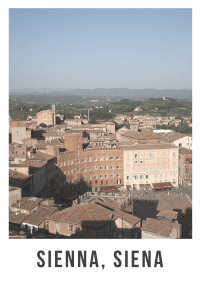
Siena, Sienna

Sienna, SienaThis name has somewhat of a complicated history, though it seems like a modern place-name, it has actually had a long history of use.

Sienna is an alternate spelling for an Italian city in Tuscany. The name itself is believed to be from Saina, which was the name of an Etruscan tribe that inhabited the area prior to the Romans. There is also a legend that it was named for a son of Romulus who was named Senius. The name has also been linked with the Latin senex (old) and the Latin verb, seneo (to be old).

As the name of a colour, it takes its name from the city, where the popular pigment used among artist was first produced. Its use as a colour name in the English language first appears in 1760.

Now as a given-name, this is where things get complicated. Its earliest use appears in the 18th-century, in Spain, Quebec and England. In the case of Spain and Quebec, it was most likely used in honour of St. Catherine of Sienna. In the English examples, it may have been used in reference to the colour. The British have a long history of using names of places and words since the 16th-century.

By the early 1800s, Sienna was a very popular middle name used in Bavaria and Ireland, attached to the name Catherine, so in these cases it was no doubt used in reference to St. Catherine of Sienna in devoutly Catholic pockets of Europe.

Sienna is also the name of several places throughout Poland and occasionally occurs as a surname. In this case, the name is derived from the Polish word, siano (hay).

Sienna currently ranks in the Top 100 of several countries. Its rankings are as follows:

  • #27 (Australia, NSW, 2017)
  • #28 (England/Wales, 2016)
  • #32 (New Zealand, 2016)
  • #68 (Scotland, 2016)
  • #71 (Ireland, 2016)
  • #236 (United States, 2016)
  • #354 (Netherlands, 2016)
  • #625 (Siena, United States, 2016)

A Dutch offshoot is Siënna.

A notable bearer is actress, Sienna Miller (b.1981).

Sources