 Gender: Feminine
Origin: Latin
Meaning: “wood; forest.”
(SIL-vee-ah)
The name is a feminine form of Silvius, which is derived from the Latin silva meaning, “wood; forest.”
In Roman legend it was borne by the mother of Romulus and Remus (the founders of Rome), Rhea Silvia. It has been suggested that at one time she have been worshipped as a minor forest diety.
It was also borne by a 6th-century Italian saint credited as being the mother of St. Gregory the Great.
Before the 16th-century, Silvia’s usage was relegated to continental Europe, it gained notoriety in England after being used by Shakespeare in his 1594 play, The Two Gentleman of Verona.
The spelling of Sylvia has been the standard in the English-speaking world since the 19th-century.
Currently, it is the 554th most popular female name in the United States, (2010). Her rankings in other countries are as follows:
# 61 (Spain, 2010)
# 282 (the Netherlands, 2010)
Other forms of the name include:
Sylviya Сыльвія (Belarusian)
Silviya Силвия (Bulgarian)
Sílvia (Catalan/Portuguese)
Silvija (Croatian/Lithuanian/Slovene)
Lesana (literally meaning “woods; forest” it is sometimes used as a Czech and Slovakian equivalent of Sylvia)
Silvie (Czech)
Silvia (Estonian/Italian/Romanian/Slovak/Spanish)
Sylvia (Finnish/English/German/Scandinavian)
Sylphide (French)
Sylvaine (French)
Sylviane (French)
Sylvie (French)
Szilvia (Hungarian)
Sylvía (Icelandic)
Silva (Italian/Slovene)
Silvestra (Italian)
Silvana (Italian/Hungarian/Slovene)
Silvania (Italian)
Silviana (Italian)
Silvina (Italian)
Silvietta (Italian)
Sylvi (Norwegian)
Sylwia (Polish)
Sil’vija Сильвия(Russian)
Silvena (Slovene)
Silvenka (Slovene)
Silverija (Slovene)
Silvica (Slovene)
Zülfiye (Turkish)
Síl”viya Сі́львія(Ukrainian)
Common diminutives include:
Silva/Silvinka (Czech)
Sylvette (French)
Silviuccia (Italian)
Lyya or Lyka (Russian)
Syl”va or Sylya (Russian)
Ylya (Russian)
It is the name of a classical French ballet, Sylvia, ou La nymphe de Diane, (1876).
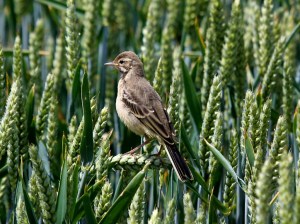
 Sylvia is also the name of a species of warbler.
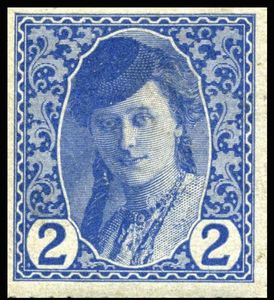
In recent years the name has been borne by American poet, Sylvia Plath (1932-1963), Queen Silvia of Sweden (b.1943)
Masculine forms include:
Silvije (Croatian)
Silvijo (Croatian/Slovene)
Silvio (Croatian/Italian/Portuguese/Spanish)
Sylvain (French)
Silvius (Latin)
Sylwiusz (Polish)
Silviu (Romanian)
Source
- http://www.behindthename.com/name/silvia
 Gender: Feminine
 Gender: Feminine
 Gender: Feminine
 Gender: Masculine
 Gender: Masculine
 Gender: Masculine
 Gender: Feminine
 Gender: Feminine