
Nancy
- Origin: English
- Gender: Female
Originally a medieval diminutive of Anne, Nancy developed from the affectionate form Nan, traditionally explained as arising through the re-bracketing of “mine Ann” as “my Nan.” Nancy was also traditionally used as a familiar form of Agnes, particularly in Scotland. It became established as an independent given name by the 18th century.
From the early to late 20th century, Nancy was among the Top 100 Most Popular Female Names in the United States between 1919 and 1978, peaking at #6 in 1950. It has since fallen considerably in popularity and, as of 2025, ranked at a lowly #965. It has experienced something of a revival in England & Wales, however, where it currently ranks at #78.
Its usage has also spread beyond the English-speaking world, particularly to Francophone and Spanish-speaking countries, as well as Brazil, Czechia, the Netherlands, and the Nordic countries.
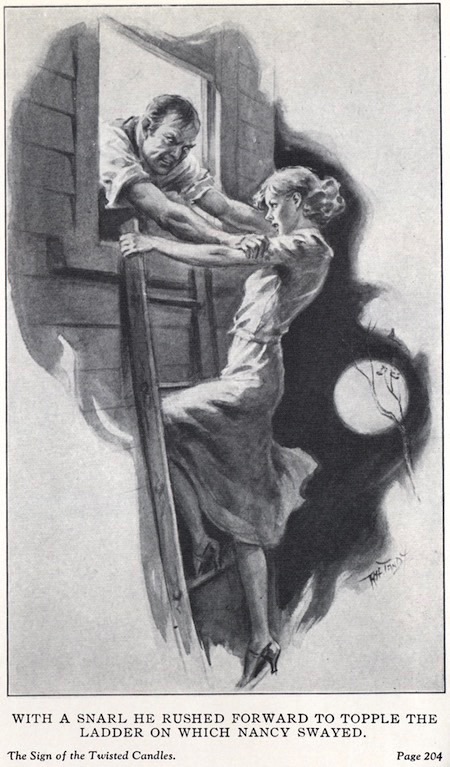
Perhaps the most famous fictional bearer is Nancy Drew, who first appeared in 1930 and became the heroine of a long-running series of mystery novels, as well as numerous film and television adaptations. Other notable bearers include American First Lady and former Hollywood actress Nancy Reagan (1921–2016), former speaker of the house Nancy Pelosi (b. 1940), and American singer Nancy Sinatra (b. 1940).
Other forms include:
- Nensi (Croatian)
- Näncy (Dutch, rare)
- Nanci (English, Portuguese-Brazilian, Latin-American Spanish)
- Nainsí (Gaelic)
- Nansija, Nensija (Latvian)
Despite the identical spelling, the given name Nancy is unrelated to the French city of Nancy, whose name has a separate origin; Nancy is speculated to derive from Nanciacum, a Gaulish personal name.
Sources
Ad space — add Google AdSense code in Appearance › Ad Settings