The name is either derived from the Old Norse fríðr (beautiful; loved) or the German fried (peace, joy), (which is also the same case in Yiddish). In modern Swedish, Danish & Norwegian, the name may also be associated with the word frid, which also means peace.
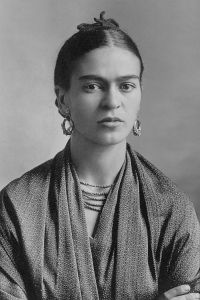
The name has been imported into several cultures. It is not only used in Northern Europe, but has experienced usage in Anglophone, Francophone & Hispanophone countries. A notable bearer from the latter was Mexican artist, Frida Kahlo (1907-1954).
It is currently the 7th Most Popular Female Name in Norway & the 19th Most Popular in Denmark (2018).
In the United States, it currently comes in as the 693rd Most Popular Female Name.
The Frida form is used in the following languages: Danish, Dutch, Czech/Slovak, Estonian, Faroese, Finnish, Hungarian, German, Italian, Latvian, Lithuanian, Norwegian, Portuguese, Slovenian, Spanish, Swedish, Yiddish
Other forms include:
- Fritha (Anglo-Saxon)
- Fryd (Danish, Norwegian, Swedish)
- Freda (English, German, Spanish)
- Frieda (Estonian, German)
- Friida (Finnish)
- Riitu (Finnish)
- Friede (German)
- Friedel, Friedl (German, Yiddish)
- Fríða FREE-thah (Icelandic, Old Norse)
- Fríður FREE-thoor (Icelandic)
- Frid (Norwegian, Swedish)
- Fryda (Polish, Norwegian, Swedish)
- Freyda, Frejda (Yiddish)
Sources
- https://www.nordicnames.de/wiki/Frida
- http://www.vikinganswerlady.com/ONNames.shtml
- https://www.behindthename.com/name/frida