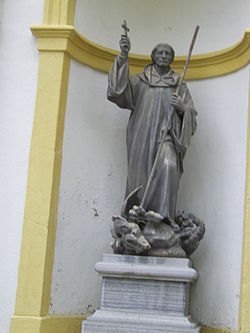
The name is from the Latin cognomen meaning “great,” and by the 11th-century, was imported to Scandinavia as a synchronized name, likely being used as a latinized form of the Old Norse Magni (power; strength).
The name was especially common among Norwegian and Swedish royalty. King Magnus I is the first bearer of the name in the Norwegian line, who was said to be named for King Charlemagne (Carolus Magnus).
It was also borne by several saints, including St. Magnus of Füssen, a 6th-century saint who is credited for converting the Germanic tribes to Christianity in what is now Bavaria.
It has remained a staple in Scandinavia, it currently ranks in as the 15th Most Popular Male Name in Denmark (2018) & the 9th Most Popular Male Name in Norway (2018). His rankings in other countries are as follows:
- #414 (England & Wales, 2018)
- #781 (United States, 2018)
Other forms of the name include:
- Mang (Alemmanish)
- Mogens (Danish)
- Magnuz (Danish, Swedish)
- Mack (English)
- Manu (Finnish)
- Mauno/Maunu (Finnish)
- Magne (French, Norwegian)
- Mânuse (Greenlandic)
- Mághnus, Manus (Irish-Gaelic)
- Magnús (Icelandic)
- Magno (Italian)
- Magnuss (Latvian)
- Magnar (Norwegian)
- Maghons (Old Swedish)
- Mávdnos (Sami)
- Mankan (Swedish)
- Måns (Swedish)
Magna is a feminine form and Magnúsína is an Icelandic feminine form.
Sources