Pascal

Gender: Masculine
Origin: French/German
Meaning: “Easter; relating to Passover.”

The name is derived from the Late Latin Paschalis which is derived from the Latin pascha meaning “Easter” which in turn is derived from the Hebrew word pesach meaning “passover.”

In the early Christian church and even today, the name was usually bestowed upon children born during the Easter season.

The name has also been borne several Christian saints and popes.

In modern English vernacular, a pascal is used to describe the SI unit of pressure, equal to one newton per square metre, which was named for French scientist, Blaise Pascal.

Other forms of the name include:

  • Paskal Паскал (Bulgarian/Croatian/Czech/German/Macedonian)
  • Pasqual (Catalan)
  • Pasco (Cornish)
  • Pascal (Dutch/English/French/German/Romanian)
  • Pascuccio (Italian)
  • Pasquale (Italian)
  • Pasqualino (Italian)
  • Pasquetto (Italian)
  • Pasquino (Italian)
  • Paschalis (Latin/Polish)
  • Paschasius (Latin)
  • Pascoal (Portuguese)
  • Paschal/Pasqual (Romansch)
  • Pascale (Sardinian)
  • Pascual (Spanish)
  • Pasqual (Venetian)

Feminines forms include:

  • Pascale (French)
  • Pascaline (French)
  • Pascala (Italian)
  • Pascalina (Italian)
  • Pasqua (Italian)
  • Pasquala (Italian)
  • Pasqualina (Italian)
  • Pasquetta (Italian)
  • Pasquina (Italian)
  • Paschalina (Polish)
  • Pascuala (Spanish)
  • Pasquita (Spanish)

An Italian female compound form is Pasquarosa.

The designated name-day is May 17 (France/Germany).

Sources
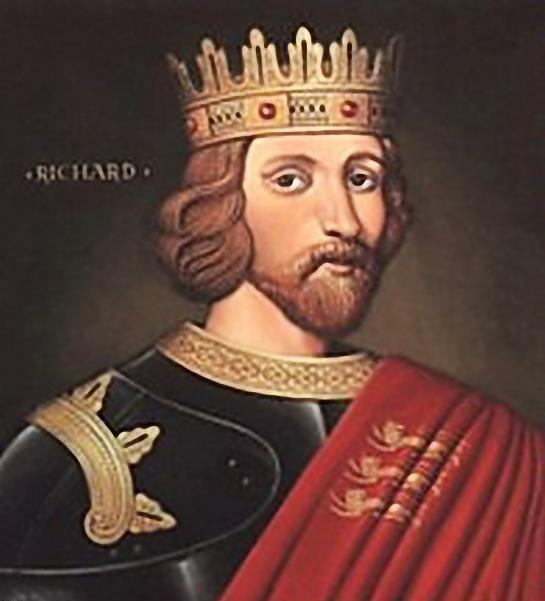
Richard

Gender: Masculine
Origin: German
Meaning: “brave power.”
Eng (RICH-erd)

The name was first introduced into the English speaking world by the Norman Conquerors, and the name has been a long standing classic since.

It was most notably borne by Richard I the Lionhearted of England, who has remained a sort of national folk hero in Britain.

Richard has been declining somewhat in the U.S. popularity charts, coming in as the 107th most popular male name (2008), in 2007, he was the 100th most popular male name.

The name is composed of the Germanic elements ric meaning “power; rule” and hard meaning “brave; hardy.”

His rankings in other countries are as follows:

  • # 53 Ricardo (Chile, 2006)
  • # 39 Richárd (Hungary, 2008)
  • # 328 Ricardo (the Netherlands, 2009)
  • # 480 (the Netherlands, 2009)

Other forms of the name include:

  • Rikard Рычард (Basque/Belarusian/Bosnian/Bulgarian)
  • Richarzh (Breton)
  • Ricard Ричард (Catalan/Occitanian/Serbian)
  • Ričard (Croatian)
  • Rikard (Croatian/Danish/Finnish/Norwegian/Swedish)
  • Richard Ричард (Czech/Dutch/English/French/German/Romanian/Russian/Slovak/Ukrainian)
  • Rijkert (Dutch: RYE-kairt)
  • Riho (Estonian)
  • Rikhard (Finnish)
  • Rickert (Frisian)
  • Ricohard (German: very rare and archaic)
  • Richárdos Ριχάρδος (Greek: Modern)
  • Richárd/Rikárd (Hungarian)
  • Ríkarður (Icelandic)
  • Risteárd (Irish-Gaelic: RISH-taird)
  • Riccadetto (Italian)
  • Riccardino (Italian)
  • Riccardo (Italian: common form)
  • Ricciardo (Italian)
  • Ricco (Italian)
  • Rizzardo (Italian)
  • Rîşarê (Kurdish)
  • Richardus (Late Latin)
  • Ričards (Latvian)
  • Rihards (Latvian)
  • Ričardas (Lithuanian)
  • Ryszard (Polish: RIH-shard)
  • Ricardo (Portuguese/Romanian/Spanish)
  • Rico (Romansch)
  • Rikkar (Saami)
  • Ruiseart (Scottish-Gaelic)
  • Riccardu (Sicilian)
  • Rihard (Slovene)
  • Rhisiart (Welsh)

Diminutives include the Medieval English Hudde (HUD) the inspiration of such surnames as Hudson. Others include Dick, Dicky, Rich, Richie, Rick and Ricky.
Czech diminutive: Ríša
Finnish diminutive: Riku
Polish: RysiekRysioRysiu and Rychu
Slovak diminutives: Rišo, Riško
Spanish: Caíto, Cayo (Guatemala), Ricardito, Rico, Ricky, Riqui

Feminine forms are include:

  • Richardine (French)
  • Ricarda (German/Spanish)
  • Riccarda (Italian)
  • Riccardina (Italian)
  • Ricca (Italian)
  • Ricciarda (Italian)
  • Rizzarda (Italian)

The designated name-days are: April 3 (Czech Republic, France, Hungary and Slovakia), February 7 (Estonia).

Sources

  1. http://www.behindthename.com/php/find.php?name=richard
  2. http://www.askoxford.com/firstnames/richard?view=uk

Dainora

Gender: Feminine
Origin: Lithuanian
Meaning: “wishing to sing; one who longs to sing.”
(dy-NOH-rah)

The name is composed of the Lithuanian elements, dain-(daina), meaning “song” and nor-(noras, norėti) meaning “to wish for.”

The masculine form is Dainoras.

The designated name-day is April 1.

Sources

  1. http://day.lt/vardai/Dainora
  2. http://www.behindthename.com/namedays/lists/lth.php

Pellervo

Gender: Masculine
Origin: Finnish
Meaning: “acre; field.”
(PELL-air-vo)

The name is derived from the Finnish, pelto, meaning, “acre; field.”

In the Kalevala, it appears as the by-name for Sampsa Pellervoinen who was a field hand.

The designated name-day is April 2.

Sources

  1. http://www.nordicnames.de/wiki/Pellervo
  2. Lempiäinen, Pentti: Suuri etunimikirja. WSOY. (1997).

Paraskeve

Gender: Feminine
Origin: Greek
Meaning: “Friday; preparation.”
Παρασκευη

The name is derived the Greek παρασκευη (paraskeue) literally meaning, “preparation” but also the Greek word for Friday.

The name was borne by several Eastern Christian saints, the most notable being an early Christian martyr of Rome of is venerated as the patron saint of the blind.

Sometimes, the name is bestowed upon girls born on Good Friday.

Other forms of the name include:

  • Paraskeva Параскева (Bulgarian/Czech/Serbian)
  • Petka Петка (Bulgarian/Macedonian)
  • Paraskevi Παρασκευη (Greek)
  • Paraskewa (Polish)
  • Prascewia (Polish)
  • Parascheva (Romanian)
  • Praskovya Прасковья (Russian/Ukrainian)

Greek short forms are Paraskevoula, Evi, Vivi and Voula.

Common Russian diminutives are Pan, Parasha, Pasha and Frosya.

A male version is Paraskevas Παρασκευας.

In Greece, the designated name-day is July 26.

Sources

  1. http://www.antiochian.org/martyr_paraskeva
  2. http://www.behindthename.com/name/paraskeve

Jeremiah, Jeremy

Gender: Masculine
Origin: Hebrew, Biblical
Meaning: “Yahweh exhalts.”
Eng (JARE-e-MEE); (JARE-e-MY-ah)

The name is derived from the Hebrew Yirmĭyahu (יִרְמְיָה) meaning, “yahweh exhalts.”

In the Old Testament, Jeremiah was a prophet and author of the Book of Jeremiah and the Book of Lamentations. He warned the Israelites of God’s impending destruction upon them and lived to see the Babylonian Exile.

Jeremy has been attested to have been used as early as the 13th-century but the name Jeremiah did not catch on in the English-speaking world until well after the Protestant Reformation.

In the English lexicon, jeremiah is used to describe somebody who is chronically complaining and lamenting, in reference to the Biblical prophet.

Currently, Jeremiah is the 69th most popular male name in the United States, (2008).

Other forms of the name include:

  • Jeremies (Catalan)
  • Jeremija Јеремија (Croatian/Serbian/Slovene)
  • Jeremjáš (Czech)
  • Jeremia (Danish/Dutch/Finnish/German/Norwegian/Swedish)
  • Jeremias (Finnish/German/Portuguese)
  • Jorma (Finnish)
  • Jérémie/Jérémy (French)
  • Ieremias Ιερεμιας (Greek: Biblical)
  • Yirmiyahu יִרְמְיָהוּ (Hebrew: Biblical)
  • Jeremiás (Hungarian)
  • Hieremias (Latin: Biblical)
  • Jarema (Polish)
  • Jeremi/Jeremiasz (Polish)
  • Jeremiáš (Slovak)
  • Jeremías (Spanish)

A common English short form is Jerry.

A German and Finnish pet form is Jere.

Sources

  1. Jeremiah, New Bible Dictionary, Second Edition, Tyndale Press, Wheaton, IL, USA 1987.
  2. The New Bible Dictionary, Second Edition, 1982 p. 563; See also Jeremiah 31
  3. ‘Introduction to Jeremiah’, The Jewish Study Bible, Oxford University Press, 2004, p. 917
  4. ‘Jeremiah’, New Bible Dictionary, Second Edition, Tyndale Press, 1987 pp. 559-560
  5. Jeremiah 1:1
  6. http://www.behindthename.com/name/jeremiah
  7. http://www.askoxford.com/firstnames/jeremiah?view=uk
  8. http://www.askoxford.com/concise_oed/jeremiah?view=uk
  9. http://en.wikisource.org/wiki/Catholic_Encyclopedia_(1913)/Jeremias_(2)