Thuwaybah, Suwaiba, Sobia

islamic tile


  • Origin: Arabic ثويبة
  • Meaning: “rewards deserving from God.”
  • Gender: feminine

Thuwaybah was the name of one of the sahabah of the Prophet Muhammed who was believed to be his wet nurse.

Other transcriptions include Suwaiba and the more popular Urdu form of Sobia.


Sources

Rosaura

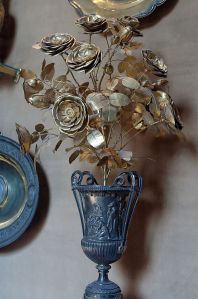
800px-Golden_rose_Biblioteca_apostolica


  • Origin: Late Latin
  • Meaning: “golden rose.”
  • Gender: feminine
  • Usage: Galician, Italian, Spanish

The name is derived from the Latin rosa (rose) & aurea (golden), other sources believe the second element may be from the Latin aura meaning “breath; air.”Some sources believe Pedro Calderón de la Barca invented the name for his 1635 play, Life is a Dream (La vida es sueño in Spanish), but the name seems to have been in use in Italy and Spain for far longer. It also may just be a combination of Rosa & Aura.

In the early modern period, the name may have been used in reference to The Golden Rose, a papal reward of affection that was often given to royalty and high ranking religious officials.


Sources

Sisira

sisira


The name comes from the Sanskrit शिशिर, which can mean “cold, cool, chilly, hoarfrost, or dew.” In the Indian Calendar, sisira refers to the cold season, roughly translating as the winter season, sisira makes up the months of Māgha and Phālguna (January-March in the Western Calendar).

It is the name of a mountain on the base of Mt. Meru and it is also the name of several male characters in the Purana and Itihasa.

As a given-name, it is mainly unisex and was borne by Sri Lankan pop-singer, Sisira Senaratne (1935-2015).

Other transliterations are Śiśira, Shishira and Shashira.


Sources


Wafi, Wafiya

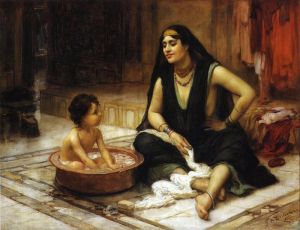
The bathing boy painting


Wafi وَافِي is derived from the Arabic root W-F-Y meaning “faithful; loyal.”

In the Ismaili branch of Islam, it was borne by Ahmad al-Wafi, the 8th Ismaili Iman (766-822 CE).

Another form is the Turkish Vâfî.

Wafia and Wafiyaوفيّة  is the feminine form.


Sources

Eadric, Edric(h)

gettyimages-676166576-1024x1024


  • Origin: Anglo-Saxon
  • Meaning: “rich ruler.”
  • Gender: Masculine
  • ENG (ED-drick; EE-drick)

The name is composed of the Anglo-Saxon elements, ead (rich) & ric (ruler). It was borne by a 6th-century King of Kent, an 11th-century Mercian ealderman known for his treachery with the Danes, and an Anglo-Saxon resister against the Normans..


It is the name of a character in the Frank Herbert’s 1969 novel, Dune.


Other forms include:

  • Ædric (Anglo-Saxon)
  • Edric (Czech, Spanish)
  • Adric (English)
  • Eadrich (English)
  • Odrich (English)
  • Edricus (Latin)

Sources

Jadirah, Yadira

Yadira Jimenez

Columbian-Mexican actress, Yadira Jimenez


  • Origin: Arabic جَدِيْرَة
  • Meaning: “essence; nature; deserving.”
  • Gender: feminine
  • Arab (jah-DEER-ah); Sp (yah-DEE-rah)

Jadirah is derived from the Arabic root J-D-R meaning “essence; nature” or “deserving.”

Its Spanish form of Yadira first came into use in Spanish-speaking countries in the early 20th-century. It may have been introduced by Lebanese immigrants to Latin America. The name became especially widespread, especially in Mexico by Columbian actress Yadira Jiménez (b. 1928), who was in several Mexican films during the 1940s.

In the U.S., Yadira appeared in the U.S. Top 1000 between 1975-2009 and peaked at #505 in 2005.

Another Spanish form is Yadhira.

Alternate transliterations for its original Arabic form are Jadeera & Jadira.


Sources

Venkata, Venkat


The name is taken from that of a hill in the Southern Indian town of Tirumala in which there is a Hindu temple dedicated to the Hindu God, Venkataswara (Lord of Venkata). Venkata itself is of uncertain meaning but according to the Brahmanda and Bhavishyottara Puranas it means “destroyer of sins.” The god Venkataswara is one of the many incarnations of Lord Vishnu in Hinduism.

Venkata was also borne by several South Indian kings.

Another form is Venkat.


Sources

Zuleika, Zuleikha

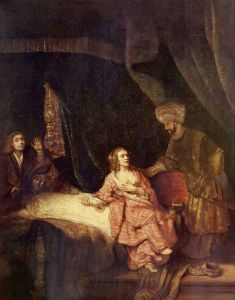
800px-Rembrandt_Harmensz._van_Rijn_065


  • Origin/Meaning: unknown زُلَيْخا זוליכה‎
  • Gender: female
  • (zoo-LAY-kah)
  • Usage: Arabic, Armenian, English, German, Italian, Ladino, Persian, Portuguese – Brazilian, Spanish

The name is of uncertain origin or meaning, since it appears in Muslim and Medieval Jewish tradition as the name of the wife of Potiphar (who is unnamed in the Old Testament), it is often suspected to be of Coptic origin, though the name is not traditionally used among contemporary Copts.

The wife of Potiphar is mentioned in the Bible as trying to seduce Joseph and later falsely claiming he tried to rape her, which leads to Joseph’s unjust imprisonment. In Medieval Islamic tradition, the story was reinterpreted as a popular love story, the subject of much poetry, she is named Zuleikha and her love for Joseph was interpreted by Sufi poets, especially Rumi and Hafez, to represent the longing the soul has for God. Zuleika is also attributed to be her name in the Sefer haYashar, also known as the Book of Jasher, a Jewish midrash of unknown authorship.

In the English-speaking world, the name first came into use in the early 19th-century, it was most likely popularized by Byron’s 1813 poem, The Bride of Abydos, in which it is the name of the heroine. It was also used by the German poet Goethe for his 1810 poem entitled, Book of Zuleika, in his collection of Eastern inspired poems called West–östlicher Divan. It is the name of the eponymous character in the 1911 novel, Zuleika Dobson by Max Beerbohn, which was later adapted into a musical.

The name is also used in Spanish-speaking countries and Brazil.


Other forms include:

  • Zulejka (Albanian, Bosnian)
  • Züleyxa (Azeri)
  • Zuleica (Catalan, Portuguese, Spanish)
  • Zulejha, Zulejka Зуле́йха, Зулейка (Chechen, Russian)
  • Zelikah (Dutch)
  • Zouleïkha (French)
  • Züleyha (Turkish)
  • Zulayho (Uzbek)

Other Arabic transliterations include: Zulaykha and Zulekha.

Spanish diminutives include: Zula & Zuzu.


Sources

Wilbert

Boy_bishop


  • Origin: German
  • Meaning: “bright will.”
  • Gender: masculine

The name is composed of the Old German elements will (will, desire) & beraht (bright). It was borne by a 9th-century bishop of Cologne and a 9th-century Bishop of Sherborne, England.

Wilbert appeared in the U.S. Top 1000 between 1880 & 1990 and peaked at #160 in 1920.

Recent notable bearers include English children’s author of Thomas the Tank Engine Fame, Wilbert Awdrey (1911-1997) & American singer & songwriter, Wilbert Harrison (1929-1994).


Wilbert is also used in German-speaking countries, French-speaking countries (now rare), the Netherlands and in the Scandinavian countries.

Other forms include:

  • Willibert (German)
  • Willabertus (Late Latin)

Common English short forms are Wilby, Will & Willy.


Sources

Ianeira, Ianira, Yanira

Les_Oceanides_Les_Naiades_de_la_mer

Les Oceanides Les Naiades de la mer. Gustave Doré, 1860s


  • Origin: Greek Ιάνειρα Ιάνιρα
  • Meaning: uncertain
  • Gender: feminine
  • (yah-NEER-ah)

The name is Greek but of uncertain derivation, it may be linked with the term Ionian. In Greek mythology, it is borne by an Oceanid nymph who was said to be gathering flowers with Persephone when she was abducted by Hades. It is also borne by a nereid.

In recent years, its Spanish forms of Janira & Yanira have become common in Spanish-speaking countries.

Other forms include:

  • Janira (Catalan, Spanish)
  • Ianira (Italian, Greek)
  • Yanira (Spanish)

Sources