Thora

Gender: Feminine
Origin: Old Norse
Eng (THORE-ah); Fare/Ice (THOH-rah); Nor/Swe (TOH-rah)

The name is derived from the Old Norse, Þóra, a feminine form of Þórr, meaning, “thunder.”

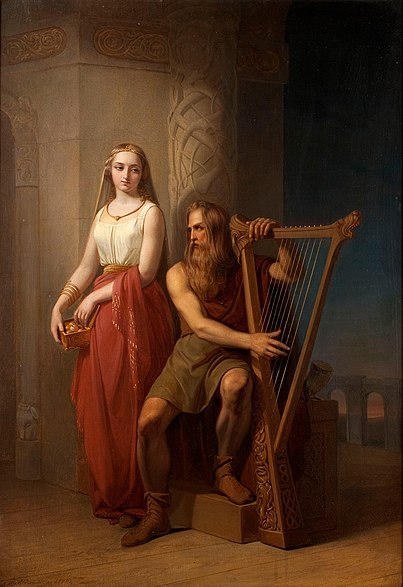
In Norse legend the name is born by Thora Town-Heart, known in Norse as Þóra Borgarhjörtr, the daughter of Herrauðr, the Earl of Götland. According to the legend, Thora was held captive in her room by a serpant. Her father promised that any man who was able to kill the serpent could marry his daughter. Ragnar Loðbrók took up the challenge and was successful in killing the serpent and married Thora.

Its Faroese form of Tóra is currently the 7th most popular female name in the Faroe Islands.

Other forms of the name include:

  • Thora (English/German/Scandinavian)
  • Tóra (Faroese/Old Norse)
  • Þóra (Icelandic/Old Norse)
  • Tore (Norwegian)
  • Torø (Norwegian)
  • Tora (Scandinavian)

The name is also borne by American actress, Thora Birch (b.1981) and the late British actress, Dame Thora Hird (1911-2003).

Talitha

Gender: Feminine
Origin: Aramaic
Meaning: “little girl.”
Eng (tuh-LEE-thuh; TAL-i-thə); Dutch/Scan (tah-LEE-tah)

The name is taken from a phrase in the New Testament as spoken by Jesus to the dead daughter of Jairus in Mark (5:41), talitha cumi, meaning, “arise little girl.”

Its occurrence as a name seems to be traced to the Puritans of England and America. One interesting record of the name is of a girl born in England in 1861 who was christened: Talitha-Cumi People.

It also the name of two stars, which is derived from the Arabic,  القفزة الثالثة (at-tālitah), meaning, “the third leap.”

As of 2010, its continental form of Talita was the 7th most popular female name in the Faroe Islands.


Sunniva

Gender: Feminine
Origin: Anglo-Saxon
Meaning: “sun gift”
Sunniva: (sun-NEE-vah); (SUN-nih-vuh); Synnove (sewn-NEW-veh) the Y is like a French U and the umlauted O is like the French eu.

The name is derived from the Anglo-Saxon name, Sungifu, which is composed of the elements sun meaning, “sun” and gifu meaning, “gift.”

The name was attributed to an Irish princess and saint in the 1170 Norwegian work, (written in Latin), Acta sanctorum in Selio.

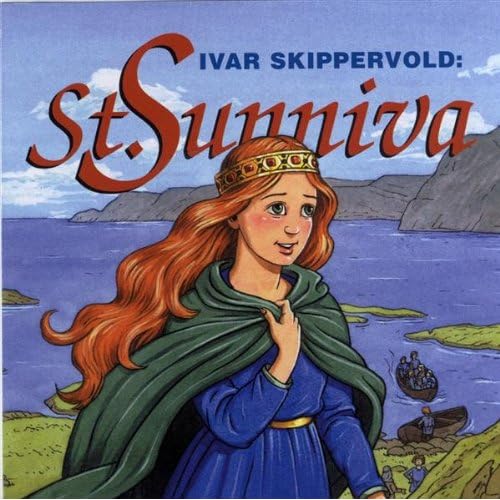
The book recounts the legend of St. Sunniva, who fled her native homeland in order to escape the advances of an unwanted suitor. She and her entourage ended up landing in what is now Selje Norway, where they took refuge in a cave. When the local inhabitants accused them of stealing sheep, it is said that rocks fell and miraculously closed off the cave to the angry inhabitants.

In 996, King Olaf Tryggvason excavated the cave where he found the body of the saint, (who had been dead hundreds of years), miraculously intact.

King Olaf designated her as the patron saint of the municipality of Selje. An abbey was built over the site of the cave.

Another legend attributed to her says that when fires ravashed the area of Bergen, between 1170-1 to 1198, the remains of the saint were taken from her reliquary and sat up in a sitting position, which miraculously stopped the spread of the fire.

As of 2010, its Faroese form of Sunneva was the 7th most popular female name in the Faroe Islands, while Sunniva was the 44th most popular female name in Norway, (2010).

Other forms of the name include:

  • Sungifu (Anglo-Saxon)
  • Synne (Norwegian/Danish: originally a diminutive, now used as an independent given name)
  • Sunneva (Faroese/Icelandic)
  • Sunnefa (Icelandic)
  • Sunníva (Icelandic)
  • Sunnifa (Middle Scandinavian)
  • Sunni (Norwegian)
  • Sunniva (Norwegian)
  • Synnev(a) (Norwegian)
  • Synøve/Synnøve (Norwegian)
  • Sönne (Swedish)
  • Synnöve (Swedish)

Possible nickname options include Sunny, Sunna, Sun or Neve or Niva.

In 2007, Sunniva was the 47th most popular female name.

The designated name-day is July 8th.

Sarita

Gender: Feminine
Origin: Spanish; or Indian सरिता
Meaning: “river.”
Ind (SAH-ree-tuh); Sp (sah-REE-tah)

The name could either be an Indian female name, meaning, “river” or it could be a Spanish diminutive form of Sarah.

As of 2010, Sarita was the 7th most popular female name in the Faroe Islands.

Rói

Gender: Masculine
Origin: Old Norse
Meaning: “fame.”
(ROH-ee)

The name is derived from the Old Norse element, hróð, meaning, “fame.”

As of 2010, Rói was the 7th most popular male name in the Faroe Islands.

Other forms of the name include:

  • Roi (Danish)
  • Rói (Faroese/Old Norse)
  • Hrói (Icelandic/Old Norse)
  • Roe (Norwegian)

Hjalti

Gender: Masculine
Origin: Old Norse
Meaning: “hilt” or; “from Hjaltland.”
(YAHL-tee)

The name could either be derived from the Old Norse, hjalti, meaning “from Hjaltland” or it could be from, hjalt, meaning, “hilt.”

As of 2010, Hjalti was the 7th most popular male name in the Faroe Islands.

Other forms of the name include:

  • Hjalte (Danish/Swedish)
  • Helte (English)
  • Hjalti (Faroese/Icelandic/Old Norse)

An Icelandic feminine form is Hjalta.

Fróði, Frodo

Gender: Masculine
Origin: Old Norse
Meaning: “clever; wise.”
Old Nor (FROH-thee); Eng (FRO-do); Scan (FROH-deh)

He is the progenitor of the Tolkien name, Frodo, and is derived from the Old Norse, fróðr, meaning, “clever; wise.”

Its Tolkien version of Frodo, was inspired by the same Norse elements, and is found in The Lord of the Rings (1959) as the name of the hobbit hero, Frodo Baggins, the bearer of the One Ring and the one who must destroy it.

As of 2010, Fróði was the 7th most popular male name in the Faroe Islands.

Other forms of the name include:

  • Frodo (English)
  • Fróðar (Faroese)
  • Fróði (Faroese/Icelandic/Old Norse)
  • Froder (Norwegian)
  • Frode (Scandinavian)

An Icelandic feminine form is Fróða.

Bragi

Gender: Masculine
Origin: Old Norse
Meaning: “poetry.”
(BRAH-gee)

The name is derived from the Old Norse, bragr, meaning, “poetry”. In Norse Mythology, Bragi was the god of poetry and the husband of Idunn.

He is believed to greet the noble dead into the halls of Valhalla.

The name was also borne by several Norse skalds, whether Bragi was their true given name or a title given to them due to their talents in poetry is unknown.

It is believed that the modern English verb “to brag” is possibly related to bragr as this was also the term used for toasting in Nordic culture. Most of these toasts encompassed long tomes for the person being toasted about, hence, bragging.

As of 2010, Bragi was the 7th most popular male name in the Faroe Islands, while its modern Scandinavian version of Brage is currently the 59th most popular male name in Norway, (2010).

Other forms of the name include:

  • Bragi (Faroese/Icelandic/Old Norse)
  • Brage (Scandinavian)

Bjartur

Gender: Masculine
Origin: Old Norse
Meaning: “bright; light.”
(BYAR-toor)

The name is a modern Icelandic and Faroese form of the Old Norse male name, Bjartr, which comes directly from the word, “bright; light.” The name shares the same etymology with Bjørt, Bertha and Bert.

As of 2010, Bjartur was the 8th most popular male name in the Faroe Islands.

Other forms of the name include:

  • Bjarti (Faroese)
  • Bjartur (Faroese/Icelandic)
  • Bjart(e) (Norwegian)
  • Bjerte (Norwegian)
  • Bjartr (Old Norse)