Embla

Photo by Jelena Kostic on Pexels.com
  • Origin: Old Norse
  • Meaning: unknown
  • Gender: feminine
  • EM-blah

The name appears in Norse Mythology as the name of the first woman, who has a husband named Ask. They are attested to in the Poetic Edda and the Prose Edda.

The name Embla itself may derive from the Proto-Norse *elm-la (elm tree), the Proto-Norse *Ambilō (vine) or the Proto-Norse eim + la (firemaker) and it has even been connected with the Germanic root word, amal (work).

It is first attested to in Sweden in 1882, in Norway in 1900, and in Iceland after 1950, however, it may have been in use in Medieval times as well.

Between 2010 and 2016, this was among the most popular female names in Iceland. In Iceland, it peaked at #8 in 2016 . It is currently the 96th Most Popular Female Name in Norway (2023).

Sources

Shair, Shaira

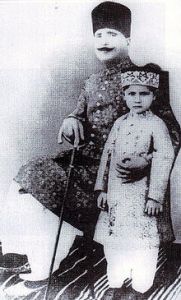
220px-Iqbal_and_son_Javid_in_1930

Allama Iqbal & Son (1930)


Shair (pronounced SHAH-eer) is a masculine name from the Arabic شاعر؛ meaning, “poet.”

It is the name of the oldest Urdu-language literary magazine (circ. 1930).

Among Pakistani families, both its feminine and masculine form may be used in honour of Shair-e-Mashriq (nee Muhammed Iqbal (1877-1938), known as Allama Iqbal, a British Indian poet who was known to have inspired the Pakistani Movement.


Its feminine form of Shaira (pronounced SHY-rah) also exists and has become widespread in Latin America and the Philippines since the 1980s. It is borne by Filipina photographer, Shaira Luna (b. 1986) and Filipina actress Shaira Diaz (b. 1995).


Sources


Calliope

Origin: Greek
Meaning: beautiful voiced
Gender: Female
Pronunciation: kuh-LIE-uh-pee

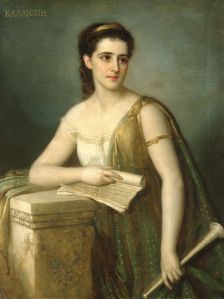
The name is composed of the Greek elements, καλλος (kallos) “beauty” and οψ (ops) “voice.” It is borne in Greek mythology by the muse of epic poetry and eloquence. She was said to be the mother of Orpheus and was said to be the chief among the muses by Hesiod and Ovid.

The name is also borne by a Catholic and Christian Orthodox saint who was tortured and martyred for refusing a suitor who wanted her hand in marriage as well as for her to renounce her faith.

It is also the name of a type of musical instrument as well as genus of hummingbird.

In recent years, it is the full name of a fictional character on the popular tv series, Grey’s Anatomy, Callie Torres, portrayed by Sara Ramirez.

In the English-speaking world, the name first came into use in the early 18th-century.

The name recently entered the U.S. Top 1000 Female Names, coming in as the 939th most popular female name.

A common short form is: Callie.

Other forms include:
Kalliope Կալլիոպե(Armenian/Danish/Dutch/Finnish/German/Estonian/Norwegian/Polish/Romanian/Swedish)
Kalіё́pa Каліё́па(Belarusian)
Kaliopa Калиопа(Bulgarian/Serbo-Croatian/Slovenian)
Cal·líope (Catalan)
Kalliopé (Czech/Hungarian/Slovak)
Calliope (French/English/Italian)
K’aliop’e კალიოპე (Georgian)
Kalliόph Καλλιόπη (Modern Greek)
Kallíópa (Icelandic)
Kaliopė (Lithuanian)
Calíope (Portuguese/Spanish)
Kalliopa Каллиопа(Russian/Ukrainian)

Sources

https://en.wikipedia.org/wiki/Calliope
https://www.behindthename.com
https://www.familysearch.org
https://www.ssa.gov
http://www.theoi.com

Bragi

Gender: Masculine
Origin: Old Norse
Meaning: “poetry.”
(BRAH-gee)

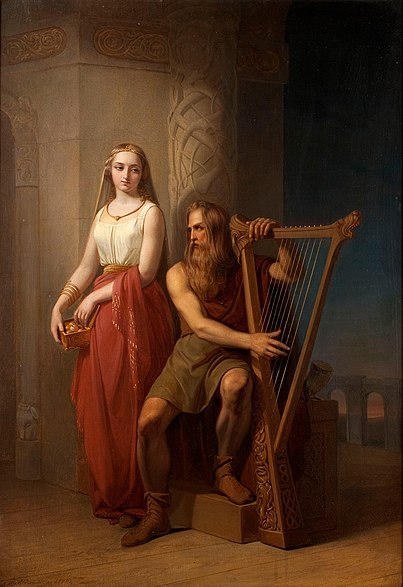
The name is derived from the Old Norse, bragr, meaning, “poetry”. In Norse Mythology, Bragi was the god of poetry and the husband of Idunn.

He is believed to greet the noble dead into the halls of Valhalla.

The name was also borne by several Norse skalds, whether Bragi was their true given name or a title given to them due to their talents in poetry is unknown.

It is believed that the modern English verb “to brag” is possibly related to bragr as this was also the term used for toasting in Nordic culture. Most of these toasts encompassed long tomes for the person being toasted about, hence, bragging.

As of 2010, Bragi was the 7th most popular male name in the Faroe Islands, while its modern Scandinavian version of Brage is currently the 59th most popular male name in Norway, (2010).

Other forms of the name include:

  • Bragi (Faroese/Icelandic/Old Norse)
  • Brage (Scandinavian)

Deborah

Gender: Feminine
Origin: Biblical Hebrew
Meaning: “bee.”
דְּבוֹרָה
Eng (DEB-uh-ruh); Eng (deh-BORE-uh)

In the Old Testament, the name is found in the Book of Judges as the name of a prophetess and female judge who led a defeat against the Canaanites.

It was also borne by a nurse of Rebecca.

The name has always been a common Jewish name, but did not catch on with Christians until after the Protestant Reformation, when the name became especially prevalent among the Puritans.

Deborah experienced a sharp vogue in the mid 20th century when, in 1955, she ranked in as the 2nd most popular female name in the United States. Deborah remained in the top 10 between 1950 and 1962. As of 2010, Deborah only ranked in as the 776th most popular female name.

Currently, its Portuguese form of Débora is the 88th most popular female name in Brazil, (2011). Her rankings in other countries are as follows:

  • # 328 (France, 2009)
  • # 491 (the Netherlands, 2010)

Other forms of the name include:

  • Deborha (Amharic)
  • Diba دیبا (Arabic)
  • Debara Дэбара (Belarusian)
  • Dihya (Berber)
  • Debora დებორა Девора (Bulgarian/Czech/Dutch/Finnish/Georgian/German/Italian/Polish/Russian/Scandinavian)
  • Devora Девора (Bulgarian)
  • Dèbora(Catalan)
  • Debra (English)
  • Deboora (Estonian)
  • Débora (French/Portuguese/Spanish)
  • Debbora Δεββωρα (Greek: Biblical)
  • Devorah דְּבוֹרָה (Hebrew: Biblical)
  • Dvora/Dvorit דְּבוֹרָה (Hebrew: Modern)
  • Debóra (Icelandic)
  • Deborra (Late Latin)
  • Depke (Plattdeutsch)


Common Nicknames include:

Deb, Debbie (English)
Debbos, Debo, Deby (German)

Other notable bearers include: British actress, Deborah Kerr (1921-2007); American pop singer, Deborah “Blondie” Harry (b.1945); American Singer, Debbie Gibson (b.1970); Italian actress, Debora Caprogli0 (b.1968); Estonian poet and translator, Debora Varaandi (1916-2007); Polish philsopher and poet, Debora Vogel (1900-1942); Belgian actress, Déborah François (b.1987).

The designated name-days are: April 24 (Poland); September 21 (France); November 4 (Poland).

Sources

  1. http://www.behindthename.com/php/find.php?name=deborah
  2. http://www.jewishencyclopedia.com/view.jsp?artid=689&letter=J&search=Judges
  3. http://www.newadvent.org/cathen/04663a.htm
  4. http://www.houseofdavid.ca/anc_heb.htm
  5. http://www.houseofdavid.ca/anc_heb_6.htm#Deborah

Laïs

Gender: Feminine
Origin: Greek/Celtic
Meaning: debated
(lah-YEES)

The name could be of a few derivatives depending on the bearer of the name. It could be a Greek name, of uncertain meaning. It was borne by two very famous hetaeras of the ancient world. Laïs of Corinth was alive during the Peloponnesian War and was said to be the most beautiful woman of her time, another courtesan of the same name is often confused with the former, Laïs of Hyccara, was a rival of Phryne and was said to be stoned to death by the jealous women of Thessaly.

Laïs could also be a plural form of lai, a type of Provençal or Breton lyrical narrative poem written in octosyllabic verse which often deals with tales of romance and adventure. In this case, it is argued that the source of the word may be from the Celtic meaning “song” or from the Old High German word, leich, meaning “song; melody.”

It could also be the name of the botanical genus of hippaestrum, erroneously referred to as  amaryllis, they are endemic to Central and South America.
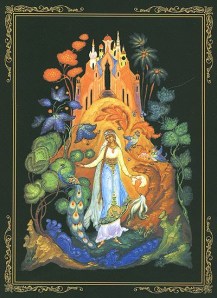
Lais is also the name of a castle in Estonia.

Currently, the Portuguese rendition of Laís is the 56th most popular female name in Brazil, (2011).

Other forms of the name include:

  • Laïs (French/Greek)
  • Laïda Λαΐδα (Modern Greek)
  • Laís (Portuguese)

Ludmila

Gender: Feminine
Origin: Slavic
Meaning: “dear to the people.”

The name is composed of the Slavic elements lud (people; folk) and mil (dear; beloved; kind). The name is most likely a remnant from pre-Christian Slavic culture and survived due to a popular Czech saint of the same name.

St. Ludmila of Bohemia is considered the patron saint of Bohemia and is the mother of Good King Wenceslaus.

Alexandr Pushkin also used the name for his heroine in his 1820 poem based on Russian folklore, Ruslan and Ludmila. M. Glinka followed suit by creating an opera based on the poem.

Around the same time, in Poland, the name was popularized by a Romance written by Leo Potocki entitled, Żelisław & Ludmiła (1816).

As of 2009, Ludmila was the 20th most popular female name in Argentina.

Other forms of the name include:

  • Ljudmila/Lyudmila Людмила (Bulgarian/Hungarian/Russian/Slovene)
  • Ludmila Људмила (Czech/Serbian/Slovene)
  • Ludmiła (Polish)
  • Ludomiła (Polish)
  • Ludzimiła (Polish)
  • Ludźmiła (Polish)
  • Ľudmila (Slovak)
  • Lyudmyla Людмила (Ukrainian)

Diminutives include:

  • Lída (Czech)
  • Ljuda/Luda (Russian)

Masculine forms include

  • Lyudmil/Ljudmil Людмил (Bulgarian)
  • Ludmił (Polish)
  • Ludomił (Polish)


Sol

Gender: Feminine
Origin: Old Norse/Latin/Spanish
Meaning: “sun”

The name is believed to be of ancient Indo-European roots and in Norse Mythology, she is the personification of the sun. Sól appears in Old Nordic literature, such as, the Prose Edda, where she is attested as being the sister of the Moon (Máni) and the daughter of Mundilfari. It is foretold that in the coming days of Ragnarók, she shall be devoured by the Fenris wolf, but beforehand, she shall give birth to a daughter who will take her place after the great battle.

Many scholars have theorized that the goddess may be an extension of a proto-European bronze age goddess and may be related to the Sanskrit Surya. This theory is supported by the fact that similar attestations and names appear in other Pre-Christian European religions, such as the Lithuanian Saulė, the Gaulic Saulis and the Slavic Solnitse. In Roman mythology, Sol was personified as a man.

In modern Spanish, Swedish and Norwegian, it is the word for sun and is occasionally bestowed as a female given name. It has recently become more common in Latin America, where it was originally used as a short form of Marisol, but is now more often used as an independent given name.

Currently, Sol is the 27th most popular female name in Argentina, (2009).


Myra

Gender: Feminine
Origin: English
MY-rah

This week I feature another literary invention, Myra.

The name is believed to have been created by Sir Philip Sidney’s very own biographer, Fulke Greville, the 1st Baron Brooke (1554-1628). Not only was he an Elizabethan administrator but he was also an accomplished poet. Greville is believed to have derived the name from the Latin, myrra (myrrh).

It is also the name of an ancient city in Anatolia.

The name is currently the 964th most popular female name in the United States (2010).

A Spanish version is Mayra, which was the 65th most popular name in Chile in 2006 and the 863rd most popular female name in the United States (2010).

Source

  1. http://www.behindthename.com/name/myra

Thaddeus

Gender: Masculine
Origin: Aramaic
Meaning: uncertain
Eng (THAD-dee us; TAD-dee-us)

The name is a Greek transliteration of the Aramaic male name, Thaddai, which is argued to either be derived from an Aramaic word meaning heart or to be an Aramaic version of the Greek male name, Theodore.

In the New Testament, the name is borne by one of the 12 Apostles, known as Jude Thaddeus, especially among Catholics. He is popularly known as St. Jude, St. Thaddeus or St. Jude Thaddeus and is venerated as the patron saint of lost causes.

In American history, the name was borne by the Polish borne revolutionary hero, Taddeusz Kosciuszko (1746-1817).

In 2010, Thaddeus was the 983rd most popular male name in the United States. In Slovenia, Tadej was the 58th most popular male name of 2010.

The name Tadeusz, has always been a popular male name in Poland, it is the name of the title character of one of Poland’s beloved literary classics, Pan Tadeusz by Adam Mickiewicz.

Other forms of the name include:

Aday (Aramaic)
T’adeos Թադէոս (Armenian)
Tadevuš (Belarusian) (tah-DEH-voosh)
Tadija (Croatian) (TAH-dee-yah)
Tadeáš (Czech/Slovak) (tah-deh-AHSH)
Thaddée/Taddée (French) (tah-DAY)
Thaddäus (German) (tad-DAY-oos)
Thaddaeus/Thaddaios  Θαδδαιος (Greek: Biblical)
Tádé (Hungarian) (TAH-day)
Taddeo (Italian) (tah-DAY-o)
Tadas (Lithuanian) (TAH-dahs)
Tadeušas (Lithuanian) (TAH-deh-oo-SHAHS)
Tadeusz (Polish) (tah-DAY-oosh)
Tadeu (Portuguese)
Faddei/Faddey Фаддей (Russian) (FAD-day)
Tadej (Slovene) (tah-DAY)
Tadeo (Spanish) (tah-DEY-o)

Common English diminutives are Tad, Thad and Teddy. In Polish it is Tadek.

The designated name-days are: June 25 (Slovakia), October 28 (Poland) and October 30 (Czech Republic),

Feminine forms include the Italian, Taddea and the Polish, albeit rare, Tadea.

Source

  1. http://www.behindthename.com/name/thaddeus