 Gender: Feminine
Origin: Greek
Meaning: “Bethlehem”
ΒΗΘΛΕΕΜ
The name is derived from the Greek word for Bethlehem and is usually bestowed upon girls born around the Christmas holiday.
Source
Gender: Feminine
Origin: Greek
Meaning: “Bethlehem”
ΒΗΘΛΕΕΜ
The name is derived from the Greek word for Bethlehem and is usually bestowed upon girls born around the Christmas holiday.
Source
Gender: Masculine
Origin: English
The name is the English form of the Latin, Placidus, meaning “calm; placid.”
The feminine form of Placidia was borne by the daughter of Emperor Theodosius I.
The name was never very common in the English-speaking world, however, it was occasionally used by the Puritans.
Other forms the name include:
Placid (English/Hungarian)
Placidino (Italian)
Placido (Italian)
Placyd (Polish)
Plácido (Portuguese/Spanish)
Placidus (Latin)
Feminine forms include:
Placide (French)
Placida (Italian)
Placyda (Polish)
Placidia (Sardinian/Sicilian)
The designated name-day throughout Europe is October 5.
The name is borne by 6th-century Italian monk, St. Placido; 17th-century English Protestant Minister, John Placid Adelham; 20th-century Catholic Indian theologian, Father Placid J Podipara; world famous Spanish tenor and opera singer, Plácido Domingo.
Source
 Gender: Masculine
Origin: Biblical Hebrew
Meaning: “lion of God.”
אֲרִיאֵל
Eng (Air-ee-el): Mod Heb (AHR-ee-EL)
The name is from the Biblical Hebrew, meaning “lion of God” and is found in the Old Testament as another name for the city of Jerusalem.
In Jewish and Christian apocrypha, it is also the name of an archangel, believed to be the angel who has authority over the Earth and its elements.
As a given name, it has been used by Jews, exclusively as a masculine name for centuries. It has only been in recent years, most notably, following the release of Walt Disney’s, the Little Mermaid (1989), that is has been given to females.
As a male name, it was the 556th most popular male name in the United States (2009), while for females it was the 206th most popular (2009).
In 2006, Ariel was the 78th most popular male name in Chile.
Shakespeare used this name for one of his characters in his play, The Tempest (1611).
Other forms of the name include:
Ariel (Catalan/English/French/German/Hebrew/Hungarian/Polish/Spanish)
Ariël (Dutch)
Feminine forms include:
Ariëlle (Dutch)
Arielle (French)
Ariela (German/Modern Hebrew/Polish/Spanish)
Ariella (Italian)
Hebrew short forms for the masculine version include: Ari and Arik.
A Polish diminutive form is Arielka.
Other notable bearers include: Ariel Sharon, former Israeli Prime Minister (b.1928); Polish soccer player, Ariel Jakubowski (b.1977); Polish Soccer Player, Ariel Borysiuk (b.1991); Argentine writer, Ariel Dorfman (b.1948); Mexican soap actor, Ariel López Padilla (b.1962); Argentine soccer player, Ariel Ortega (b.1974).
The designated name-day is October 1 (France).
Source
Gender: Masculine
Origin: Polish
Meaning: “Lord thoughts; lordly thoughts.”
The name is a very old Polish male name composed of the elements, wito, meaning (lord) and mysł (thoughts).
The name is out of usage in Poland and is mostly associated with the name of a village.
The designated name-days are June 11 and September 2nd.
Sources
 Gender: Masculine
Origin: Lithuanian
Meaning: unknown
(NEH-moo-nahs)
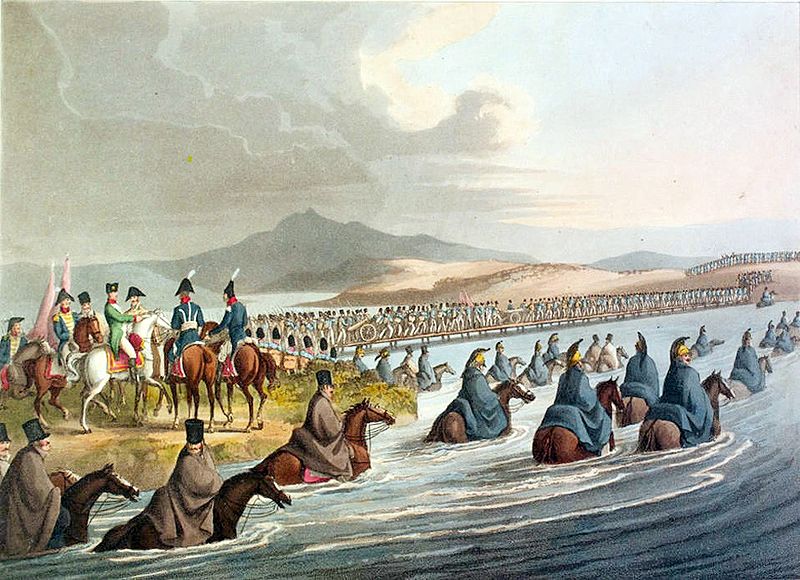
The name is derived from the name of a river in Lithuania, Neman.
In Lithuanian, the Neman is referred to as the Father of Rivers and is the subject of a famous Lithuanian poem which can be recited by most Lithuanians, written by Maironis, goes as follows:
| Lithuanian lyrics | Approximate English translation |
| Kur bėga Šešupė, kur Nemunas teka | Where the Šešupė runs, where the Neman flows |
| Tai mūsų tėvynė, graži Lietuva | That’s our homeland, beautiful Lithuania |
The origin and meaning of the name is debatable. Some sources claim it is derived from an Old Baltic source referring to a damp place while others will insist that it was the name of a Baltic god.
The designated name-day is August 20.
Sources
Gender: Feminine
Origin: Lithuanian
Meaning: “plain; complain; console; comfort.”
(GWOH-stey)
The name is from the Lithuanian word guostis meaning “complain; plain; console; comfort.”
It is also the name of a river in Lithuania.
The designated name-day is August 14.
Sources
 Gender: Masculine
Origin: Lithuanian
Meaning: unknown
(NAHG-lis)
The name is from a Lithuanian legend, Naglis & Neringa (see Neringa).
It is also the name of a mountain in the resort region of Palanga, Lithuania.
The designated name-day is August 13.
Sources
Gender: Masculine
Origin: Breton
Meaning: “holy light or; white light.”
The name is composed by the Breton elements, goulou, meaning “light” and gwen which can either mean “holy” or “white.”
The name was borne by an early Breton saint, a commune in the department of Finistère was named in his honour.
Other forms of the name include:
Goulc’hen (Breton)
Golven (French)
Gonvel (French)
Gonven (French)
Goulien (French)
Goulven (French)
Goven (French)
Feminine forms are:
Goulwena /Goulvena
Goulwenez/Goulvenez
The designated name-day is July 1.
Sources
Gender: Feminine
Origin: Estonian
(EHS-ta)
The name may have started off as an affectionate form of Esther, but later came to be associated with the Latin word Esta, meaning “Estonia.” The name is more likely used in patriotic reference.
The designated name-day is May 16.
Other forms include: Este and Esti.
Sources
 Gender: Feminine
Origin: Czech
Meaning: debated
(sfah-TAH-vah)
The name is an ancient Czech name of old Slavonic origins. It shares its name with a river and a village in the Czech Republic.
Some sources believe it was a Czech vernacular form (or a direct translation) of Liutgarda (guardian) being a derivative of the Slavic, svet (strong) and hence roughly translating to something like “guard.”
Others believe it may be from the Slavic element svyat (world) or svyetlo (light).
The designated name-day in the Czech Republic is May 11.
Sources