 Gender: Feminine
Origin: Lithuanian
Meaning: unknown
Lith (bih-ROO-tey); Pol (bee-ROO-tah).
Birutė is a classic Lithuanian name. It’s meaning and origin is debated.
It may be a diminutive form of any Lithuanian name beginning in the Birė element.
Other sources suggest it is derived from the Lithuanian verb birti meaning “to scatter; strew” or “pour out.”
It has also been linked with the Lithuanian verb byrėti meaning “to crumble or to fall apart,” which is associated with the Lithuanian word, byrančiu, meaning, “falling snow.”
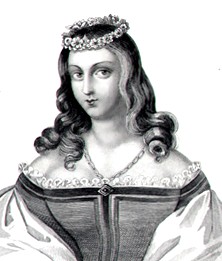
In Lithuanian history, the name was borne by the wife of Grand Duke Kęstutis of Lithuania and the mother of Vytautas the Great (d. 1382)
In Lithuania, Birutė is considered a sort of folk heroine, a lot of legends have been attributed to her, one being that Birutė was a vaidilutė or priestess of the gods who guarded the sacred fire. It is believed that Kęstutis kidnapped and married her against her will. After her death, she was made into a sort of pagan folk saint. In 1989, archeological evidence suggested that she had a sanctuary dedicated to her on a hill in Palanga, now named Birutė Hill, it is considered the highest dune in Palanga.
The form of Biruta was also ocassionally used in Poland and Latvia.
A Lithuanian masculine form is Birutis.
The designated name-days are February 5 (Lithuanian) and November 24 (Poland).
Possible translations in other languages could be
- Biruta (Germanic and most Latin langauages)
- Biroute (French)
This was my first favorite Lithuanian name! I’m so glad to see an entry for it.
Its not my favorite, but I love the history behind it 🙂
Birute is the name for the Book of Ruth in the Lithuanian bible. It has nothing to do with snow.
I am not sure where you are getting your source. I just looked it up and it is Rūta not Birutė and yes, it is associated with byrančiu which relates to falling snow but since I wrote this entry, there are other theories proposed for this name, none related to Ruth.
This was my great grandmother’s name.
“Lith (bih-ROO-tay)”…. No, this is not how it is pronounced in Lithuanian. Birutė is the name I was given. I am Lithuanian. The dot above the e (ė) is like the dot on a musical note, saccato, and is, like the musical note, short and quick. Sounds kind of like the e in pet an get. Not “tay” for sure. Also, it’s not ROO in the middle. The “u” is pronounced more like the u in put
It is close enough. It is hard to transliterated pronunciation in plain English and I need to brush up on my IPA
I will make the update when I can get to a computer. Thanks for stopping by. I only ever heard the Polish pronunciation and I think that’s what influenced me.
Reblogged this on Legitimate Baby Names.