Rumaysah, Romaïssa

رُمَيْسَة
Photo by Rhyan Stark on Pexels.com

The name seems to be of disputed etymology, but is Arabic in origin. It was the name of Rumaysah bint Milhan known as Umm Sulaym, one of the first women to convert to Islam. Her son was Anas ibn Malik who was one of the companions of the Prophet Muhammed.

The name itself seems to have several meanings attached to it, according to QuranicNames.com, it possibly derives from رُمَيْسَة and mean “wind that scatters like dust.” If spelled رُمَيْثَة (transliterated as Rumaithah) it is the name of a place. It may also be linked with the Arabic root R-M-TH, which can mean “increasing.” Another association is that it is a feminine form of the Arabic male name Rams/Ramth meaning, “raft.”

Other sources have listed it as meaning “bouquet,” but I could not verify this information. If anyone has anymore information regarding the etymology of this name, it would be much appreciated.

Romaïssa (hro-MY-sah) is a North African variation that has been very popular in the Maghreb and in the Maghrebi Diaspora. 

It’s Turkish form of Rümeysa is the 94th most popular female name in Turkey (2019)/

Other transliterated forms include:

  • Romaysa(h)
  • Romeysa
  • Rumaila
  • Rumaisa(h)
  • Rumaitha
  • Rumaysah

Other forms include:

  • Rumejsa (Albanian/Bosnian)
  • Rusejma (Bosnian)
  • Rümeysa (Turkish)
  • Rumeysa (Turkish)
  • Romeesa (Urdu)

Sources

  1. https://quranicnames.com/rumaisah-
  2. https://www.behindthename.com/name/romaissa/submitted
  3. https://www.babynames.co.uk/names/rumaysa/
  4. https://en.wikipedia.org/wiki/Umm_Sulaym_bint_Milhan
  5. https://www.names.org/n/rumaisah/about#pronunciation
  6. https://muslimnames.com/rumaisah
  7. https://hamariweb.com/names/muslim/arabic/girl/rumaisa-meaning_5822
  8. https://de.wikipedia.org/wiki/Umm_Sulaim_bint_Milh%C4%81n
  9. https://www.knjigaimena.com/?znacenje-imena-Rumejsa
  10. http://www.turkstat.gov.tr/PreTablo.do?alt_id=1059

Safwan, Safwana

photo-1507832321772-e86cc0452e9c


Safwan is an Arabic male name which is derived from the Arabic صَفْوَانٍ meaning “rock.” It is used in Quran verse 2:264: Such men are like a rock covered with earth: a shower falls upon it and leaves it hard and bare. (Quran 2:264). It also shares the same root with ‏ صاف؛ (cloudless).


The name was borne by 2 companions (sahabas) of the Prophet Muhammed, Safwan ibn Umayyah صفوان بن أمية‎) (died 661) and Ṣafwān ibn al-Muʿaṭṭal al-Sulamī (صفوان بن المعطل السلمي‎) (d. 638 or 679), the latter is attributed to founding the city of Safwan in Iraq.


A Turkish form is Safvan (Turkish) and it is sometimes transliterated as Safuan.

The feminine form is Safwana.


Sources

Samiha

Canzi_Arab_Girl_1844

A Young Arab Girl by August Alexius Canzi courtesy Wikimedia Commons


Origin: Arabic سميحة
Meaning: generous; forgiving
Gender: feminine
(suh-MEE-huh)


The name is derived from the Arabic verb سامح (smh), which means “to condone; excuse; forgive; overlook; pardon” and can also be translated as to mean “lenient, generous.”

Other transliterations include: Sameeha (Urdu) and Samihah.

A masculine more unusual form is Samih سامح.


Sources

Shair, Shaira

220px-Iqbal_and_son_Javid_in_1930

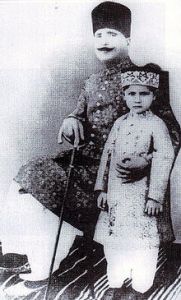
Allama Iqbal & Son (1930)


Shair (pronounced SHAH-eer) is a masculine name from the Arabic شاعر؛ meaning, “poet.”

It is the name of the oldest Urdu-language literary magazine (circ. 1930).

Among Pakistani families, both its feminine and masculine form may be used in honour of Shair-e-Mashriq (nee Muhammed Iqbal (1877-1938), known as Allama Iqbal, a British Indian poet who was known to have inspired the Pakistani Movement.


Its feminine form of Shaira (pronounced SHY-rah) also exists and has become widespread in Latin America and the Philippines since the 1980s. It is borne by Filipina photographer, Shaira Luna (b. 1986) and Filipina actress Shaira Diaz (b. 1995).


Sources


Sawda

Sawdah

By Omaislam – Own work, CC BY-SA 4.0, https://commons.wikimedia.org/w/index.php?curid=41784804


  • Origin: Arabic سودة
  • Meaning: uncertain
  • Gender: feminine
  • (SOW-dah)

The name is of uncertain meaning but is believed to be from the Arabic root S-W-D which can mean “blackness” or “large number of palm trees.”

The name was borne by one of the wives of the Prophet Muhammed known as Sawda bint Zama, considered one of the Mothers of Believers. Sawda bint Zama was a widow who married Prophet Muhammed at around the age of 50 to help care for his children.


Other transliterations are Sauda & Saudah.

Other forms include:

  • Seuda (Albanian)
  • Säüdä, Säüzä, Savda Сәүҙә (Bashkir)
  • Sevda (Bosnian)
  • Sawda Савда (Avar)
  • Sawdat Савдат (Chechen)
  • Saudah (Indonesian, Malaysian)
  • Sauda Сауда (Kazakh)
  • Sevde (Turkish)

Sources

Thuwaybah, Suwaiba, Sobia

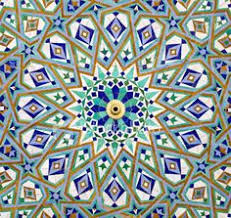
islamic tile


  • Origin: Arabic ثويبة
  • Meaning: “rewards deserving from God.”
  • Gender: feminine

Thuwaybah was the name of one of the sahabah of the Prophet Muhammed who was believed to be his wet nurse.

Other transcriptions include Suwaiba and the more popular Urdu form of Sobia.


Sources

Zuleika, Zuleikha

800px-Rembrandt_Harmensz._van_Rijn_065


  • Origin/Meaning: unknown زُلَيْخا זוליכה‎
  • Gender: female
  • (zoo-LAY-kah)
  • Usage: Arabic, Armenian, English, German, Italian, Ladino, Persian, Portuguese – Brazilian, Spanish

The name is of uncertain origin or meaning, since it appears in Muslim and Medieval Jewish tradition as the name of the wife of Potiphar (who is unnamed in the Old Testament), it is often suspected to be of Coptic origin, though the name is not traditionally used among contemporary Copts.

The wife of Potiphar is mentioned in the Bible as trying to seduce Joseph and later falsely claiming he tried to rape her, which leads to Joseph’s unjust imprisonment. In Medieval Islamic tradition, the story was reinterpreted as a popular love story, the subject of much poetry, she is named Zuleikha and her love for Joseph was interpreted by Sufi poets, especially Rumi and Hafez, to represent the longing the soul has for God. Zuleika is also attributed to be her name in the Sefer haYashar, also known as the Book of Jasher, a Jewish midrash of unknown authorship.

In the English-speaking world, the name first came into use in the early 19th-century, it was most likely popularized by Byron’s 1813 poem, The Bride of Abydos, in which it is the name of the heroine. It was also used by the German poet Goethe for his 1810 poem entitled, Book of Zuleika, in his collection of Eastern inspired poems called West–östlicher Divan. It is the name of the eponymous character in the 1911 novel, Zuleika Dobson by Max Beerbohn, which was later adapted into a musical.

The name is also used in Spanish-speaking countries and Brazil.


Other forms include:

  • Zulejka (Albanian, Bosnian)
  • Züleyxa (Azeri)
  • Zuleica (Catalan, Portuguese, Spanish)
  • Zulejha, Zulejka Зуле́йха, Зулейка (Chechen, Russian)
  • Zelikah (Dutch)
  • Zouleïkha (French)
  • Züleyha (Turkish)
  • Zulayho (Uzbek)

Other Arabic transliterations include: Zulaykha and Zulekha.

Spanish diminutives include: Zula & Zuzu.


Sources

Sondos, Sundus

Persian_Silk_Brocade_-_IRI_logo_with_Selvage_-_Pictorial_Brocade,_Picture_Brocade,_Brocade_Tableau_-_Seyyed_Hossein_Mozhgani_-_1981


  • Origin: Arabic سُنْدُس
  • Meaning: “fine silk; fine brocade.”
  • Gender: feminine
  • (SOON-doos; SOHN-dohs)

The name comes directly from the Arabic word for fine silk or a fine brocade.

Others transliterations include Sundes & Sundos.

A Turkish form is Sündüs.


Sources

Yasir, Yasira, Yashira

800px-Jetta_(Bedouin_child)._(Taken_during_the_1904_World's_Fair)


Yasir is a male Arabic name which is derived from the Arabic root y-s-r meaning “ease” or “right-handed.” The name was borne by Yasir ibn Amir (d. 615 C. E.), who is said to be the second martyr in Islam according to Islamic tradition.

Other transliterations include: Yassir & Yasser (Persian) & Yaser (Turkish).

It’s feminine form is Yasira and the Spanish off-shoot of Yashira has been popular in the Caribbean & Latin America since the 1980s. It is unknown how the name evolved and became popular in the Spanish-speaking world.

Other feminine transliterations include: Yacerah, Yacirah, Yacireh, Yaseira & Yassira.


Sources

Zaha, Zahaa

Zahaa


Pronounced zuh-HEAH, (the latter syllable rhymes with “yeah”), the name is Arabic ضَحَاء and means “morning.” A notable bearer was British Architect, Zaha Hadid (1950-2016). It is also sometimes transliterated as Dhahaa.

Alternately, pronounced ZAH-kha, it is from the Hebrew tzach צַח (fresh, pure, clean). Another transcription is Tzacha.


Sources