Alma

The name has several different origins and meanings. Its usage as a name in Britain skyrocketed around 1854, after the victorious Battle of Alma, which took place near the Alma River in the Crimea.

In this case, the name is derived from the Tatar word for, “apple.” It is interesting to note that Alma, till this day, is a traditional and common female name across Central Asia, especially among Russian-Tatars, Kazakhs and Uzbeks. In Uzbek, it appears in the form of Olma. Alma is also the word for apple in Hungarian, where it is also occasionally used as a female given name.

The name also appears in Edmund Spenser’s The Faerie Queen as the name of a minor character, the head of the House of Temperance in Book 2. In this case, the name is most likely taken from the Portuguese and Spanish word for “soul.”

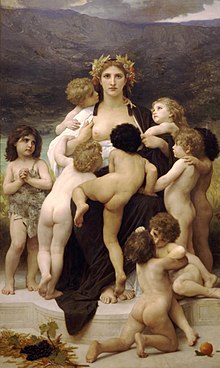
Alma appears sparingly as a female given name in Renaissance Italy, in this case, it is most likely derived from the Latin, almus, meaning, “nourishing”; hence the term, alma mater (fostering mother). This usage of the name also appears as an epithet for a few Roman goddess, particularly Venus and Ceres.

It is the name of a book in The Book of Mormon, but in this case, it is masculine, being the name of two prophets, a father and son; Alma the Younger being the Chief Judge among the Nephites.

Other etymologies which have been suggested, include:

  • It is from the Greek, αλμη (salt water)
  • It is from an Arabic source, al-ma, meaning, (the water).
  • It is a contracted form of Amalia and Amalberga.

The name is used in virtually every European country, including Scandinavia, where it is currently very trendy.

As of 2010, Alma was the 8th most popular female in the Faroe Islands. Her rankings in other countries are as follows:

  • # 23 (Sweden, 2010)
  • # 24 (Denmark, 2010)
  • # 48 (Norway, 2010)
  • # 49 (Bosnia & Herzegovina, 2010)
  • # 80 (Spain, 2010)
  • # 849 (United States, 2010)


Eva, Eve

Gender: Feminine
Origin: Hebrew
Meaning: “life.”
Eng (EEV); (EE-vuh); Germ/Sp/Pol (EV-ah)

The name is borne in the Bible and in the Quran by the first woman created by God. She and her husband were expelled from the Garden of Eden after eating from the Tree of Knowledge.

The name is believed to be derived from the Hebrew roots חַוָּה, Ḥavvāh, from the Hebrew root ḥāyâ meaning “life” and the Semitic element, ḥyw “to live.” Both the Hebrew word chavah meaning “to live” and chayah meaning “to breath” share the same root.

Despite Eve’s fall from Grace in the Bible, the name was always in usage among Jewish, Christian and Muslim communities. In England, its usage can be traced back to the 12th-century. Its Latinate form of Eva, has always been a classic in continental Europe, especially in Germany, Poland, Slovakia and the Czech Republic.

As of 2010, Eva was the most popular female name in the Faroe Islanda and in Slovenia. Eve, Eva and all her various forms’ rankings in other countries are as follows:

  • # 3 (Iceland, 2010)
  • # 4 (French-speaking, Switzerland, 2010)
  • # 5 (Netherlands, 2010)
  • # 7 (Ieva, Lithuania, 2010)
  • # 10 (Armenia, 2010)
  • # 10 (Evie, England/Wales, 2010)
  • # 14 (Northern Ireland, 2010)
  • # 15 (France, 2009)
  • # 17 (Scotland, 2010)
  • # 20 (Belgium, 2009)
  • # 24 (New Zealand, 2010)
  • # 26 (Australia, NSW, 2010)
  • # 29 (Croatia, 2010)
  • # 31 (Evie, Scotland, 2010)
  • # 33 (Evie, Australia, NSW, 2010)
  • # 37 (England/Wales, 2010)
  • # 44 (Eevi, Finland among Finnish-speakers, 2010)
  • # 44 (Ireland, 2010)
  • # 46 (Austria, 2010)
  • # 47 (Canada, BC, 2010)
  • # 48 (Spain, 2010)
  • # 55 (Catalonia, 2010)
  • # 55 (Éabha, Ireland, 2010)
  • # 56 (Eve, Northern Ireland, 2010)
  • # 59 (Eve, Ireland, 2010)
  • # 86 (Norway, 2010)
  • # 91 (United States, 2010)
  • # 92 (Eve, England/Wales, 2010)
  • # 99 (Eve, Australia, NSW, 2010)
  • # 201 (Eve, France, 2009)
  • # 589 (Eve, United States, 2010)
  • # 705 (Evie, United States, 2010)

Other forms of the name include:

  • Eva Ева ევა
    (Afrikaans/Albanian/Armenian/Basque/Belarusian/Bosnian/Catalan/Croatian/Czech/Dutch/Faroese/French/Frisian/Galician/Georgian/German/Icelandic/Italian/Portuguese/Romansch/Spanish/Scandinavian)
  • Evis (Albanian)
  • Mahalet/Mahlet (Amharic)
  • Hawa حواء Хауа (Arabic)
  • Yeva (Armenian)
  • Həvva (Azeri)
  • Yeva Ева Эва (Belarusian/Russian/Ukrainian)
  • Yevga Евга (Belarusian)
  • Hava (Bosnian)
  • Evy (Danish/Norwegian/Swedish: initially a diminutive form, occasionally used as an independent given name)
  • Eveke (Dutch: initially a diminutive form, used as an independent given name, EV-eh-ke)
  • Eve (English/Estonian/Walon)
  • Evie (English)
  • Hawat/Hewa (Egyptian/Coptic)
  • Eeva (Estonian/Finnish)
  • Eevi (Estonian/Finnish)
  • Evi (Estonian)
  • Ivi/Iivi (Estonian)
  • Iivika (Estonian)
  • Ève (French)
  • Eefje, Eefke (Frisian)
  • Hawwa ሕይዋን (Ge-ez)
  • Eua Ευα (Greek)
  • Chava חַוָה (Hebrew: Modern: KHAH-vah, gutteral CH sound)
  • Éva (Hungarian: AY-vaw, diminutive form is Évike)
  • Hawa (Indonesian/Malayalam)
  • Éabha (Irish-Gaelic)
  • Ieva (Latvian/Lithuanian: YEH-vah)
  • Evuzus (Malaysian)
  • Aaue (Manx)
  • Èva (Occitanian)
  • Ewa (Polish: EH-vah, diminutive forms are Ewka, Ewunia and Ewusia)
  • Evá (Sami)
  • Evelia (Spanish)
  • Evita (Spanish)
  • Eba (Tagalog)
  • Havva (Turkish)
  • Efa (Welsh)

Italian masculine form is Evo.

Traditionally, in most European countries, the name-day for Adam and Eve is December 24.

Tariq

Gender: Masculine
Origin: Arabic طارق
Meaning: “morning star; messenger; the knocking one; traveller, path finder.”
طارق

The name is of Arabic origins and can have several different interpretations, one is that it is from the Arabic verb ṭaraqa meaning “to knock” or “to pound.” In this case, the name would take on the meaning of “messenger” or “bringer of news.”

In the Qu’ran, the morning star is named ṭāriq and is described as something that shines and leads the way and in this case, the name can take on the meaning of “someone who leads the way” “traveller” or “pathfinder.”

As of 2010, Tarik was the 2nd most popular male name in Bosnia & Herzegovina, while Tareq is the 8th most popular male name in Libya.

The name was most notably borne by Tariq ibn Ziyad, the Islamic general who helped conquer Spain in the 8th-century.

The name is used by both Muslim and Christian Arabs.

Other forms of the name include:

  • Tarik (Albanian/Bosnian)
  • Tarak/Tarek (Algerian/Lebanese/Moroccan/Tunisian: these are usually the way the name is transcribed in French and hence is most often used in the Francophone world)
  • Tarık (Azeri/Kurdish/Turkish)

The name is also transliterated as Tareq and Tareeq.

Samad

Gender: Masculine
Origin: Arabic  صمد
Meaning: “eternal.”

The name is derived from the Arabic Aṣ-Ṣamad (the eternal), one of the names of God.

Its Bosnian form of Samed is the 93rd most popular male name in Bosnia & Herzegovina, (2010).

The name was borne by Azeri-Russian General, Samad bey Mehmandarov (1855-1931) and Azeri poet, Samad Vurgun (1906-1956)

Other forms of the name include:

  • Samed (Albanian/Bosnian)
  • Səməd (Azeri)
  • Semed (Kurdish/Turkish)

Samad is used throughout the Islamic world.

Elli

Gender: Feminine
Origin: Old Norse
Meaning: “old age.”
(EL-lee)

I love this, while it is not a name I’d ever use myself, it is one of those names that you would never suspect had such a long and symbolic history.

The name is often listed as a Germanic diminutive form of Elisabeth, which may be in part, true, but its usage as a given name actually pre-dates Elisabeth’s introduction to the Germanic world.

In Old Norse, elli is the word for old age, and she is personified in the Prose Edda. Her story is recounted in the Book of Gylfaginning, in which she defeats Thor in a wrestling match.

In pre-Christian Norse culture, old age often symbolized wisdom.

Elli has been a popular name throughout Scandinavia and Germany. It experienced a vogue in the 19th-century and seems to be experiencing a revival. It is currently the 172nd most popular female name in Germany, (2011). Another German spelling is Elly.

Elli is also used in Estonia and Finland.

Hira

Gender: Feminine
Origin: Arabic
(HEE-rah)

The name is of uncertain meaning but is taken from the name of a cave in Mecca where it is believed the Prophet Mohammed first received his visions and revelations from God through the angel Gabriel.

The name is often used as a feminine given name, bestowed in reference to the event that took place.

Currently, Hira is the 483rd most popular female name in Germany, (2011).

Fadi

Gender: Masculine
Origin: Arabic فادي
Meaning: “saviour.”
(FUH-DEE)

The name comes directly from the Arabic word for saviour and is a very popular name among Middle Eastern Christians. Al-Fadi (the saviour) is an appellation used for Jesus.

Currently, Fadi is the 470th most popular male name in Quebec, Canada (2010).

The feminine form is Fadia فادية.

Sources

  1. http://www.behindthename.com/name/fadi
  2. http://www.babynamer.com/fadi
  3. http://www.babynamespedia.com/meaning/Fadi


Taha

Gender: Masculine
Origin: Arabic  طه‎,

The name is formed from two Arabic letters, Ta and Ha. It is the name of Sura 20 in the Qu’ran. The sura gets its name from the fact that it begins with the Arab letters طه which is a Muqatta’at. A Muqatta’at is an abbreviation that begins certain suras and whose meanings are unknown usually attested as being divine secrets.

Currently, Taha is the 393rd most popular male name in Quebec, Canada (2010).

Sources

  1. http://en.wikipedia.org/wiki/Ta-Ha
  2. http://en.wikipedia.org/wiki/Taha_(name)
  3. http://www.rrq.gouv.qc.ca/Interactif/PR2I121_Prenoms/PR2I121_Prenoms/PR2SPrenoms_01.aspx


Israel

Gender: Masculine
Origin: Hebrew: יִשְׂרָאֵל
Meaning: “wrestles with God.”

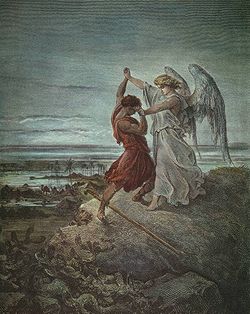
The name is found in the Old Testament (Genesis 32:28 and 35:10) as the name given to the Patriarch Jacob after he had wrestled with an angel. Jacob’s descendants came to be known as the Israelites later forming the Kingdom of Israel. This is where the modern day country gets its name.

The name is very popular among Orthodox Jews but hasn’t seemed to have caught on in other circles. It is currently the 220th most popular male name in the United States, (2010).

Other forms of the name include:

  • Yisrael ይስራኤል (Amharic)
  • Yisra’el יִשְׂרָאֵל (Hebrew)
  • Izrael (Polish)
  • Izrail Изра́илإِسْرَائِيل‎ (Russian/Arabic)
  • Iser (Yiddish)
  • Issur (Yiddish)
  • Sroel (Yiddish)
Source

Hope

Gender: Feminine
Origin: English

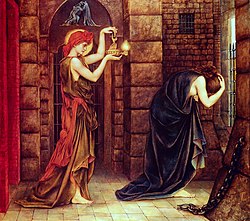
The name comes directly from the English word and has been in usage since the Middle Ages due to the popularity of a cult of sister saints, Hope, Faith and Charity.

Its popularity was in enhanced in the 17th-century due to its usage among the Puritans.

Currently, Hope is 245th most popular female name in the United States, (2010). Its Spanish cognate of Esperanza is currently the 75th most popular female name in Chile and the 948th most popular in the United States, (2010).

Other forms of the name include:

  • Nadzieja Надзе́я (Belarusian/Polish. nod-JAY-yah)
  • Nada (Bosnian/Croatian/Serbian/Slovene)
  • Esperañs (Breton)
  • Esperança (Catalan/Portuguese)
  • Naděžda (Czech)
  • Spes (German/Latin)
  • Elpida Ελπίδα (Greek)
  • Elpis (Greek/Coptic)
  • Hopeful (English: a popular female name among Puritans)
  • Hopestill (English: a popular female name among Puritans)
  • Hopewell (English: a popular female name among Puritans)
  • Espérance (French)
  • Speranza (Italian)
  • Speranță (Romanian)
  • Nadezhda наде́жд (Russian)
  • Spiranza (Sicilian)
  • Esperanza (Spanish)
Source