Harsh

Photo by Daniel Xavier on Pexels.com
  • Origin: Sanskrit
  • Meaning: “joy; delight; excitement.”
  • Pron: (HERSH; HER-shuh; HERSH-e-NEE, some dialects HERSH-nee); HERSH-ee-kuh; HERSH-ee-tuh; HERSH-VERD-the-nuh)

From the Sanskrit root हर्ष (harsa) meaning “joy; delight; excitement.” It can also refer to sexual excitement or an erection. In Hinduism, Harsha is one of the twenty-four emanations of the celestial couple, Lakshmi and Narayana. It is also the name of one of the three sons of Dharmadeva and the husband of Nandi (also meaning “joy).

Harsha itself is unisex but is more common on males. It was born by a 7th-century Emperor of Kannauj of the Pushyabhuti dynasty in Northern India, also known as Harshvardhana or Harsh-Vardhana, and several other medieval Indian Kings as well as a 12th-century C.E. Sanskrit epic poet. A strictly masculine form is Harsh (HERSH).

Harshvardhana or sometimes spelled Harsh Vardhana is a masculine double name which means “increasingly happy,” being composed of the Sanskrit words, हर्ष (harsa) and वर्धन vardhana (increase; growth).

The feminine offshoot of Harshika derives from the same root but also refers to a type of musical metre.

Another feminine form is Harshini, which derives from the Sanskrit adjective हर्षिन् (harSin) meaning “delightful; joyful.” Harshini is also the name of a type of plant. This beautiful name is not pronounced har-SHEE-nee, but more like HERSH-e-nee or HERSH-nee, like Hershey Chocolate Kisses. There is also just Harshi, pronounced like Hershey.

And another female form is Harshita, which is of the same root being from the Sanskrit हर्षित (harsita) meaning, “pleased; gladdened; joy; happy; delight; charmed” or “made to stand erect.”

Sources

Rishi

In Eastern Religions, a rishi is an accomplished or enlightened person or a yogi who has composed hymns or Vedas. In the Vedas, it also refers to an inspired poem or hymn. In Buddhism, it may refer to a monk of high rank or a Buddha. The word itself may be derive from the Sanskrit root ṛṣ meaning “to move; to flow.”

Rishi is currently a common Indian male name, it is born by the current British Prime Minister, Rishi Sunak.

In the U.S., it currently ranks in as the 968th most popular male name (2023) and the 790th most popular in the U.K. and Wales (2021).

The feminine form is Rishika.

Other forms include:

  • Ruesi តាឥសី (Khmer); ฤๅษี (Thai) ລືສີ (Lao).

Transcriptions

  • ऋषि (Hindi, Nepali)
  • ऋषी (Marathi)
  • ऋषी (Bengali)

Sources

Nandini

Photo by Nischal Mudennavar on Pexels.com
  • Origin: Sanskrit नंदिनी
  • Meaning: “joy; daughter.”
  • Gender: feminine
  • Pronunciation: NAN-dee-nee; NUN-dee-nee

The name comes directly from the Sanskrit word for daughter, which ultimately derives from the Sanskrit word नन्दि (nandi) meaning, “joy; delight; rejoice.”

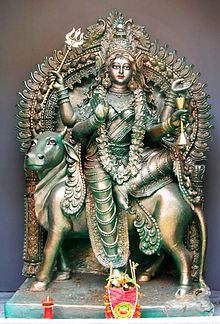
In Hinduism, it is one of the many epithets for the goddess Durga.

Sources

Shraddha

Photo by Rayhan Ahmed on Pexels.com
  • Origin: Sanskrit श्राद्ध
  • Meaning: “faith; belief; devotion; trust.”
  • Gender: feminine
  • Pronunciation: SHRAHD-dha

The name comes directly from the Sanskrit word for faith, belief, devotion or trust. It is ultimately from the Indo-European root *ḱred-dʰeh₁ (to believe; to put one’s heart into another). It shares the same root as the word creed and the Latin credo.

In Hinduisim, shraddha is a funerary ritual that is used to honour one’s deceaded forbears, especially deceased parents.

A notable bearer is Indian actress and singer, Shraddha Kapoor (b. 1989). Other notable bearers include the Indian actresses, Shraddha Arya (b. 1987); Shraddha Sinath (b. 1990) and Shraddha Das (b. 1987)

Sources

Dhyana, Dhyani, Dhyan

Dhyana & Dhyani are unisex (pronounced TAH-nah & TAH-nee), ultimately derived from the Sanskrit ध्यान and meaning “meditation; attention.” Both concepts are applied in Buddhism and Hinduism.

An exclusive masculine form is Dhyan.

Sources

Gauri

  • Origin: Sanskrit, Hindi, Marathi गौरी
  • Meaning: “fair; light-skinned; white; brilliant.”
  • Gender: feminine
  • Pronunciation: GORE-ee

The name comes directly from the Sanskrit word meaning “fair; light-skinned; white; brilliant.” In Hinduism, this is an epithet for the goddess Parvati in her Mahagauri form.

The Kannada and Tamil form is Gowri கௌரி (Tamil) & ಗೌರಿ (Kannada).

Gauri can also be a Finnish male form of the name Gabriel.

Sources

Hansa

The name can have a few origins and meanings. It is primarily an Indian name that comes from the Sanskrit हंस (hamsa), which originally referred to an aquatic bird of passage. The hamsa is described as a mythical bird with knowledge in the Rig Veda and also as the main means of transport for the gods Brahma, Gayatri, Saraswati, and Vishvakarma in Hinduism. In the Ramayana, the hamsa was the bird that carried love letters between Damayanti and Nala. According to Indian legend, arayanna (heavenly hamsa swans) are said to live in the Himalayas where they eat pearls and are able to separate milk from water.

The hamsa bird is also associated with the concept of soham (that I am), as when it is said fast, hamsa starts to resemble soham. The latter is linked with the Brahman, and thus the bird is often associated with the cycle of samsara.

The hamsa bird has also been a popular motif in Indian art for centuries.

Over the centuries, it has interchangeably been translated as a swan, flamingo, goose or duck. It is ultimately from the Proto-Indo-European root word *ǵʰh₂éns, which is also the progenitor of the English word goose, German gans (goose), and the Latin anser (goose).

In India, as a given-name, it is used among all languages groups. The name is primarily used on females but has occasionally been given to males.

The name is also German and Scandinavian female name, being a contracted form of Johanna. Other forms are Hansina and Hansine.

Sources

Anil, Anila

Anila is from the Sanskrit आनिल (wind), in Hinduism it is an epithet for the wind God, Vayu. In contemporary India, both names are unisex.

Anıl is a Turkish unisex name meaning “the memory; to be remembered,” in Turkish. Anil is also a popular Albanian & Bosnian male name, while Anila is the feminine form that is exclusively used in Albania & Bosnia.

Anıl appeared in the Top 100 Most Popular Male Names in Turkey between 1990 and 2012, peaking at #51 in 1991.

Sources

Lakshmi, Laxmi

  • Origin: Sanskrit लक्ष्मी
  • Kannada: ಲಕ್ಷ್ಮೀ
  • Malayalam: ലക്ഷ്മി
  • Marathi/Hindi: लक्ष्मी
  • Odia: ଲକ୍ଷ୍ମୀ
  • Tamil: லட்சுமி
  • Telugu: లక్ష్మి
  • Meaning: “to perceive, observe, know, understand’ and ‘goal, aim, objective.”
  • Gender: feminine
  • LUCK-shmee

The name is derived from the Sanskrit lakṣ (लक्ष्) and lakṣa (लक्ष), meaning “to perceive, observe, know, understand’ and ‘goal, aim, objective.”

It is borne in Hinduism by the supreme goddess, wife of Vishnu, who is revered as the goddess of beauty, prosperity, luxury, contentment and among other things. She is known as Sri (the Noble One) and Akshara (imperishable), among other names. She is mentioned in the Rigveda as early as approximately 1000 BCE and is also revered in Buddhism and Jainism.

The name is mainly feminine, but is sometimes used among males in honour of the goddess in the same way that Mary, Maria, Marie has been used on males among Roman Catholics in honour of the Virgin Mary.

Sources

Siddhi

  • Origin: Sanskrit सिद्धि
  • Marathi: सिद्धि
  • Meaning: “perfection, attainment, completion; accomplishment; success.”
  • Gender: feminine
  • Pronunciation: SID-dee; SIT-tee (depending on language & dialect)

The name comes from the Sanskrit noun सिद्धि (siddhi), meaning “perfection, attainment, accomplishment,” which is a concept that refers to the attainment of magical, paranormal or psychic abilities through meditation and yoga. It is a concept found in Yoga, Buddhism and Hinduism.

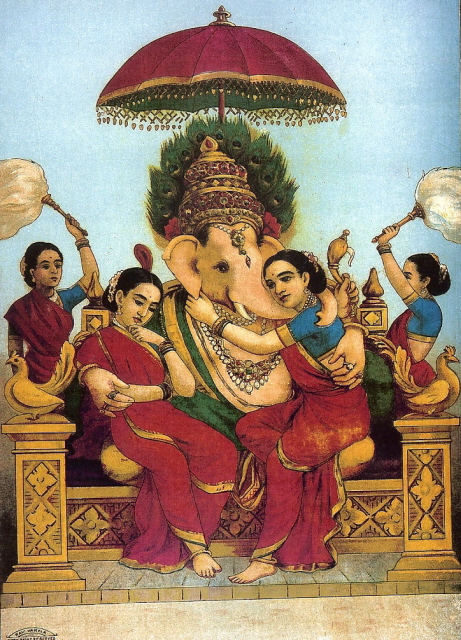
In Hinduism, it is the name of one of Lord Ganesha’s wives, the other being named Riddhi.

Sources