Ephraim

  • Origin: Biblical Hebrew אֶפְרַיִם
  • Meaning: “fruitful; double fruited; increasing.”
  • Gender: masculine
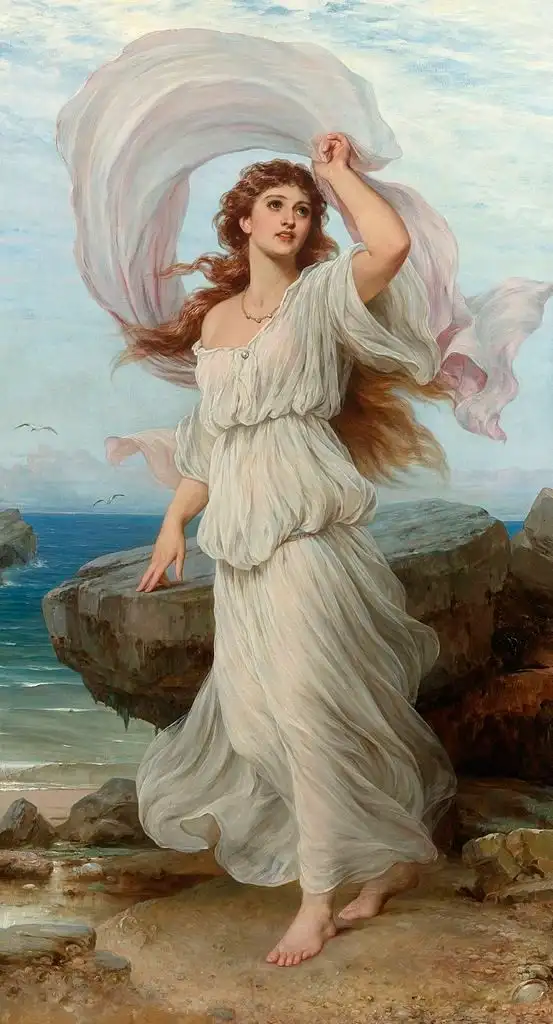
“Ephraim” Francisco Hayez

The name is borne in the Bible by the son of Joseph and Asenath, who is considered a patriarch, as he is a founder of one of the 12 trubes of Israel. According Genesis 41:52, he is named thus by Joseph because “God has made me fruitful in the land of my suffering.”

The name was also borne by a few early Christian saints, including St. Ephraim of Syria (4th-century, CE).

Ephraim appeared in the U.S. Top 1000 between 1880-1914, it disappeared for 99 years and reappeared in the charts in 2013. For its first centennial cycle, it peaked at #403 in 1880. As of 2023, it was the 992nd most popular male name.

Its Spanish counterparts of Efraín and Efrén have also appeared in the U.S. Top 1000, Efraín appeared between 1950 and 2014, peaking at #469 in 1981 whilst Efrén appeared between 1966-2007, peaking at #768 in 1990.

Forms/Usages

  • Efrayim ኤፍራይም (Amharic, Modern Hebrew)
  • Yeprem, Jeprem, Eprem Եփրեմ (Armenian)
  • Afrem ܐܦܪܝܡ (Assyrian)
  • Afri ܐܦܪܝ (Assyrian)
  • Afron ܥܦܪܘܢ (Assyrian)
  • Aprem, Aprim ܐܦܪܝܡ (Assyrian)
  • Efrim ܐܦܪܝܡ (Assyrian)
  • Ephraim ეფრაიმ (Georgian); Εφραιμ (Greek); ⲉⲫⲣⲁⲓⲙ (Coptic); ܐܦܪܝܡ(Syriac) (Assyrian, Dutch, English, Estonian, German, Greek, Portuguese)
  • Akhrym, Ahrym Акхрым (Belarusian)
  • Yafrym Яфрым (Belarusian)
  • Efraïm (Catalan, Dutch)
  • Efrajim (Czech)
  • Efraim (Finnish, Hungarian, Italian, Nordic, Polish, Romanian)
  • Eprami (Finnish)
  • Éphraïm (French)
  • Îvfa (Greenlandic)
  • Eframi (Icelandic)
  • Efraím (Icelandic)
  • Efraimo (Italian)
  • Efrem (Italian, Polish)
  • Effrem (Italian)
  • Efro (Italian)
  • Ephraem (Late Latin)
  • Ephraimus (Late Latin)
  • Ofrem (Russian, Archaic)
  • Yefraim, Jefraim Эфраим (Russian)
  • Yefrem Ефрем (Russian)
  • Jevrem Јеврем (Serbian)
  • Efraín (Spanish)
  • Efrén (Spanish)
  • Ohrim, Okhrim Охрім (Ukrainian)
  • Evron ֶבְֿרוֹן (Yiddish)

Sources

Idalia

  • Origin: debated, various
  • Meaning: debated, various
  • Gender: feminine
  • Alternate transcriptions: Ἰδαλία
  • Pron: Eng (i-DAH-lee-ah; id-DAHL-yah); Pol (ee-DAHL-yah)

The name can have a few different origins and meanings. It does seem to appear in use in Medieval France, in this case, it may be an elaborated form of a Germanic name, perhaps related to a Frankish element, idal (unknown meaning) or the Old Norse ið, meaning “work.” Alternately, it appears in Greek mythology as an epithet for the goddess Aphrodite. In this case, the etymology is from the name of city on the island of Cyprus called Idalion, in which a temple to Aphrodite existed. The etymology of the city name itself is from the Greek Eidon helios, “I saw the sun.”

The name has had use across Europe. In Poland, it came into use in the 19th-century when Juliusz Słowacki used it as the name of a heroin in his 1866 play, Fantazy. It was thereafter used as the name of a character in the 1909 novel, Trędowata by Helena Mniszkówna.

In Poland, it has appeared in and out of the 200 most popular female names between 2010 and 2022, peaking at #172 in 2021.

In 2023, 160 girls were given this name in the United States.

Other forms/Usages

  • Idalia (Catalan, Dutch, English, German, Greek, Lithuanian, Polish, Portuguese, Spanish)
  • Idalie (French)
  • Idalina (Italian)

Italian masculine forms are Idalo and Idalio.

Sources

Mishael, Misael

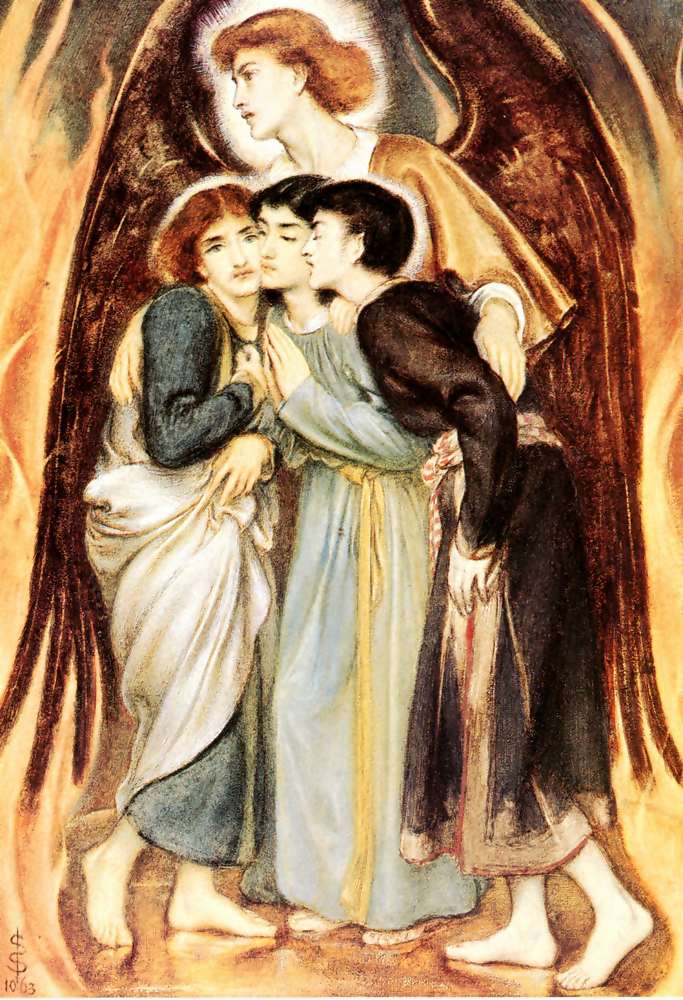
Simeone Solomone, Shadrach, Meshach, Abednego
  • Origin: Biblical Hebrew מישאל
  • Meaning: debated
  • Gender: Masculine
  • Transcriptions: ሚሳኤል (Amharic), Ⲙⲓⲥⲁⲏⲗ (Coptic), Μισαήλ (Greek)
  • ENG: mih-SHILE, mih-SHALE; Heb: (MEE-SHAH-yel); Sp: (mee-SAH-yel)

The name comes from the Hebrew meaning, “who is like God?; who is equal to God?,” “who is asked for?” and according to Hitchcock Bible names, “lent.” The name is borne by three male characters in the Bible, one mentioned in (Exodus 6:22) as one of the sons of Uzziel, the uncle of Moses and Aaron and most notably, it is the Hebrew name of Meshach (Dan. 1:11, 19) one of the three youths who refused to worship idols and were thrown in a furnace but miraculously survived.

Misael currently ranks in as the 192nd most popular male name in Mexico (2021) and the 790th most popular male name in the United States (2022).

In the Coptic Church, it is borne by St. Misael the Anchorite (7th-century CE).

Its feminine version of Mishaela is a pop song by Israeli pop singer, Achinoam Nini and has experienced sporadic usage in Israel and the English-speaking world. It is also the name of a character in Shining Force Gaiden: Final Conflict.

Other forms/Usage

Male

  • Misael (Amharic, Coptic, Greek, Portuguese, Spanish)
  • Misiel ܡܝܣܝܝܠ (Assyrian – Neo Aramaic)
  • Misayyl ميصائيل (Egyptian-Arabic, used by Copts)
  • Misaël (French)
  • Mischaël (German)
  • Misaele (Italian)
  • Miszael (Polish)
  • Misail Мисаи́л, Mizael Мизаел (Ukrainian, Russian)

An Italian short form is Misa.

Sources

Álvaro, Alvaro

Photo by Maria Pop on Pexels.com
  • Origin: Germanic
  • Meaning: debated
  • Gender: masculine

The name is of unknown origin or meaning, the consensus is that it is Germanic but which Germanic language it originates from is up for debate. Since it first occurred in Spain, the most likely is that it is of Gothic origins, possibly composed of the Germanic elements *allaz “all, whole, every”‘ and wart “‘guard, ward.” The second element may also stem from wars (cautious, guarded). Others have related it to the Old Norse, Hallvadr (hall-guard) or Alfarr (elf-warrior), but this is less likely.

The name has been in use in the Iberian peninsula since Medieval times, it was borne by Álvar Fáñez (12th-century), a vassal of El Cid and the subject of the Spanish epic poem, El Cantar de mio Cid.

It is the progenitor of the Spanish surname, Alvarez/Álvarez and the Portuguese, Alves.

Álvaro is the 10th most popular male name in Spain as of 2022. His rankings in other countries/regions are as follows:

  • #22 (Galicia, Spain)
  • #69 (Catalonia, Spain)
  • #97 (Chile, 2021)
  • #99 (Basque Country, Spain)
  • #188 (Mexico, 2021)
  • #794 (United States)

Usage/Forms

  • Àlvar (Catalan)
  • Álvaro (Portuguese, Spanish)
  • Álvaro (Galician)
  • Alvar (German, Scandinavian)
  • Alvaro (Italian)
  • Alvarus (Latin)
  • Alwar (Polish)

Feminine forms include, Álvara (Portuguese, Spanish), Alvara (Italian, Scandinavian).

Sources

Bode, Bodo

Photo by igovar igovar on Pexels.com
  • Origin: German
  • Meaning: “lord, master.”
  • Gender: Masculine
  • Pronunciation: Eng: BOH-dee; Low Germ (BOH-deh); Germ, Eng: BOH-doh

Both names are derived from the Old Saxon bodo (lord). It has alternately been argued to be linked with the Old German, boto (messenger). It may have also been a hypochoristic form of any older Medieval Germanic name which had the bod- element.

It was borne by a 7th-century Frankish saint, who was bishop of Toul, he founded what is now known as the Monastery of Bonmoutier.

Bodo reentered popular use in Germany in the 19th-century. In recent years, its low German form of Bode has entered the U.S. top 1000. It currently ranks in as the 960th most popular male name (2022).

Other forms include:

  • Bode (Dutch, English, Scandinavian)
  • Bodon (French)
  • Bodo (German, Scandinavian)
  • Botho (German)
  • Poto (Italian, archaic)

Sources

Alaric

Photo by Leandro Paes Leme on Pexels.com
  • Origin: Gothic
  • Meaning: “ruler of all.”
  • Gender: masculine
  • Pronunciation: Eng (AL-e-rik)

The name is composed of the Germanic elements al (all) and rikr (ruler). It was most notably borne by two Gothic kings, Alaric I and Alaric II. Alaric I was known for leading a rebellion against Rome and sacking it. His Gothic name was 𐌰𐌻𐌰𐍂𐌴𐌹𐌺𐍃 (Alareiks).

An historical curiosity, Alaric has never experienced much usage, however, it has been in the U.S. Top 1000 since 2017, and currently ranks in as 915th most popular male name.

Other forms include:

  • Alaric (Catalan, French, English, Occitanian)
  • Alarich (Czech, German, Slovak)
  • Alareiks (Gothic)
  • Alarico (Italian, Portuguese, Spanish)
  • Alaricus (Latin)
  • Alariks (Latvian)
  • Alarikas (Lithuanian)
  • Alaryk (Polish)
  • Alarih Аларих (Russian, Ukrainian)
  • Alarik (Scandivanian, Slovene)

Obscure feminine forms include Alarica, Alarika and Alarice.

Sources

Theodosia, Theodosius

Photo by Juliano Astc on Pexels.com
  • Origin: Greek
  • Meaning: “giving to God.”

Both come from the Greek, θεός (theos) meaning “god” and δόσις (dosis) meaning “giving.” Both the male and female form were borne by several Christian saints and Medieval rulers. In the English-speaking world, a notable bearer was Theodosia Alston Burr (1783-1813), the daughter of Aaron Burr and an American socialite who mysteriously disappeared in a ship-wreck. Her fate has been a source of speculation for two centuries, but she most likely died in the wreck. She is also the subject of the Broadway opera song from Hamilton, My Theodosia.

It’s female version has experienced usage in the English-speaking world since the 15th-century. It has spun off several diminutive off-shoots, which later became independent names, such as Docie/Dosey, Doshie, Dosha, Docia and Theda.

Theodosia appeared in the U.S. Top 1000 Most Popular Female Names between 1880-1895, it peaked at number #547 in 1880. It’s offshoot of Doshie appeared in the U.S. Top 1000 between 1880-1905 and peaked at #640 in 1884 whereas Doshia peaked at #582 in 1881 and Docia at #317 in 1880.

Theda (THEE-dah) was the name of silent film actress, Theda Bara (born Theodosia Burr Goodman, 1885-1955). Theda appeared in the U.S. Top 1000 between 1880-1948 and peaked at #350 in 1916. Theda Bara may have helped sustain the usage of the name in the United States, but it seems to have been common enough long before she graced the silver screen.

In the 1988 movie For Keeps, starring Molly Ringwald, a teen couple are faced with an unexpected pregnancy, in which they name their daughter Theodosia, short form Thea, it is a last minute decision decided by the father who gets the name from his deceased grandmother of the same name.

It is the name of the main character of the R. L. LaFevers 2007 children’s novel, Theodosia and the Serpents of Chaos, which spun off a tv series.

Its pronunciation in the English-speaking world fluctuates depending on the region and personal preference, from THEE-oh-DOH-see-uh, to THEE-oh-DOH-shuh and THEE-oh-DOH-zhuh, the sky’s the limits.

Its masculine form has always been prevalent in eastern Christian countries but did not pick up the same momentum in the English-speaking world as its feminine counterpart did.

Female forms

  • Tayodosiya ታዮዶሲዮስ (Amharic)
  • Thudusya ثيودوسيا (Arabic, used by Arab Christians)
  • T’eodosia Թեոդոսիա (Armenian)
  • Teodosija ТеодосиЯ (Bulgarian, Latvian, Lithuanian)
  • Teodosia თეოდოსია (Catalan, Corsican, Georgian, Italian, Portuguese, Romanian, Sardinian, Sicilian, Spanish)
  • Theodosia Θεοδοσια ⲑⲉⲟⲇⲟⲥⲓⲁ.(Coptic, English, German, Greek, Latin, Nordic, Romansch)
  • Teodozija Теодосија (Croatian, Macedonian, Serbian, Slovene)
  • Docia, Dosha, Doshia (English)
  • Docie, Docey (English)
  • Dosia (English, Polish)
  • Theda (English)
  • Théodosie (French)
  • Teodózia (Hungarian)
  • Teodosja (Maltese)
  • Teodozja (Polish)
  • Teodósia (Portuguese)
  • Feodosija Феодосия (Russian, Ukrainian)
  • Teudosia (Sicilian)

Male Forms

  • Teodosi (Albanian, Catalan)
  • Tayodosiyos ታዮዶሲዮስ (Amharic)
  • Thudusyus ثيودوسيوس (Arabic, used by Arab Christians)
  • T’eodosios Թեոդոսիոս (Armenian)
  • Teodosij Теодосий (Bulgarian)
  • Theodosios Θεοδόσιος ⲑⲉⲟⲇⲟⲥⲓⲟⲥ (Coptic, Greek)
  • Teodosiu (Corsican, Romanian, Sardinian)
  • Teodozije Теодосије (Croatian, Macedonian, Serbian, Slovene)
  • Theodosius (English, German, Latin, Nordic)
  • Théodose (French)
  • Theodósziosz (Hungarian)
  • Teodosio (Italian, Spanish)
  • Teodosijs (Latvian)
  • Teodosijus (Lithuanian)
  • Teodosju (Maltese)
  • Teodozy, Teodozjusz (Polish)
  • Teodósio (Portuguese)
  • Theodosi (Romansch)
  • Teodosie (Romanian)
  • Feodosij Феодосий (Russian, Ukrainian)
  • Teudosiu (Sicilian)
  • Teodóz (Slovak)

Sources

Tully, Tullia

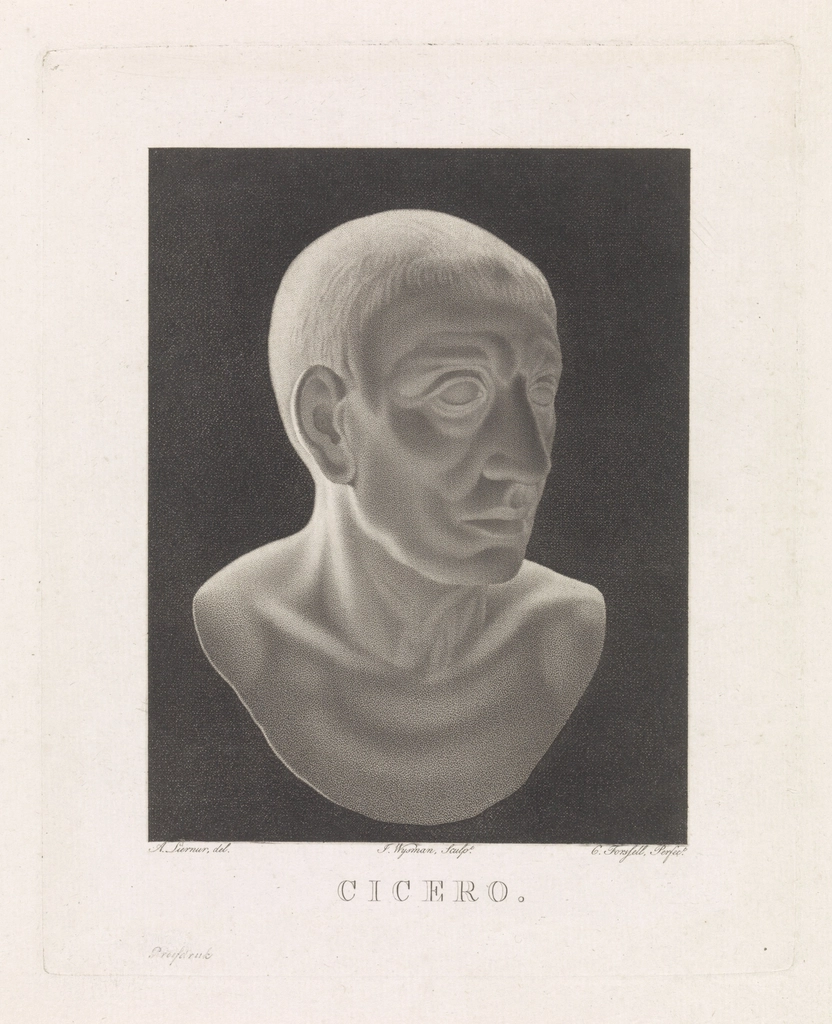
Borstbeeld van Cicero (1778 – by Rijksmuseum is licensed under CC-CC0 1.0
  • Origin: Latin
  • Meaning: unknown

Tully is the English form of the Roman family name, Tullius, which is derived from the praenomen, Tullus, of an unknown meaning. It is likely Etruscan and its meaning has been lost. Other suggestions include that it is from the Latin, tullius (spout of water; gush of blood) or the Latin term, tollere, meaning “to lift,” allegedly referring to the act of a Roman father lifting their newborn son and claiming him.

A notable bearer is Marcus Tullius Cicero.

It was also borne by several male and female saints.

Alternately, Tully has been used on females occasionally, mainly as a diminutive form of Petula.

Male forms

  • Tulli (Catalan)
  • Tullie (French, this is a unisex name in France, though it is rare)
  • Tullió (Hungarian)
  • Tullo (Italian)
  • Tulio (Italian, Spanish)
  • Tullio (Italian)
  • Tuliusz, Tulliusz (Polish)
  • Túlio (Portuguese)

Female forms

  • Túl·lia (Catalan)
  • Tullie (French)
  • Tulia (Hungarian, Italian, Polish, Spanish)
  • Tullia (Italian, Latin)
  • Tulla (Italian)
  • Túlia (Portuguese)

Sources

Velia

  • Origin: Italian
  • Meaning: unknown
  • Gender: feminine
  • It (VAY-lee-ah); Eng (VEE-lee-ah)
  • Usage: Italian, Portuguese, Spanish

The name is of uncertain origin or meaning, it has been suggested to be from an Old Roman gens name, Velius, possibly meaning “concealed.” It may have also been taken from the name of an Ancient Roman city in Salerno, which possibly has the same meaning as above, and has also been suggested to be a contracted form of Evelia or Evelina. It is mainly used in Lazio and Tuscany. It was further popularized in Italy by the 1923 novel by Bruno Cicognani, La Velia.

It is also the name of a genus of aquatic insect in the family veliidae.

It appeared in the U.S. Top 1000 Popular Female Names between 1929 and 1930, peaking at #836 in 1929.

There are also the masculine forms of Velio, Velino (Italian), Velius (Latin) and the Bulgarian, Velian Велиян.

Other forms include:

  • Vélie (French)
  • Vélia (Hungarian)
  • Veliana Велиана, Веляна (Italian, Bulgarian)
  • Velina (Italian)
  • Welia (Polish)
  • Velia (Portuguese, Spanish)

Sources

Villano, Villana

Photo by Helena Lopes on Pexels.com
  • Origin: Italian
  • Meaning: “farmhand, countryman, peasant”

From the Medieval Italian term, villano, meaning a farmhand, countryman, peasant, ultimately from the Latin villanus, of the same above meaning.

Both its masculine form of Villano and its feminine form of Villana were in common use in Medieval Italy. Its masculine form was born by two 12th-century Italian bishops, and its feminine form was born by Bl. Villana de Botti (1332-1360), an Italian nun and penitent who is currently up for canonization by the Catholic Church.

Both names fell out of use in Italy due to the term later taking on the meaning of a rude or crass person. Villano is however, also an Italian surname. Its gallicized forms of Villain and Villaine appear in sporadic use in France between the 11th-17th centuries.

Villanella is a type of Italian music, which later spun off the Villanelle (derived from pluralized of the former word), which is the name of a type of pastoral poem that became popular in 19th-century England.

Villanelle was used as the name of a character in the 1987 Jeannette Winterson novel, The Passion. It was then used as the name of a character in the Luke Jennings’ thriller novel, Codename Villanelle, which later spun off the BBC series, Killing Eve (2018-2022). Since 2018, the name has appeared in sporadic use in the U.K. being given to 5 baby girls a year.

Theoretically, Villanella could have been a Medieval diminutive form of Villana, and it would then be possible to gallicize the name to Villanelle, but I cannot find any records for either name being used prior to the 21st-century, and Villana’s French form was Villaine, which would more likely to have lend itself to the diminutive form of Villainette.

Masculine forms:

  • Villain (French, rare)
  • Villanus (Late Latin)
  • Willan (Polish, rare)

Feminine forms

  • Villaine (French)
  • Willana (Polish)

Sources