Anastasia

Gender: Feminine
Origin: Greek
Meaning: “resurrection.”
Eng (an-ne-STAY-zha); (ah-na-STAH-zee-a)

The name is derived from the Greek masculine name, Anastasios (Αναστασιος), which is from the Greek (anastasis) αναστασις the word for resurrection.

The name was popularized in the Orthodox Christian world by an early Christian marytr of Dalmatia, revered as the patron saint of weavers. It is borne by several other saints as well.

Usually, the name is bestowed upon children born around the Easter season, currently, Anastasia is one of the most popular female names in Russia and in other former Soviet countries. Its rankings are as follows:

  • # 1 (Belarus, 2011)
  • # 1 (Moldova, 2008)
  • # 1 (Ukraine, 2010)
  • # 2 (Russia, 2011)
  • # 3 (Estonia, 2011)
  • # 3 (Latvia, 2011)
  • # 5 (Georgia, 2011)
  • # 12 (Kazakhstan, 2010)
  • # 364 (United States, 2010)
  • # 461 (France, 2009)

In the English-speaking world, the name was occasionally used in the Middle Ages in its archaic English forms of Anastice or Anstice (AN-ne-stis); (AN-stis). It was never very common and was only re-introduced into the English-speaking world via Eastern European immigrants in the United States starting in the late 19th-century.

In the Western World, the name is most famously associated with the youngest daughter of the Tsar Nicholas II of Russia, who was rumored to have survived the massacre of her family.

The designated name-days are: December 25 (Germany/Poland), December 22 (Greece), January 4 (Russia), February 4 (Russia), February 27 (Poland), April 15 (Czech Republic/Hungary/Poland), April 30 (Slovakia), August 17 (Poland) and November 11 (Lithuania/Poland/Russia).

Other forms of the name include:

  • Anastasiya Анастасия (Bulgarian/Russian/Ukrainian: a-nah-stas-SEE-ya)
  • Anastàsia (Catalan)
  • Anastasija Анастаија Анастасія (Belorusian/Croatian/Latvian/Lithuanian/Macedonian/Serbian/Slovene)
  • Asja (Croatian/Bosnian)
  • Anastazie (Czech)
  • Anastázie (Czech: ah-nah-STAHZ-ye)
  • Anastasia ანასთასია (Dutch/English/Estonian/Galician/Georgian/German/Greek/Italian/Romanian/Scandinavian/Spanish)
  • Anastasie (French: a-na-stah-ZEE)
  • Anastace/Anstice (English: archaic)
  • Nastassja (German/Rusyn)
  • Anasztázia (Hungarian)
  • Nasztázia (Hungarian)
  • Neszta (Hungarian)
  • Anastasía (Icelandic)
  • Nastachu Настачи (Mari)
  • Nastasu Настаси (Mari)
  • Anastazja (Polish: a-na-STAHZ-yah)
  • Nastazja (Polish)
  • Anastásia (Portuguese)
  • Anna Staschia (Romansch)
  • Staschia (Romansch)
  • Stasia (Romansch)
  • Anastázia (Slovak)

Czech/Slovak diminutives are: Anaska, Anastazka, Anastázička, Anuška, Nasťa, Nastička, Nastík, Staci, Stasa, Staska, Stáza, Stázi, Stazinka, Tazia.
English short forms are: Ana, Annie, Stacey and Tacey.
Greek diminutives are: Natasa, Sia, Tasia , Tasoula.
Polish diminutives are: Ania, Anka, Nastka, Nastusia, Stasia, Staska, Tusia.
Russian diminutives are: Anya, Asya, Nastasya, Nasten’ka, Nastya, Nastyona, Nastyuha, Stasya

Masculine forms include:

  • Anastas Анастас (Bulgarian/Russian)
  • Anastazije (Croatian)
  • Anastáz/Anastásius (Czech)
  • Anastasius (Dutch/Latin)
  • Staas (Dutch: originally a diminutive form, used as an independent given name)
  • Anastasio (Galician/Italian/Spanish)
  • AnastasiosΑναστάσιος (Greek: Modern)
  • Anasztáz (Hungarian)
  • Anastazy (Polish)
  • Anastasi (Romansch)
  • AnastasiyАнастасий (Russian/Ukrainian)

Sources

  1. http://www.behindthename.com/name/anastasia
  2. http://www.askoxford.com/firstnames/anastasia?view=uk

Sabina

Gender: Feminine
Origin: Latin Сабина
Meaning: “Sabine.”
Eng (suh-BEE-nah; suh-BYE-nah).

The name comes from a Roman cognomen, Sabinus, which was usually carried by people of Sabine origins. The Sabines were an ancient Italic people who lived in Central Italy and whose culture was eventually absorbed by the Romans.

The name was borne by an early Christian saint and martyr. It is also the name of a region in Italy which takes its name from the tribe.

It is also the name of a genus of tree, which has probably further popularized the name.

The name could also be from the Arabic, sometimes transliterated as Sabeen, meaning “follower of another religion” and was said to be a name given to the Prophet Mohammed by non-Muslims.

Currently, Sabina is the 13th most popular female name in Kazakhstan, (2010), while Sabine is the 392nd most popular in the Netherlands, (2010).

The name is used throughout Europe and Central Asia.

Other forms include:

  • Sabien (Dutch)
  • Sabine (German/French)
  • Szabina (Hungarian)
  • Sabeena (Indian)
  • Savina (Italian)

Masculine forms include:

  • Sabino (Italian)
  • Savino (Italian)
  • Sabinus (Latin)
  • Sabin (Romanian)

A Czech and Polish diminutive is Sabinka.

Anna, Anne

Gender: Feminine
Origin: Biblical Hebrew
Meaning: “grace.”
(ANN; AHN). (ANN-uh; AHN-nah). (HANN-uh; HAHN-nah)

Anne is possibly one of the quintessential classic English and French female names. Prior to the 18th-century, it seems that every other girl born in England was either named Anne, Jane or Mary. There were several British and French queens who bore this simplistic moniker, including the ill fated Anne Boleyn, the mother of Elizabeth I. The history of Anne is rather long and complicated.

It was foremost popularized through the cult of St. Anne, a legendary figure who was said to be the mother of the Virgin Mary and the grandmother of Christ.

In Brittany, the name became especially popular because it happened to coincide with the name of an ancient Celtic goddess, her cult being replaced by St. Anne’s. In fact, it was borne by one Breton Princess, Anne of Brittany.

The name was introduced into Britain by the French-Normans after the invasion in 1066. Previously, there had been a minor Saxon king named Anna, but in this case the name is related to the Saxon arn (eagle). Anna and Anne are still occasionally used as male given names in Friesland.

Other than the apocryphal saint, the name Anne can be traced directly back to the Bible. In the New Testament, it is the name of a prophetess who predicts the Crucifixion of Christ.

Anna (Αννα), is the Greek translation of the early Hebrew Channah חַנָּה, usually transliterated as Hannah, meaning “grace.”

Hannah is borne in the Old Testament by the faithful mother of the prophet, Samuel.

Hannah has always been popular among Jewish families, but was virtually unheard of among non-Jews before the Reformation, except in some cases where it may have been used as a diminutive form of Johanna, spelled Hanna.

It was the Byzantines who had introduced the Anna form to the world, making it popular throughout Eastern and Southern Europe. It was a very popular name among the Byzantine royal family and it was borne by the majestic Anna of Byzantium.

Anna may be the more melodic form of the bunch, but Anne’s minimalistic qualities are charming. Short, to the point, no frills. It’s not a bad name, though it does lack some spice, which is why parents are probably more attracted to its more exotic alternatives. In fact, Anne only comes in at # 608 in the top 1000 female names of the United States. It is safe to say, however, that she is very much loved in the middle name spot.

Anna is currently one of the most popular female names in Europe and abroad. Her rankings are as follows:

  • # 1 (Austria, 2010)
  • # 1 (Estonia, 2011)
  • # 2 (Hungary, 2010)
  • # 3 (Ana, Georgia, 2010)
  • # 3 (Iceland, 2010)
  • # 4 (Ana, Croatia, 2010)
  • # 4 (Czech Republic, 2010)
  • # 4 (Germany, 2011)
  • # 4 (Ukraine, 2010)
  • # 5 (Faroe Islands, 2010)
  • # 5 (Ana, Portugal, 2010)
  • # 6 (Armenia, 2010)
  • # 6 (Ane, Greenland, 2002-2003)
  • # 6 (Ana, Romania, 2009)
  • # 6 (Ana, Serbia, 2010)
  • # 7 (Latvia, 2011)
  • # 7 (Russia, 2011)
  • # 8 (German-speaking Switzerland, 2010)
  • # 9 (Denmark, 2011)
  • # 10 (Netherlands, 2010)
  • # 10 (Northern Ireland, 2010)
  • # 10 (Norway, 2010)
  • # 11 (Italy, 2010)
  • # 12 (Ireland, 2010)
  • # 14 (Poland, 2010)
  • # 16 (Catalonia, 2010)
  • # 26 (Canada, B.C., 2010)
  • # 28 (Italian-speaking Switzerland, 2010)
  • # 28 (United States, 2010)
  • # 29 (Scotland, 2010)
  • # 40 (France, 2009)
  • # 46 (French-speaking Switzerland, 2010)
  • # 53 (Belgium, 2009)
  • # 63 (England/Wales, 2010)
  • # 71 (Australia, 2010)
  • # 81 (Sweden, 2010)
  • # 83 (Spain, 2010)
Other forms of the name include:
  • Anneen (Afrikaans/Low German)
  • Anna Анна (Afrikaans/Albanian/Armenian/Breton/Bulgarian/Catalan/Corsican/Czech/Dutch/English/Estonian/Faroese/Finnish/French/Frisian/German/Greek/Hungarian/Icelandic/Italian/Latvian/Limburgish/Maltese/Polish/Russian/Ukrainian/Scandinavian/Slovak)
  • Anne (Basque/Dutch/English/French/Scandinavian)
  • Gánna Га́нна (Belarusian)
  • Annaig (Breton)
  • Annick (Breton)
  • Maina (Breton)
  • Mannaig (Breton)
  • Mannick (Breton)
  • Naig (Breton)
  • Ana Ана ანა (Bulgarian/Croatian/Galician/Georgian/Lombard/Macedonian/Portuguese/Romanian/Samogaitian/Serbian/Slovene/Spanish/Venetian)
  • Jana (Croatian/Ladino)
  • Aneta (Czech/Polish/Samogaitian/Slovak)
  • Aina (Catalan)
  • Anica (Croatian/Serbian/Slovene)
  • Ane (Danish)
  • Anika (Danish)
  • Anneke (Dutch)
  • Anneken (Dutch)
  • Annika (Dutch/Finnish/German/Latvian/Scandinavian)
  • Anka (Dutch/Frisian/German)
  • An(n)ke (Dutch/Frisian)
  • Anouk (Dutch/French)
  • Ans (Dutch)
  • Enneke (Dutch)
  • Enneken (Dutch)
  • Anita (English/German/Polish/Spanish)
  • Annette (English/French/German)
  • Anissa (English)
  • Annelle/Annella (Estonian)
  • Anete (Estonian/Latvian)
  • Anett (Estonian)
  • Anu (Estonian)
  • Anni (Finnish)
  • Annikki (Finnish)
  • Anniina (Finnish)
  • Annukka (Finnish)
  • Niina (Finnish)
  • Anaïs (French/Provençal)
  • Annouche (French)
  • Ninette (French)
  • Ninon (French)
  • Ninouk (French)
  • Anje (Frisian)
  • Ankea (Frisian)
  • Antje (Frisian)
  • Antjen (Frisian)
  • Anute (Fruilian)
  • Anano (Georgian)
  • Annchen (German)
  • Annel (German)
  • Annele (German/Latvian)
  • Anneli(e) (German/Finnish/Swedish)
  • Annet (German)
  • Anina (German)
  • Anja (German/Slovene)
  • Anouschka (German/Italian/Russian)
  • Annaki (Greek)
  • Annoula (Greek)
  • Noula (Greek)
  • Anikó (Hungarian)
  • Annuska (Hungarian)
  • Panni (Hungarian)
  • Áine (Irish)
  • Ánna (Irish)
  • Annarella (Italian)
  • Annella (Italian)
  • Annetta (Italian)
  • Annettina (Italian)
  • Nona (Italian/Romansch)
  • Ance (Latvian)
  • Annija (Latvian)
  • Anninya (Latvian)
  • Ona (Lithuanian)
  • Annamma (Malayalam)
  • Annam (Malayalam)
  • Onnee (Manx)
  • Âone (Norman)
  • Aenna/Aenne (Old High German)
  • Annehe (Old High German)
  • Änna/Änne (Old High German)
  • Neta (Piedmontese)
  • Noto (Piedmontese)
  • Anke (Plattdeutsch)
  • Anneke(n) (Plattdeutsch)
  • Analia (Romansch/Spanish)
  • Annina (Romansch)
  • Annotta (Romansch)
  • Anca (Romanian)
  • Anicuta (Romanian)
  • Anėta (Samogaitian)
  • Anėkė (Samogaitian)
  • Annag (Scottish)
  • Ghianna (Sicilian)
  • Janna (Sicilian)
  • Nanna (Sicilian)
  • Anniken (Swedish)
  • Ann (Welsh)
  • Nan (Welsh)
  • Nanno (Welsh)
  • Nanw (Welsh)
  • Aana (Wolof)
As for the Hannah forms

Hanna without an H is the prefered form on Continental Europe, usually pronounced (HAHN-nah) and in French like Anna. Hanna and Hanne (HAHN-neh) are also used as diminutive forms of Johanna/Johanne in the Netherlands, Sweden, Norway, Denmark and Germany. There is the Hungarian Hajna pronounced (HOY-no). The Czech/Slovak form of Hana nickname Hanka. There are the Yiddish forms of Heyna, Hayna, Hejna (all pronounced like HAY-nah) including the diminutive forms of HenaHende, Hendel and Henye.  The Polish diminutive form of Hania, which might make an interesting alternative to Anya or Hannah. Hannah, Hanna and Henna are all used in the Middle East.

Of course, how could we ever forget the popular diminutive forms of Annie and Nan.

Paul

Gender: Masculine
Origin: Latin
Meaning: “short; small; humble; few.”
Eng (PAWL)

The name is derived from the Latin Roman family name, Paulus, which could translate as meaning, “small, short; humble; few.”

Paul and his various forms has to be one of the most common male names used throughout the Christian world. It has been used equally among Orthodox Christians, Roman Catholics and Protestants.

Its most famous bearer was Paul of Tarsus, whose real name was Saul. St. Paul, as referred to by the Roman Catholic and Eastern Orthodox Churches, is attributed as being the author of much of the New Testament.

The name was borne by several popes, royals and saints thereafter.

Currently, its Germanic form of Paul is the 8th most popular male name in Germany, (2011). His rankings in other countries are as follows:

  • # 13 (Austria, 2010)
  • # 22 (France, 2009)
  • # 41 (Romania, 2009)
  • # 90 (Ireland, 2010)
  • # 130 (Scotland, 2010)
  • # 178 (United States, 2010)
  • # 485 (Netherlands, 2010)
His foreign equivalents rankings are as follows:
  • # 3 (Pablo, Spain, 2010)
  • # 4 (Páll, Faroe Island, 2010)
  • # 4 (Pau, Catalonia, 2010)
  • # 17 (Paweł, Poland, 2010)
  • # 26 (Pablo, Chile, 2010)
  • # 29 (Pavel, Czech Republic, 2010)
  • # 31 (Pablo, Catalonia, 2010)
  • # 44 (Pau, Spain, 2010)
  • # 91 (Pál, Hungary, 2010)
  • # 144 (Pablo, France, 2009)
  • # 202 (Paolo, France, 2009)
  • # 361 (Pablo, United States, 2010)

Other forms of the name include:

  • Pali (Albanian)
  • Paulë (Albanian)
  • Boulos/Bulos بولس (Arabic)
  • Faulus (Aramaic)
  • Boghos Պողոս (Armenian)
  • Poghos Պողոս (Armenian)
  • Paul (Basque/Dutch/English/Estonian/German/French/Romanian/Scandinavian/Silesian)
  • Paweł Павeл (Belarusian/Polish)
  • Polus (Berber)
  • Paol (Breton)
  • Pavel Павел (Bulgarian/Czech/Russian/Slovene)
  • Pavolo (Calabrian)
  • Pavulu (Calabrian)
  • Pau (Catalan/Occitanian)
  • Pawl (Cornish/Welsh)
  • Paulu (Corsican/Sardinian/Sicilian)
  • Pavao (Croatian)
  • Pavle პავლე Павле (Croatian/Georgian/Macedonian/Serbian)
  • Pavo (Croatian)
  • Palle (Danish)
  • Poul (Danish)
  • Pauwel (Dutch)
  • Paavel (Estonian)
  • Paavo (Estonian/Finnish)
  • Páll (Faroese/Icelandic)
  • Paavali (Finnish)
  • Pauli (Finnish)
  • Pol (Flemmish/Romansch)
  • Paale (Frisian)
  • Pals (Frisian)
  • Paulus पौलुस (Frisian/Hindi/Latin)
  • Pay (Frisian)
  • Powles (Frisian)
  • Pouw (Frisian)
  • Pauli (Fruilian)
  • Pódhl (Gaelic)
  • Pól (Gaelic)
  • Paulo (Galician)
  • Pavlos Παυλος (Greek)
  • Pāl पॉल (Hindi)
  • Pál (Hungarian)
  • Pósa (Hungarian)
  • Paolo (Italian/Portuguese)
  • Paolino (Italian/Portuguese)
  • Paulinus (Latin)
  • Pāvils (Latvian)
  • Paulius (Lithuanian)
  • Povilas (Lithuanian)
  • Paol (Lombard)
  • Paulose (Malayalam)
  • Pawl (Maltese)
  • Pawlu (Maltese)
  • Payl (Manx)
  • Paora (Maori)
  • Pål (Norwegian/Swedish)
  • Pavel (Romanian)
  • Paulin (Romansch)
  • Polet (Romansch)
  • Polin (Romansch)
  • Pulegn (Romansch)
  • Pàl (Scots-Gaelic)
  • Pawůł (Silesian)
  • Pavol (Slovak)
  • Pawoł (Sorbian)
  • Pablo (Spanish)
  • Paoro (Tahitian)
  • Pàul (Tuscan)
  • Pavlo Павло (Ukrainian)

For a Reference a Female forms See Paula and Paulina (soon to come)

Linus

Gender: Masculine
Origin: Greek
Meaning: debated
Eng (LIE-nus); Germ (LEE-nuws); Swe (LEE-nus)

The name is either derived from the Greek verb ailinon meaning “to whine; complain” or it could be from the Greek Λινος (linos) meaning “flax.” In the latter case, the Lithuanian male name, Linas, would share the same etymology. It was also a Roman cognomen, which may have been derived from the Greek.

In Greek mythology, the name was borne by a son of Apollo, who in some legends was accidentally killed by his own father and in other legends was the music teacher of Hercules.

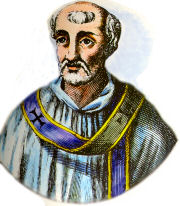
The name was also borne by the 2nd pope and saint who succeeded St. Peter.

In the English-speaking world, the name is often associated with the Charles Schulz character who appears in the Peanuts Comic strips.

The name was fairly common in 19th-century America and Britain, being borne by Linus Bacon Comins (1817-1892), a Massachusetts politician, Linus Yale, Jr. (1821-1868) a mechanical engineer, Linus Pauling (1901-1994) a famous American chemist and British actor, Linus Roache (b.1964)

Currently, Linus is the 30th most popular male name in Germany, (2011). His rankings in other countries are as follows:

  • # 44 (Sweden, 2010)
  • # 53 (Norway, 2010)

Other forms of the name include:

  • Llinu (Asturian)
  • Lin Лін Лин (Belarusian/Breton/Bulgarian/French/Piedmontese/Russian/Serbian/Slovene/Ukrainian)
  • Lli (Catalan)
  • Lino (Croatian/Galician/Italian/Portuguese/Spanish)
  • Linus (Danish/Dutch/English/Estonian/Finnish/French/German/Hungarian/Norwegian/Polish/Romanian/Swedish)
  • Líneas (Gaelic)
  • Linusi ლინუსი (Georgian)
  • Linos Λινος (Greek)
  • Línus (Icelandic)
  • Lins (Latvian)
  • Linas (Lithuanian)

Benedict, Benedikt

Gender: Masculine
Origin: Latin
Meaning: “blessed.”

The name comes directly from the Late Latin name Benedictus meaning “blessed.” The name was borne by a 6th-centuy Italian monk and saint who credited for being the founder of the Order of the Benedictines.

The name was very common throughout Medieval Europe, being borne by 16 popes, it was fairly popular in England, in the form of Bennett.

The name was also commonly used among German-Jews, being used as a cognate of the Hebrew male name Baruch בָּרוּךְ (blessed).

In the United States, the name became taboo to use due to its associations with Benedict Arnold (1741-1801) a famous American deserter and traitor to the British.

The name recently skyrocketed in Germany after the succession of the German born Pope Benedict XVI. It is currently the 93rd most popular male name in Germany, (2011). It is especially popular in Bavaria.

His rankings in other countries are as follows:

  • # 1 (Bence, Hungary, 2010)
  • # 32 (Benedek, Hungary, 2010)
  • # 294 (Benoît, France, 2009)

Other forms of the name include:

  • Benedikti (Albanian)
  • Benedet (Aragonese)
  • Benedictu (Asturian)
  • Benedita (Basque)
  • Beñat (Basque)
  • Benead (Breton)
  • Benet (Catalan)
  • Benedettu (Corsican/Maltese/Sardinian)
  • Benedikt Венедикт (Croatian/Czech/German/Icelandic/Norwegian/Russian/Serbian/Scandinavian/Ukrainian)
  • Ben(d)t (Danish/Norwegian)
  • Benedictus (Dutch/Late Latin)
  • Benedict (English/German/Romanian/Scandinavian)
  • Bennett (English)
  • Pentti (Finnish)
  • Bénédict (French)
  • Benoît (French)
  • Beinidict (Gaelic)
  • Bieito (Galician)
  • Benedikhti ბენედიქტე (Georgian)
  • Bendix (German/Norwegian)
  • Bennet (German)
  • Benz (German)
  • Venediktos Βενέδικτος (Greek)
  • Bence (Hungarian)
  • Benedek (Hungarian)
  • Benett (Hungarian)
  • Benedetto (Italian)
  • Benito (Italian/Spanish)
  • Bettino (Italian)
  • Bendiks (Latvian)
  • Benediktas (Lithuanian)
  • Bendik (Norwegian)
  • Benedix (Plattdeutsch)
  • Benedykt (Polish)
  • Benedito (Portuguese)
  • Bento (Portuguese)
  • Benezet (Provençal)
  • Banadet (Romansch)
  • Banadegt (Romansch)
  • Bandet (Romansch)
  • Benedegt (Romansch)
  • Binidittu (Sicilian)
  • Beňadik (Slovak)
  • Bengt (Swedish)
  • Bened (Welsh)
  • Benesh (Yiddish)

Feminine forms include:

  • Benedetta (Corsican/Maltese/Italian/Sardinian)
  • Benedikta (Czech/German)
  • Benedikte (Danish/Norwegian)
  • Bénédicte (French)
  • Benoîte (French)
  • Benita (Italian/Spanish)
  • Bettina (Italian)
  • Benedicta (Latin/Romansch)
  • Benedykta (Polish)
  • Benedita (Portuguese)
  • Bengta (Swedish)

Lia

Gender: Feminine
Origin: Italian/Galician/German
(LEE-ah)

The name could either be from the Italian and Galician form of Leah or it could be a German contraction of Rosalia or Julia or any name that ends in -lia.

Currently, it is the 34th most popular female name in Germany, (2011). Her rankings in other countries are as follows:

  • #18 (German-speaking Switzerland, 2010)
  • #59 (Slovenia, 2010)
  • #299 (France, 2009)
  • # 356 (United States, 2010)

The name is borne by German Opera Soprano, Lia Hanus.

Theresa

Gender: Feminine
Origin: Uncertain
Eng (teh-REE-sah; teh-REESE); Spanish (teh-REY-sah); German/Polish (teh-REH-zah); French (teh-HREZ).

The name was first recorded in the 4th century as Therasia. It was borne by the wife of the ex-Roman senator turned Christian Bishop, St. Paulinus of Nola. Therasia had hailed from the Northern Region of Spain, and the name took off as Teresa in both Spain and Portugal.

Its origins are most popularly attributed to the Greek, therizo, meaning, “to harvest” or “to reap.” However, some sources believe that it might be from the Greek word theros meaning “summer” or that it is derived from the name of one of the Santorini islands. It could also very well be an old Iberian name of uncertain etymology. What is certain is that the name’s usage was confined to the Iberian Peninsula up until the 16th-century when it was made famous throughout Europe by St. Teresa of Avila, a Roman Catholic nun and mystic. She is revered as a Doctor of the Church.

In the German-speaking world, it was popularized by Habsburg, Maria Theresa (1717-1780), Empress of the Austro-Hungarian Empire.

It is also borne by a 19th-century French nun, St. Thérèse de Lisieux. She is also revered as a great theologian and Doctor of the Church.

Currently, Teresa/Theresa is the 31st most popular female name in Austria, (2010), the 65th most popular in Germany (2011) and the 100th most popular in Spain, (2010). While in the United States, she comes in at a lowly # 936 (2010).

Popular English nicknames include:  Trace, Tracy, Terry, Tess, Tessa, Tressie (also used as a nickname in Malta), Tress & Reese.
Other forms of the name:
  • Teresa تيريزا (Albanian/Arabic/Catalan/Finnish/German/Italian/Latvian/Polish/Portuguese/Spanish)
  • Terese (Basque/Norwegian/Swedish)
  • Terezija (Croatian/Slovenian)
  • Rezika (Croatian/Slovenian)
  • Resa (Bavarian)
  • Reserl (Bavarian)
  • Resi (Bavarian)
  • Tessa (Bavarian/English/German/Italian)
  • Tereza (Bulgarian/Czech/Maltese/Portuguese-Brazilian/Romanian/Slovak)
  • Teresia (Corsican/Swedish)
  • Terezie (Czech)
  • Thera (Dutch)
  • Theresa (Dutch/German/English)
  • Theresia (Dutch/German/Swedish: common Dutch nicknames are Thera and Trees)
  • Tereesa/Tereese (Estonian)
  • Thérèse (French)
  • Tereixa (Galician)
  • Terisa (German)
  • Therese (German/Scandinavian)
  • Theres (German/Scandinavian)
  • Terézia (Hungarian/Czech/Slovak. Hungarian diminutive form is Teca)
  • Teréz (Hungarian)
  • Teresía (Icelandic)
  • Toiréasa (Irish)
  • Treasa (Irish)
  • Teresiana (Italian)
  • Teresina (Italian)
  • Terina (Italian)
  • Teresija (Latvian)
  • Terēze (Latvian)
  • Tèrìz (Lebanese)
  • Teresė (Lithuanian:Teresijus)
  • Threissya (Malayalam)
  • Trezza (Maltese)
  • Teresita (Spanish)
  • Tessan (Swedish: traditionally a diminutive form, occasionally bestowed as an independent given name)
The designated name-day is often October 15.

Jerome

Gender: Masculine
Origin: Greek ‘Ιερωνυμος
Meaning: “sacred name.”
Eng (jə-ROM), Fre (zheh-HROME)

The name is derived from the Greek male name, Hieronymus (‘Ιερωνυμος).

It was borne by a 5th-century saint who is responsible for creating the Vulgate Bible. He is revered as a Doctor of the Church.

The name was common in England during the 12th-century, but fell out of usage after the Protestant Reformation, only to be reintroduced again in 19th-century America via Catholic immigrants from Germany, Ireland and Italy.

Currently, Jerome is the 208th most popular male name in Germany, (2011).

Other forms of the name include:

  • Jeronimi (Albanian)
  • Hieronimos Հիերոնիմոս (Armenian)
  • Jerolin (Basque)
  • Gerasim Герасім (Belarusian)
  • Jeronim Йероним (Bulgarian)
  • Jeroni (Catalan)
  • Jeronim Јероним (Croatian/Serbian)
  • Jeroným (Czech)
  • Hero (Dutch)
  • Hiëronymus (Dutch)
  • Jeroen (Dutch)
  • Jero(o)m (Dutch)
  • Jerome (English/German)
  • Jérôme (French)
  • Iaróm (Gaelic)
  • Ieróim (Gaelic)
  • Xerome (Galician)
  • Jeromos (Hungarian)
  • Geronimo (Italian)
  • Girolamo (Italian)
  • Jeronimas (Lithuanian)
  • Ġlormu (Maltese)
  • Jiròni (Occitanian)
  • Hieronim (Polish/Slovene)
  • Jerônimo (Portuguese: Brazilian)
  • Jerónimo (Portuguese/Spanish)
  • Ieronim Иерони́м Ієронім (Romanian/Russian/Ukrainian)
  • Jaronas (Romansch)
  • Jerun (Romansch)
  • Giron(n)as (Romansch)
  • Jerone (Sardinian)
  • Zirominu (Sardinian)
  • Giròlamu (Sicilian)
  • Hieronym (Slovak)
  • Jarolím (Slovak)
  • Hierónimo (Spanish)
  • Sierôm (Welsh)


Titus

Titus (Roman Emperor)Gender: Masculine
Origin: Latin
Meaning: “title of honour.”
Eng (TY-tus)

The name comes from the Roman praenomen which is derived from the Latin, titulus, meaning “title of honour.”

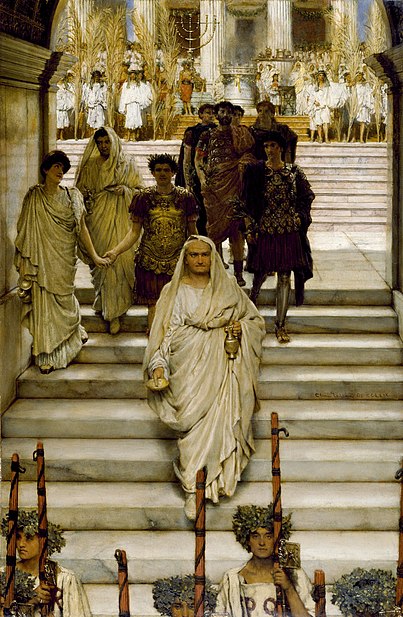
In Ancient History, the name is borne by Titus Flavius Vespasianus, the tenth Roman emperor in the Roman Empire and the second of the Flavian Dynasty.

In the New Testament, the name is borne by a companion of St. Paul who later became the first bishop of Crete and was a recipient of one of Paul’s epistles.

The name was also used by Shakespeare for his tragedy Titus Andronicus (1593).

Currently, Titus is the 253rd most popular male name in Germany, (2011) and the 397th most popular in the United States, (2010).

Other forms of the name include:

  • Tito (Aragonese/Basque/Galician/Italian/Portuguese/Spanish)
  • Titus (Czech/Danish/Dutch/English/French/German/Latin/Norwegian/Swedish)
  • Tiitus (Finnish)
  • Tite (French)
  • Titos Τιτος (Greek Biblical)
  • Titou τιτου (Greek Modern)
  • Titusz (Hungarian)
  • Títus (Icelandic/Slovak)
  • Titas (Lithuanian)
  • Titu Тітъ (Old Church Slavonic)
  • Tytus (Polish)
  • Tit Тит (Romanian/Russian/Croatian/Slovene)

An Italian, Portuguese and Spanish feminine form is Tita.

The designated name-day is January 4th.