Anara

pomegranate-openGender: Feminine
Origin: Kazakh
Meaning: “pomegranate”
(uh-NAH-ruh)

The name come directly from the Kazakh word for the pomegranate. It is a fairly common name in Central Asia, and has even made it over to Pakistan. Other forms include Anar, Anargul, Lunara and the very popular Gulnara, the latter meaning “pomegranate flower.” Pomegranate season occurs in the months of Fall.

Višnja

Gender: Feminine
Origin: Serbo-Croat
Meaning: “cherry.”
(VEESH-nyah)

As summer comes to a close, I almost forgot to post about this lovely gem. Find Cherry too tacky as a given name? Then why not this Balkan beauty. The name comes directly from the South Slavic word for the cherry, and it a fairly common name in the former Yugoslav Republic. In Slovenia, its the name of a mountain Gora Visnja, known as Weichselburg in German.

Maasika

Gender: Feminine
Origin: Estonian
Meaning: “strawberry.”
(MAH-sih-kah).

The name comes directly from the Estonian word for the Strawberry. Summer is strawberry season and today also happens to be Maasika’s name-day.

Maasika is a legit feminine name in Estonia, and if you want something natury and fruity, this might be a nice nod without it sounding too ridiculous.

It even appears on the Estonian calender, its designated name day is July 27.

Jagoda

Gender: Feminine
Origin: Polish/Serbo-Croatian
Meaning: “strawberry” in Serbo-Croat and “berry” in Polish
(yah-GOH-dah)

July is Strawberry season, so I thought I’d give the time of day to write about this name. In Poland the name actually started out as a form of Jadwiga, but with its coincidental meaning of “berry” in Polish, it broke off as an independent name. In Serbo-Croatian the name specifically means “strawberry.”

Amanda, Amandine

  • Gender: Feminine
  • Origin: Latin
  • Meaning: “lovable; fit to be loved.”
  • (uh-MAN-duh); (ah-MOWn-deen).

The name seems to have been coined in the 17th-century. It is believed to be derived from the Latin gerundive amanda. However, the much older masculine form of Amandus seems to have been in usage since the 4th century. It was borne by several early male saints. In the late 1970s, in the United States, Amanda suddenly spiked in popularity coming in at # 3 in 1979. In 1980, it went up to # 2. It currently comes in at # 138. Its French form of Amandine has become widely popular in French speaking countries, although it may actually be derived from the French word amande meaning “almond”. It came in 2006 as the 54th most popular female name in France. Pronounced (ah-MOWn-DEEN) it can be anglicized as (uh-MAN-deen). It might make a more fresher alternative to the dated Amanda. It is also a French culinary term meaning “to garnish with almonds.” It is also the name of a type of potato cultivated in France, the potato most likely got its name due to its distinctive almond shape. Its designated name day is July 9. Nickname options include Amy, Manda and Mandy. Amandina is the Corsican version (ah-mahn-DEE-nah).

Aeronwy

  • Gender: Feminine
  • Origin: Welsh
  • Meaning: “berry; fruit.”
  • (eye-ROAN-wee); (ay-ROAN-wee).

The name is derived from the Welsh aeron which is the name of a river and also the name of an ancient Welsh goddess of fate. It is derived from the word for berry or fruit. The name is currently borne by the daughter of Welsh poet Dylan Thomas (b. 1943). She is said to have been named after the River Aeron which her father had missed while living in London. A variation is Aeronwen which means “white berry,” (eye-RON-wen); (ay-RON-wen). (Upper left, Aeronwy as a baby with her father Dylan Thomas.)

Olivia

Gender: Feminine
Origin: Latin
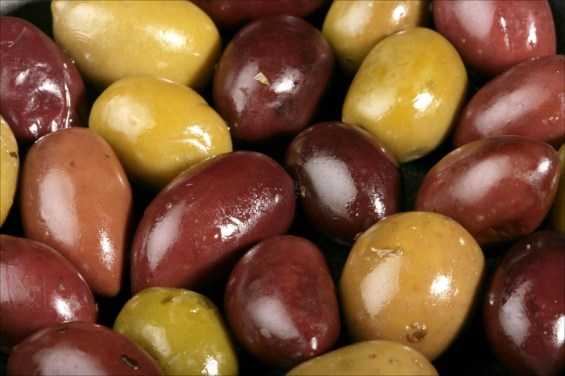
Meaning “olive”
(o-LIV-ee-ah)

The name is often believed to have been an invention of William Shakspeare for his play Twelfth Night, however, the name was borne by a 9th century Sicilian saint. She is considered one of the patron saints of Palermo, and legend has it that she was kidnapped by Muslim invaders and taken into slavery to Tunisia. Her captors were so impressed with her sincerity, virtue and beauty that they permitted her to remain a Christian and to live as a hermitess in a cave.

She was known for performing miracles among the local Tunisians, and many had converted to Christianity as a result. She was imprisoned and tortured and then burnt at the stake. Legend pertains that when they lit the fires at the stake, the flames would not touch her and she was decapitated instead. For whatever reason, she is also considered the patron saint of music.

The name was then possibly introduced into the English speaking world through William Shakespeare in 1599 for one of his characters in the play Twelfth Night. Since then, the name has been in usage in the English speaking world. In the States, the name has been in the top 1,000 since 1880. The name has gradually climbed its way up to the top 10 the last 20 years. In 1989, Olivia came in at # 179 the following year of 1990 saw it jump all the way up to # 72, by 2001 it reached position # 1o and as of last year, 2008, it has made itself a niche at # 6. In Poland, it is at # 5 as the most popular female name, spellt Oliwia. The name is in the top in Canada and the United Kingdom.

The name is used in virtually every European country.

Other forms include:

  • Olivija (Croatian/Serbian/Slovene)
  • Olivie (Czech: ah-LEEV-yeh)
  • Oliva (English/Italian)
  • Olive (English)
  • Olivie/Olivia (French)
  • Olivette (French: obscure)
  • Olívia (Hungarian/Portuguese/Slovak)
  • Olivana/Oliviana (Italian: obscure)
  • Oliveira/Oliviera (Italian)
  • Olivetta (Italian: obscure)
  • Oliwia (Polish: o-LEEV-yah)

Nicknames include: Ollie, Liv, and Livy. A German nickname is Livchen.

A very rare Polish masculine form is Oliwjusz.