Leo

Gender: Masculine
Origin: Latin
Meaning: “lion.”
Eng (LEE-oh)

The name comes directly from the Latin, leo, meaning, “lion.”

Its usage as a given name became popular among Christians after the ascent of Pope Saint Leo the Great (circ. 4th-century CE). It was borne by 12 other popes thereafter.

Leo was also a popular name among the Byzantine Emperors being borne by six.

Leo is also the name of a constellation as well as the 5th sign in the zodiac.

The highest Leo ever ranked in U.S. naming history was in 1903, coming in as the 37th most popular male name. As of 2011, he was the 167th most popular male name in the United States. His rankings in other countries are as follows:

  • # 4 (Finland, 2011)
  • # 4 (Léo, France, 2010)
  • # 14 (Sweden, 2011)
  • # 36 (England/Wales, 2010)
  • # 37 (Croatia, 2009)
  • # 42 (Austria, 2010)
  • # 42 (New Zealand, 2010)
  • # 59 (Scotland, 2010)
  • # 61 (Norway, 2011)
  • # 64 (Catalonia, 2010)
  • # 65 (Australia, NSW, 2011)
  • # 79 (Slovenia, 2010)
  • # 80 (Spain, 2010)
  • # 96 (Ireland, 2010)

Leo is used in about every European country. Other forms of the name include:

  • L”v Лъв (Bulgarian)
  • Leo Лео (Catalan/Croatian/Dutch/English/Estonian/Finnish/German/Italian/Latvian/Portuguese/Romansch/Russian/Scandinavian/Slovene/Spanish)
  • Leoš (Czech)
  • Lev Лев (Czech/Russian)
  • Léo (French)
  • Leó (Hungarian)
  • Lew (Polish)

Melanie

Gender: Feminine
Origin: Greek μελαινα
Meaning: “black, dark.”
Brit/Amer Eng (MEL-ah-NEE); Aus Eng (meh-LAH-nee); Fre (may-lah-NEE); Germ (MEL-ah-nee)

The name is derived from the Latin, Melania, which is derived from the Greek, μελαινα (melaina), meaning, “dark; black.”

In Greek Mythology, Melaina was the name of a nymph.

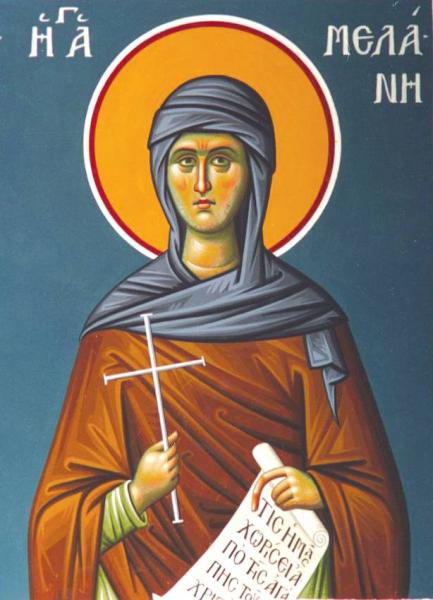
In the early Christian Church, the name was popularized by two 5th-century Roman saints, a grandmother and her granddaughter. Melanie the Younger is known for giving all her wealth to charity.

The name was introduced into England by the conquering Normans, but was never really common. The name became rather common in both the United States and in Britain starting in the early 20th-century, whether it was a French import, or if the character of Melanie Wilkes in Margaret Mitchell’s novel, Gone with the Wind (1936), are attributable to its popularity is up to conjecture.

Currently, Melanie is 89th most popular female name in the United States, (2011). Her rankings in other countries are as follows:

  • # 54 (Austria, 2010)
  • # 60 (Argentina, 2009)
  • # 237 (France, 2010)
  • # 376 (Netherlands, 2011)

Other forms of the name include:

  • Melanya (Armenian)
  • Melanija Меланија Мелания (Croatian/Macedonian/Russian/Serbian/Slovene)
  • Melánie (Czech: meh-LAHN-ye)
  • Melanie (Dutch/English/German)
  • Mélanie (French)
  • Melaina Μελαινα (Greek)
  • Melánia (Hungarian/Slovak)
  • Melani (Hungarian)
  • Melania (Italian/Late Latin/Polish/Spanish)
A common German short form is Mellie.

Italian masculine forms are: Melanio and Melaneo.

Polish diminutives are: Melanka, Melcia and Melusia.

The name is also borne by:

British pop singer, Melanie Brown, (former Spice Girl) b.1975. Melanie Chrisholm, aka Sporty Spice, b. 1974. American actress, Melanie Griffith (b.1957) and French actress and star of Inglorious Bastards, Mélanie Laurent (b. 1983).

The designated name-days are: January 10 (Hungary), January 13 (Poland), June 30 (Slovakia) and December 31 (France/Germany/Poland).

Sources

  1. http://www.behindthename.com/top/search.php?terms=melanie
  2. http://www.askoxford.com/firstnames/melanie?view=uk
  3. http://www.newadvent.org/cathen/10154a.htm
  4. http://ocafs.oca.org/FeastSaintsLife.asp?FSID=103701

Gabriel, Gabriella

Origin: Hebrew גַבְרִיאֵל  Γαβριηλ
Meaning: “strong man of God.”
Eng (GABE-ree-el); (gah-bree-EL-ah); Fre (gah-bree-EL); Germ (GAHP-ree-el); Pol (GAHP-ryel)

The name is derived from the Biblical Hebrew, גַבְרִיאֵל (Gavri-el) meaning, “strong man of God.”

In Judeo-Christian religions, it is the name of a powerful archangel, who is often viewed as a messenger of God. He appears several times in the Old and New Testaments.

Among Christians, one of his most important messages was relayed to the Virgin Mary that she would be the mother of Jesus. Islamic tradition also believes the same, and in Islam, it was the angel Gabriel who revealed the Qu’ran, (through God), to Mohammed.

In Mormon theology, Gabriel is believed to be the embodiment of Noah in the afterlife.

Gabriel is a fairly common name among Christians, Jews and Muslims, making him an extremely cross-cultural portable name.

Currently, in the United States, his popularity has been rising. He is the 24th most popular male name, (2011). In other countries, his rankings in all his various forms are as follows:

  • # 2 (Gabriel(e), Liechtenstein, 2010)
  • # 3 (Brazil, 2011)
  • # 4 (Romania, 2009)
  • # 6 (Gabriele, Italy, 2009)
  • # 7 (France, 2010)
  • # 9 (Quebec, Canada, 2011)
  • # 19 (Croatia, 2009)
  • # 26 (Belgium, 2008)
  • # 28 (Canada, BC, 2010)
  • # 28 (Mexico, 2010)
  • # 29 (Austria, 2010)
  • # 35 (Spain, 2010)
  • # 40 (Poland, 2009)
  • # 47 (Sweden, 2011)
  • # 48 (Norway, 2011)
  • # 52 (Catalonia, 2010)
  • # 78 (England/Wales, 2010)
  • # 95 (Australia, NSW, 2011)
  • # 124 (Scotland, 2010)
  • # 189 (Djibril, France, 2010)
  • # 313 (Jibril, France, 2010)

Other forms of the name include:

  • Jibrail/Jibrīl جبرائيل ጂብሪል (Arabic/Ethiopian)
  • Gabriel გაბრიელი ገብርኤል
    (Armenian/Catalan/Coptic/Czech/Danish/English/Ethiopian/Finnish/French/Georgian/German/Norwegian/Polish/Portuguese/Romanian/Romansch/Spanish/Swedish)
  • Gavrik (Armenian)
  • Cəbrayıl/Cibril (Azeri)
  • Gawryil Гаўрыіл (Belarusian)
  • Džibril/Džebrail (Bosnian)
  • Gavrail Гавраил (Bulgarian)
  • Zheberejil Жәбірейіл (Central Asian)
  • Gabrijel (Croatian/Maltese/Serbian)
  • Gabriël (Dutch)
  • Gaabriel (Estonian)
  • Gabrel (Ethiopian)
  • Kaapo/Kaapro (Finnish)
  • Gabriél Γαβριήλ (Greek)
  • Gavril Γαβριηλ (Greek)
  • Gavriel גַּבְרִיאֵל (Hebrew)
  • Gábriel (Hungarian)
  • Gábor (Hungarian)
  • Gabríel (Icelandic)
  • Jibril (Indonesian)
  • Gaibriéil (Irish-Gaelic)
  • Gabo/Gabbo (Italian)
  • Gabriele (Italian: more common form)
  • Gabriellino (Italian)
  • Gabriello (Italian)
  • Gabrio (Italian)
  • Cibrayîl (Kurdish)
  • Gabrielus (Latin)
  • Gabriels (Latvian)
  • Gabrielius (Lithuanian)
  • Jibrail (Malaysian)
  • Gavriilu Гаврїилъ (Old Church Slavonic)
  • Khabbriele (Puglian)
  • Gabin (Provençal)
  • Gavril Гавриил (Romanian/Russian)
  • Crabiele/Gabilele/Gabriello (Sardinian)
  • Cabbrieli (Sicilian)
  • Gabri’el ܠܒܪܝܐܝܠ (Syrian)
  • Gebrael (Syrian)
  • Cebrâîl (Turkish)
  • Gavrel גַאבְֿרֶעל (Yiddish)

English short form is Gabe.

Its feminine form of Gabriella/Gabriela is also rising in popularity. Currently, Gabriella is the 34th most popular female name in the United States, (2011). Her rankings in other countries are as follows:

  • # 3 (Gabriela, Bulgaria, 2009)
  • # 5 (Gabrielė, Lithuania, 2011)
  • # 5 (Gabrielle, Philippines, 2011)
  • # 7 (Gabriela, Columbia, 2011)
  • # 8 (Gabriela, Romania, 2009)
  • # 9 (Gabriela, Puerto Rico, 2011)
  • # 10 (Gabriela, Brazil, 2010)
  • # 13 (Gabriela, Poland, Warsaw, 2010)
  • # 19 (Gabriela, Poland, 2009)
  • # 28 (Gabrijela, Croatia, 2009)
  • # 30 (Gabriela, Mexico, 2010)
  • # 30 (Gabrielly, Brazil, 2010)
  • # 36 (Gabriela, Croatia, 2009)
  • # 38 (Gabriela, Chile, 2010)
  • # 64 (Australia, NSW, 2011)
  • # 64 (Gabriela, Spain, 2010)
  • # 67 (Gabrielle, France, 2010)
  • # 72 (Canada, BC, 2010)
  • # 94 (Gabrielle, Canada, BC, 2010)
  • # 119 (Gabrielle, United States, 2011)
  • # 466 (France, 2010)

Other feminine forms include:

  • Gebre’elwa ገብርኤሏ (Amharic/Ethiopian)
  • Gabriela (Bulgarian/Croatian/Czech/German/Polish/Portuguese/Romanian/Scandinavian/Slovak/Spanish)
  • Brielle (Cajun: abbreviated form of Gabrielle)
  • Gabrijela (Croatian/Serbian)
  • Gabriëlle (Dutch)
  • Briella/Briela (English)
  • Gabrielle (French/English)
  • Gabria (Italian)
  • Gabrielina (Italian)
  • Gabriella (Italian/English/Hungarian/Scandinavian: more common form in Italy)
  • Gabrielė (Lithuanian)
  • Gavriila Гавриила (Russian)

Czech diminutives are: Gába, Gabika, Gábina, Gabrina and Gabby.

A Polish diminutive is Gabrysia (gah-BRIH-shah).

English short forms are: Gabby and Ella.

Designated name-days are: February 10/27 (Poland), February 19 (Sweden), March 24 (Czech/Finland/Poland/Slovakia/Sweden), September 29 (France/Germany), December 12 (Hungary)
Raphael

Gender: Masculine
Origin: Hebrew רָפָאֵל Ραφαηλ
Meaning: “God is healer.”
Fre (ra-fa-EL); Eng (RAF-ee-el; RAY-fee-əl)

The name is found in Judeo-Christian and Islamic legend as the name of a major archangel. In the Bible, he is mentioned in the Book of Tobit, which is considered canonical in the Roman Catholic, Orthodox and Anglican tradition. Due to Raphael’s deliverance of Sarah from the demon Asmodeus (who killed every husband she married before consumation), Raphael has been invoked as a matchmaker by Catholics.

Raphael also appears in the non-canonical Book of Enoch in which he is responsible for binding the fallen angel Azazel

In Islamic tradition, he is known as Israfel/Israfil and it is believed that he will blow the trumpet on Judgement Day.

It is interesting to note that the modern Hebrew word for a medical doctor is  דוֹקטוֹר (rophe), compare to the first element of Raphael.

Raphael is currently a trend across Europe, in France, Raphaël is the 11th most popular male name, (2010). His rankings in his various forms are as follows:

  • # 3 (Liechtenstein, 2010)
  • # 11 (Rafael, Brazil, 2010)
  • # 17 (Austria, 2010)
  • # 40 (Rafał, Warsaw, Poland, 2010)
  • # 48 (Rafał, Poland, 2009)
  • # 50 (German-speaking, Switzerland, 2010)
  • # 54 (Raphaël, Belgium, 2008)
  • # 55 (Rafael, Spain, 2010)
  • # 56 (Rafael, Croatia, 2009)
  • # 63 (Rafael, France, 2010)
  • # 189 (Rafaël, Netherlands, 2011)
  • # 274 (Rafael, United States, 2011)
  • # 668 (United States, 2011)

Its feminine form of Rafaela is currently the 8th most popular female name in Brazil, (2010), while the French form of Raphaëlle ranked in as the 273rd most popular female name in France, (2010).

Other forms of the masculine include:

  • Rafael (Albanian/Armenian/Catalan/Croatian/Czech/Finnish/Hungarian/Portuguese/Romanian/Romansch/Scandinavian/Slovene/Spanish)
  • Raphel ሩፋኤል (Amharic/Ethiopian)
  • Rupha(e)l ራፋኤል (Amharic/Ethiopian)
  • Israfil اسرافيل, Исрафил (Arabic/Central Asian: used among Muslims)
  • Rapael რაფაელ (Armenian/Georgian)
  • Rafail Рафаил Ραφαήλ (Bulgarian/Greek/Macedonian/RomanianRussian/Serbian)
  • Rafel (Catalan)
  • Raphael (Coptic/English/German)
  • Rafaël (Dutch)
  • Raafael (Estonian)
  • Raphaël (French)
  • Raiféal (Gaelic)
  • Raffaele (Italian)
  • Raffaello (Italian)
  • Raffaelino (Italian)
  • Îsrafîl (Kurdish)
  • Rafla (Lebanese/Syrian: used among Christians)
  • Rafaelis (Lithuanian)
  • Rapolas (Lithuanian)
  • Rafel (Maltese)
  • Rafał (Polish)
  • Arrafieli (Sardinian)
  • Rafiele (Sardinian)
  • İsrafil (Turkish)
  • Rafayil Рафаї́л (Ukrainian)
Common diminiutives are: Raf (Dutch); Rafe (English); Ralph (English); Rafinha (Brazilian-Portuguese); Rafa (Spanish).
Feminine forms include:
  • Rafaela (Croatian/Macedonian/Portuguese/Romansch/Slovene/Spanish)
  • Raphaëlle (French)
  • Raphaela (German)
  • Raphaele (German)
  • Raffaella (Italian)
  • Raffaellina (Italian)
The name was also notably borne by Raphael, or Raffaello Sanzio (1483–1520), an Italian master painter.

Theo

Gender: Masculine
Origin: Greek
Meaning: “god.”

The name is possibly derived from the Greek, theos, meaning, “god.” It is more likely a contracted form of several different names beginning with the element of theo-.

Currently, Theo has become trendy across Europe. As of 2010, Théo was the 14th most popular male name in France. His rankings in other countries are as follows:

  • # 15 (Belgium, 2008)
  • # 19 (Sweden, 2011)
  • # 39 (Norway, 2011)
  • # 44 (Brazil, 2010)
  • # 44 (Teo, Croatia, 2009)
  • # 50 (England/Wales, 2010)
  • # 50 (Teo, Slovenia, 20100
  • # 99 (Teo, Catalonia, 2010)
  • # 126 (Scotland, 2010)
  • # 155 (Teo, France, 2010)
  • # 865 (United States, 2011)

Other forms of the name include:

  • Teo (Catalan/Croatian/Italian/Slovene/Spanish)
  • Theo (Dutch/English/German/Greek/Portuguese/Scandinavian)
  • Théo (French)
  • Téo (Portuguese)
A feminine form is Thea.

Timaeus

Gender: Masculine
Origin: Greek Τιμαιος
Meaning: “honour.”
Eng (tie-MEE-əs); Fre (teey-MEY-oh)

Timaeus is a latinized form of the Greek, Timaios (Τιμαιος), meaning, “honour.”

The name was very popular in ancient Greece, being the name of one of Plato’s dialogues, a Pythogorean philosopher who was the inspiration of the platonic dialogue and a Roman sophist.

The name briefly occurs in the New Testament, in Mark 10:46 as the name of the father of Bartimaeus.

As of 2010, its French form of Timéo was the 16th most popular male name in France.

Other forms of the name include:

  • Timej Тимей (Bulgarian/Russian/Ukrainian)
  • Timeu (Catalan/Portuguese/Sicilian)
  • Timaj (Croatian/Serbian)
  • Timée (French)
  • Timéo (French)
  • Timaios Τιμαιος (Greek)
  • Timaiosz (Hungarian)
  • Timeo (Italian/Spanish)
  • Timeus (Late Latin)
  • Timaeus (Latin)
  • Timajos (Polish)

Maxence

Gender: Masculine
Origin: Latin
Meaning: “greatest.”
Fre (mahk-SAWns)

The name is a French form of the Latin name, Maxentius, which is derived from maximus, meaning, “greatest.” This was a nickname of a 4th-century Roman emperor and a rival of Constantine’s.

Originally, in French, Maxence was both feminine and masculine being borne by a male saint of Agde and a female saint of Picardy.

St. Maxence of Agde was a contemporary of St. Hilary of Poitiers, while St. Maxence of Picardy was said to have been an early Scottish princess who fled to Gaul to avoid persecution, she was eventually caught and martyred.

As of 2010, Maxence was the 25th most popular male name in France.

Today, the name is very rarely given to females.

Other forms of the name include:

  • Maxentzio (Basque)
  • Maxenci (Catalan)
  • Maksencije (Croatian)
  • Maixent (French)
  • Maxens (French)
  • Maxent (French)
  • Maksentius (Frisian)
  • Maxencio (Galician)
  • Massenzio (Italian)
  • Maxentius (Latin)
  • Maksanty (Polish)
  • Maksencjusz (Polish)
  • Magêncio (Portuguese)
  • Maxêncio (Portuguese)
  • Majencio (Spanish)
Feminine forms include:
  • Maxence (French)
  • Massenzia (Italian)
  • Maxentia (Latin)
  • Maksencja (Polish)

Roman

Gender: Masculine
Origin: Latin
Meaning “Roman.”
Eng Masc. (ROH-men) Eng Fem. (roh-MANE); Fre Masc. (hroh-MAHn); Fre Fem. (hroh-MEHN); Pol (ROH-mahn)

The name’s meaning is clear from its very first utterance, most renowned in the State’s through Polish director and film maker, Roman Polanski, it was the name of a Christian martyr who died under Diocletian.

In recent years, the name has had a peak in popularity, it currently ranks in as the 157th most popular male name in the United States (2011), and seems to be rising.

His rankings in other countries are as follows:

  • # 36 (Romain, Belgium, 2008)
  • # 39 (Romain, France, 2010)
  • # 228 (Roman, France, 2010)
  • # 494 (Netherlands, 2011)

Its designated name-days are: February 23 (Slovakia); February 28/29 (Poland), May 28 (Estonia), August 9 (Czech Republic/Poland), October 6/23 (Poland), November 18 (Poland).

Roman is used in Czech, Estonian, German, Polish, Slovakian and Slovenian.

Other forms of the name are:

  • Roman Роман (Croatian/English/German/Norwegian/Polish/Romansch/Russian/Slovak/Slovene/Swedish/Ukrainian)
  • Romain (French)
  • Romanos (Greek)
  • Román (Hungarian/Spanish)
  • Romano (Italian)
  • Romanello/Romanino (Italian: obscure)
  • Romanus (Latin)
  • Romanas (Lithuanian)
  • Reman (Poitvin)
  • Romans (Poitvin)
  • Rouman (Poivin)

In Polish, Romek is the diminutive form.

Feminine forms are:

  • Romana (Croatian/Czech/Italian/Lithuanian/Polish/Slovak/Slovene)
  • Romaine (English/French)
  • Romane (French)
  • Romána (Hungarian)
  • Romanella (Italian)
  • Romanina (Italian)
  • Romanita (Italian/Spanish)
  • Romina (Italian/Spanish)
  • Romanela (Polish: very obscure)

Nino

Gender: Masculine
Origin: Italian
(NEE-no)

The name was originally a short form for any name ending in -nino, but is now used as an independent given name. Its usage has spread outside of Italy.

As of 2010, Nino was the 74th most popular male name in France. His rankings in other countries are as follows:

  • # 75 (Croatia, 2009)
  • # 82 (Slovenia, 2010)
  • # 465 (Netherlands, 2011)

Nathanael, Nathaniel

Gender: Masculine
Origin: Hebrew, Biblical
Meaning: “God has given.”
Eng (nay-THAN-yel; nah-THAN-yel)

The name is derived from the Hebrew male name, Netan’el (נְתַנְאֵל), meaning, “God has given.”

In the New Testament, the name is often attributed as being the true name of St. Bartholomew, one of the twelve Apostles.

In the English-speaking world, the name was not very common until after the Protestant Reformation, where the name seems to have been particularly common among the early Protestant settlers of North America. It was borne by famous American novelist, Nathaniel Hawthorne, (1804-1864).

Currently, Nathaniel is the 84th most popular name given to boys in the United States, (2011). His rankings in other countries are as follows:

  • # 86 (Canada, BC, 2010)
  • # 103 (Nathanaël, France, 2010)
  • # 580 (Nathanael, United States, 2011)

Other forms of the name include:

  • Natanail Натанаил (Bulgarian)
  • Natanael Натанаило (Croatian/Polish/Portuguese/Serbian/Slovak/Spanish)
  • Nathanael (Czech/Dutch/English/German/Scandinavian)
  • Nathanaël (French)
  • Natanaele/Nataniele (Italian)

An obscure French feminine form is Nathanaëlle.

Common English short forms are Nat, Nate and occasionally Thaniel.

Sources

  1. http://www.behindthename.com/php/find.php?name=nathaniel
  2. http://www.askoxford.com/firstnames/nathaniel?view=uk